Gukesh vs Sindarov: Everything You Need To Know About The 2026 World Chess Championship
Sep 25th, 2026
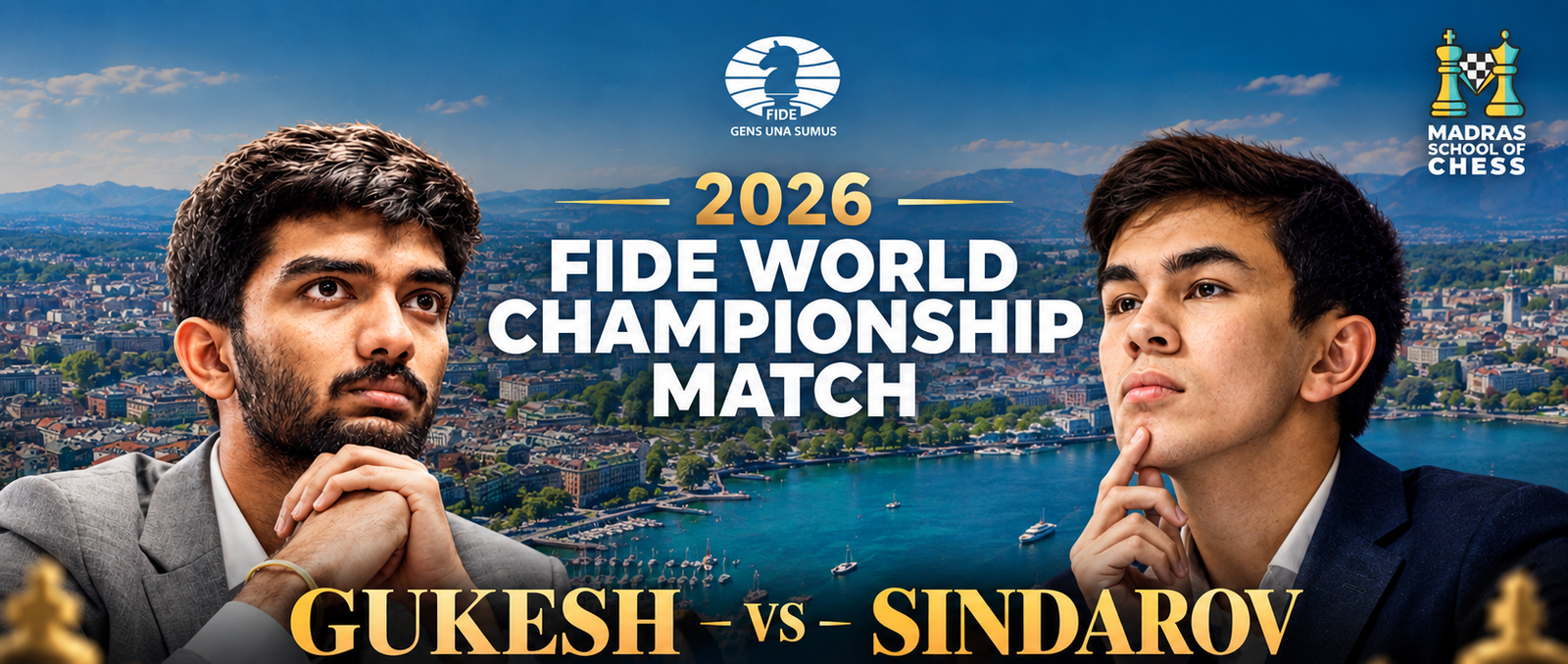
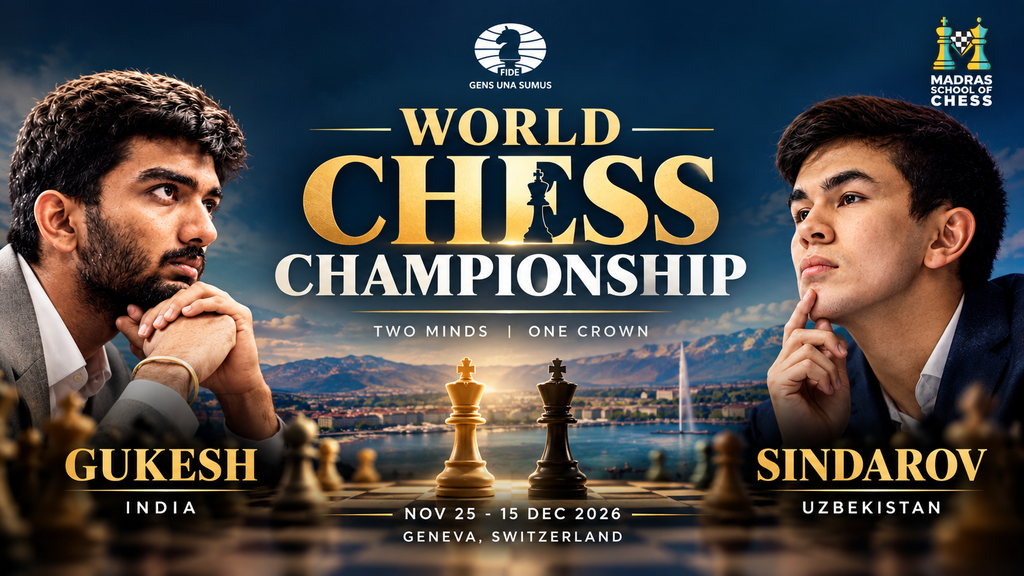
World Champion Gukesh D is set to defend his title against Javokhir Sindarov in Geneva this November, in what will be the youngest World Chess Championship match in history. Here’s everything you need to know about Gukesh vs. Sindarov, including the dates, schedule, format, prize money, venue, and the story leading up to the match.
WORLD CHAMPIONSHIP INTRODUCTION
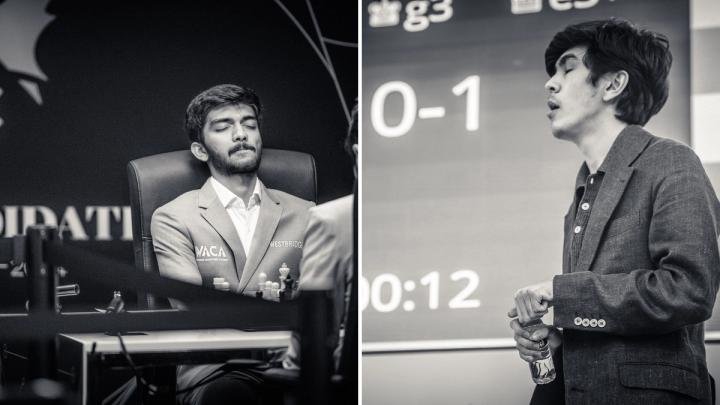
Gukesh has dropped below 2700 on the live rating list during the Olympiad in Samarkand, highlighting the huge contrast in recent form between the reigning World Champion and his challenger, Sindarov.
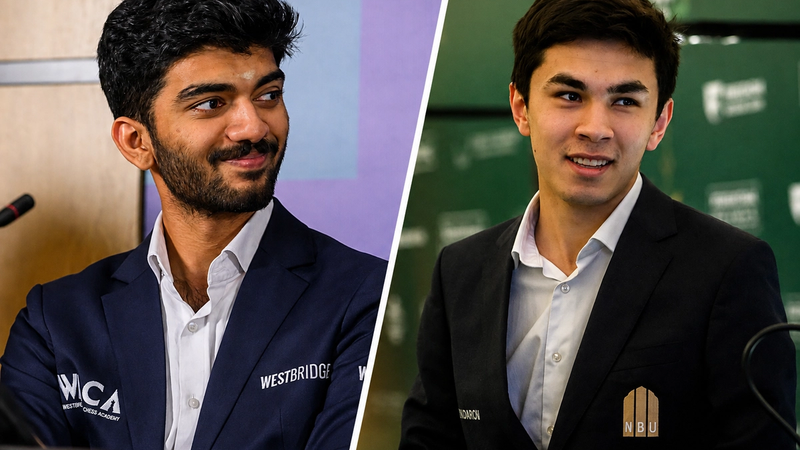
It’s Gukesh vs. Sindarov — a new India vs. Uzbekistan rivalry that is adding another exciting chapter to the world of chess. For the first time in World Championship history, two 20-year-olds will battle for the biggest title in chess.
World Champion GM Gukesh D will defend his title against GM Javokhir Sindarov in Geneva, Switzerland, this November.
The match marks another major generational change at the top of chess. In 2024, Gukesh became the youngest undisputed World Champion in history after defeating GM Ding Liren in Singapore. Just two years later, an even younger challenger is looking to take the title from him.
And Sindarov enters the match with plenty of confidence and a strong case for believing he can become the next World Champion
When is the 2026 World Chess Championship?
The 2026 FIDE World Championship Match will take place in Geneva, Switzerland, from November 22 to December 13, with the first game set to be played on November 24.
FIDE initially announced that the championship would run from November 25 to December 15. However, the match regulations approved by the FIDE Council on August 23 moved the schedule forward. The updated dates were confirmed after the newly approved regulations were reviewed.
Key dates:
November 20 — Players arrive in Geneva
November 22 — Media day and opening ceremony
November 23 — Media day and technical meeting
November 24 — Game 1
December 11 — Game 14, if required
December 12 — Tiebreaks, if required
December 13 — Player departures
Where is Gukesh vs Sindarov being played?
Geneva, Switzerland.
Geneva was selected by FIDE after several potential hosts expressed interest in staging the World Championship, including India, the United States, and Cyprus.
Interim FIDE President GM Viswanathan Anand said the decision to hold the match in Geneva was made with the aim of providing a neutral location for both players.
The championship will also return to Switzerland for the first time since 2004, when GM Vladimir Kramnik defended his classical World Championship title against GM Peter Leko in Brissago.
Who is Gukesh?
Gukesh is the reigning World Champion.
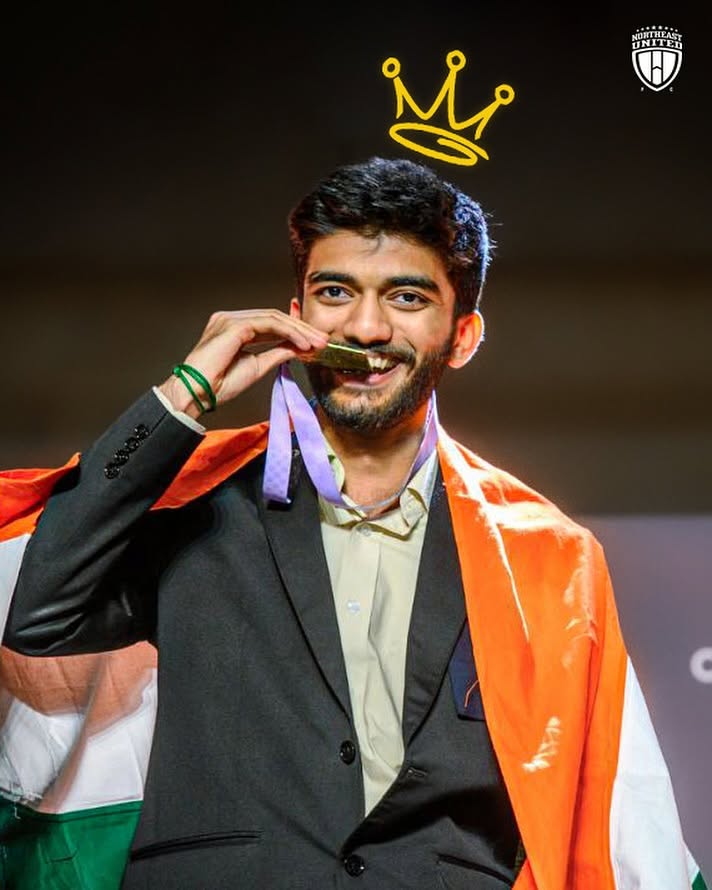
The Indian grandmaster became World Champion at just 18 after defeating Ding Liren in Singapore in December 2024. In doing so, he broke GM Garry Kasparov’s long-standing record as the youngest undisputed World Champion.
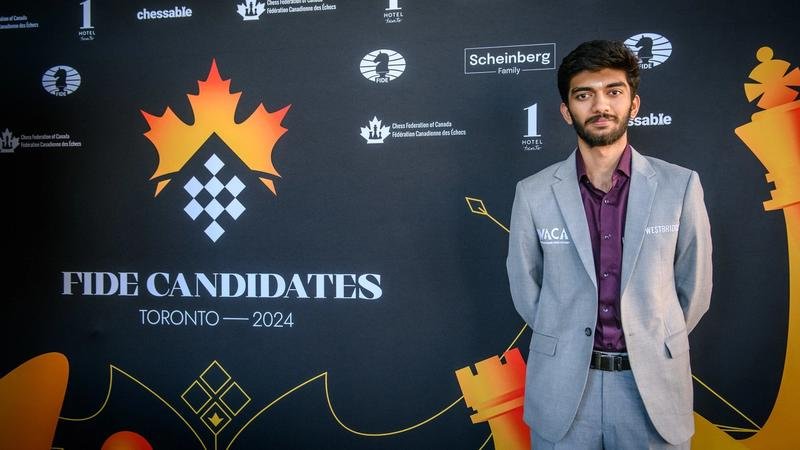
His journey to the title was remarkable. Gukesh won the 2024 Candidates Tournament at the age of 17 before beating Ding 7.5–6.5 in their 14-game World Championship match.
Now, Gukesh heads to Geneva for the first defence of his World Championship title.
However, much of the focus has been on his recent form.
Gukesh’s 2026 performances have been less consistent compared with the form he showed on his way to becoming World Champion. This has created an unusual situation, with some observers questioning his current form ahead of his first title defence.
Before the World Championship, Gukesh will represent India at the 2026 Chess Olympiad in Samarkand, giving him another opportunity to build momentum before facing Sindarov.
GM Fabiano Caruana has urged caution when assessing Gukesh’s recent results, saying that his ability “doesn’t disappear overnight” and that his form could “reverse at any moment”.
Gukesh’s recent results reached another notable point during the Chess Olympiad in Samarkand, when the World Champion dropped below 2700 on the live rating list after drawing against Indonesia’s IM Satria Duta Cahaya.
It was the first time in four years that Gukesh had fallen below the 2700 rating mark, coming just over two months before his World Championship match against Sindarov in Geneva.
Who is Javokhir Sindarov?
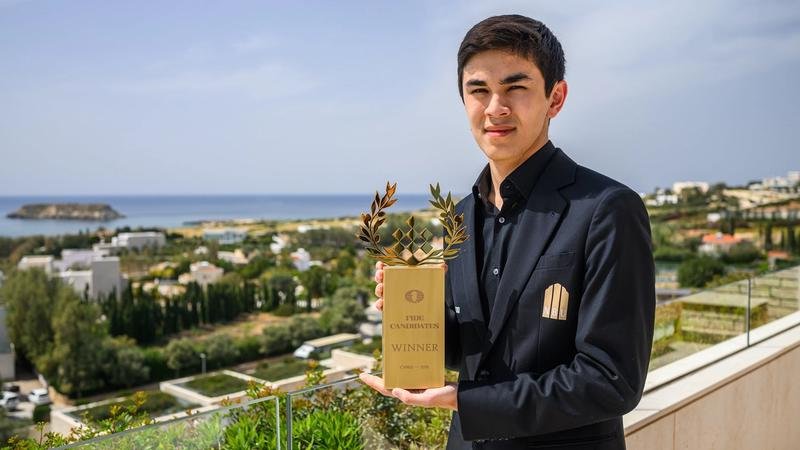
Javokhir Sindarov is the 20-year-old Uzbek grandmaster who won the 2026 Candidates Tournament, earning the right to challenge Gukesh for the World Championship title.
Like Gukesh, Sindarov has been making history from a young age. He became a grandmaster at just 12 and has steadily developed from a promising junior into one of the leading players in world chess.
He currently leads the 2026–27 FIDE Circuit, giving him another possible path to the next Candidates Tournament even before he has played his first World Championship match.
In his first four major classical tournaments of 2026, Sindarov recorded 14 wins, 29 draws and just two losses across 45 games, with an average tournament performance rating of 2837.
Those results set the stage for an intriguing World Championship battle against Gukesh.
What is the Gukesh vs Sindarov World Championship schedule?
The 2026 World Chess Championship will be played over a maximum of 14 classical games, with a rest day after every three games. Game 1 is scheduled for November 24, while Game 14 will take place on December 11, if necessary. If the match ends 7–7, tiebreaks will be played on December 12. The updated match regulations were formally approved by the FIDE Council on August 23.
November 20: Players arrive in Geneva November 22: Media Day and Opening Ceremony November 23: Media Day and Technical Meeting November 24: Game 1 — 3pm November 25: Game 2 — 3pm November 26: Game 3 — 3pm November 27: Rest day November 28: Game 4 — 3pm November 29: Game 5 — 3pm November 30: Game 6 — 3pm December 1: Rest day December 2: Game 7 — 3pm December 3: Game 8 — 3pm December 4: Game 9 — 3pm December 5: Rest day December 6: Game 10 — 3pm December 7: Game 11 — 3pm December 8: Game 12 — 3pm December 9: Rest day December 10: Game 13 — 3pm December 11: Game 14 — 3pm December 12: Tiebreaks, if required, and Closing Ceremony December 13: Departures
The match can finish before Game 14 if either Gukesh or Sindarov reaches 7.5 points first.
Gukesh vs Sindarov: What is their head-to-head record?
The two players have known each other since their junior days and have followed similar paths through the ranks for around a decade.
Sindarov has the edge in their limited classical meetings, with one win and two draws from the three recorded encounters identified by ChessTV. His victory came at the 2022 Sharjah Masters, while their latest classical meeting at Tata Steel in January 2026 ended in a draw.
They have also faced each other in faster time controls.
Their rivalry has already produced some memorable moments. Earlier this year, Gukesh celebrated passionately after defeating Sindarov with Black in a Grand Chess Tour rapid event in Warsaw.
Their relationship has attracted plenty of attention, with World Chess taking a closer look in:
The match will consist of up to 14 classical games.
The first player to score 7.5 points wins the match and becomes World Champion.
If the score is tied 7–7 after all 14 games, the title will be decided through faster tiebreak games.
The format is the same basic 14-game classical match length used in the 2024 World Championship between Gukesh and Ding.
How much is the prize money?
The total prize fund is $2.5 million.
The prize-money structure is particularly notable. Under the newly approved regulations, each player receives $200,000 for every classical game won, with the remaining prize money distributed according to the regulations.
If the match goes to tiebreaks, the winner receives $1.3 million, while the runner-up receives $1.2 million.
FIDE’s original bidding documents set a minimum prize fund of $2.5 million and estimated the overall event budget at $8.5 million.
What happens if Gukesh or Sindarov withdraws?
A reserve system is already in place.
If either player is unable to compete, GM Anish Giri is first in line to replace him.
If another replacement is needed, GM Fabiano Caruana is next.
Hopefully, neither replacement will be needed.
Why is this World Championship historic?
The age of the players is one of the biggest reasons.
Gukesh and Sindarov will both be 20 years old when the match begins, making Gukesh vs. Sindarov the youngest World Chess Championship match in history. FIDE also highlighted this record when inviting bids to host the event.
Unlike many famous World Championship rivalries involving established veterans, this match features two young players who could remain among the world’s elite for many years.
Geneva could therefore mark the beginning of a long-running rivalry between the two.
Why isn’t Magnus Carlsen playing?
GM Magnus Carlsen voluntarily stepped away from the classical World Championship cycle.
After becoming World Champion by defeating Anand in 2013, Carlsen chose not to defend his title again, saying he no longer had the motivation for the lengthy preparation and match required to retain the crown.
His decision led to a vacant title, which was eventually won by GM Ian Nepomniachtchi’s opponent, Ding Liren, in 2023.
Gukesh then defeated Ding in 2024 to become World Champion.
Carlsen can therefore remain the world’s highest-rated classical player without holding the World Championship title.
The situation is one of the unusual features of the modern World Championship cycle, with Gukesh and Sindarov now representing a younger generation competing for the crown.
How are Gukesh and Sindarov’s recent results shaping the match?
Gukesh brings the experience of having already played and won a World Championship match. He has gone through the Candidates Tournament, months of preparation and the unique pressure of playing a long match against a single opponent for the world title.
Sindarov, meanwhile, has produced a strong run of results. His unbeaten Candidates victory and performances throughout 2026 have attracted significant attention ahead of his first World Championship match.
Sindarov has said that he is preparing for the best version of Gukesh rather than focusing too heavily on the champion’s recent results.
GM Magnus Carlsen has publicly discussed the matchup as well. In September, he said Sindarov should be considered the favourite based on the current situation, while also noting that the psychology of a World Championship match could quickly change the picture.
Carlsen has also described Sindarov as “very well rounded” and said he “doesn’t have any obvious weaknesses” after facing him at the Global Chess League.
Under the revised World Championship schedule, Gukesh is expected to arrive in Geneva on November 20.
As a result, playing in both events would not be possible under the current schedule.
It also highlights how packed the modern elite chess calendar has become, with several major events taking place close together.
When does Gukesh vs Sindarov start?
Game 1: November 24, 2026, in Geneva.
The World Championship will be one of the biggest chess events of the year, with Gukesh defending his title against the 20-year-old challenger from Uzbekistan.
How can I watch Gukesh vs Sindarov?
Broadcast details for the 2026 World Chess Championship have not yet been announced.
This section can be updated once FIDE confirms the platforms and channels that will carry the match live.
Can I buy tickets for Gukesh vs Sindarov?
Ticketing information has not yet been released.
Details about the exact playing venue, tickets, broadcast arrangements, seconds and preparation teams, opening choices and the players’ form are still to come.
There is also the possibility of seeing Gukesh and Sindarov face each other at the Olympiad in Samarkand before they meet in Geneva.
Ready to Level Up Your Game? 𝐉𝐨𝐢𝐧 𝐌𝐚𝐝𝐫𝐚𝐬 𝐒𝐜𝐡𝐨𝐨𝐥 𝐨𝐟 𝐂𝐡𝐞𝐬𝐬 𝐭𝐨 𝐝𝐞𝐟𝐞𝐚𝐭 𝐲𝐨𝐮𝐫 𝐨𝐩𝐩𝐨𝐧𝐞𝐧𝐭 𝐰𝐢𝐭𝐡 𝐛𝐫𝐢𝐥𝐥𝐢𝐚𝐧𝐜𝐞 𝐚𝐧𝐝 𝐩𝐫𝐞𝐜𝐢𝐬𝐢𝐨𝐧!
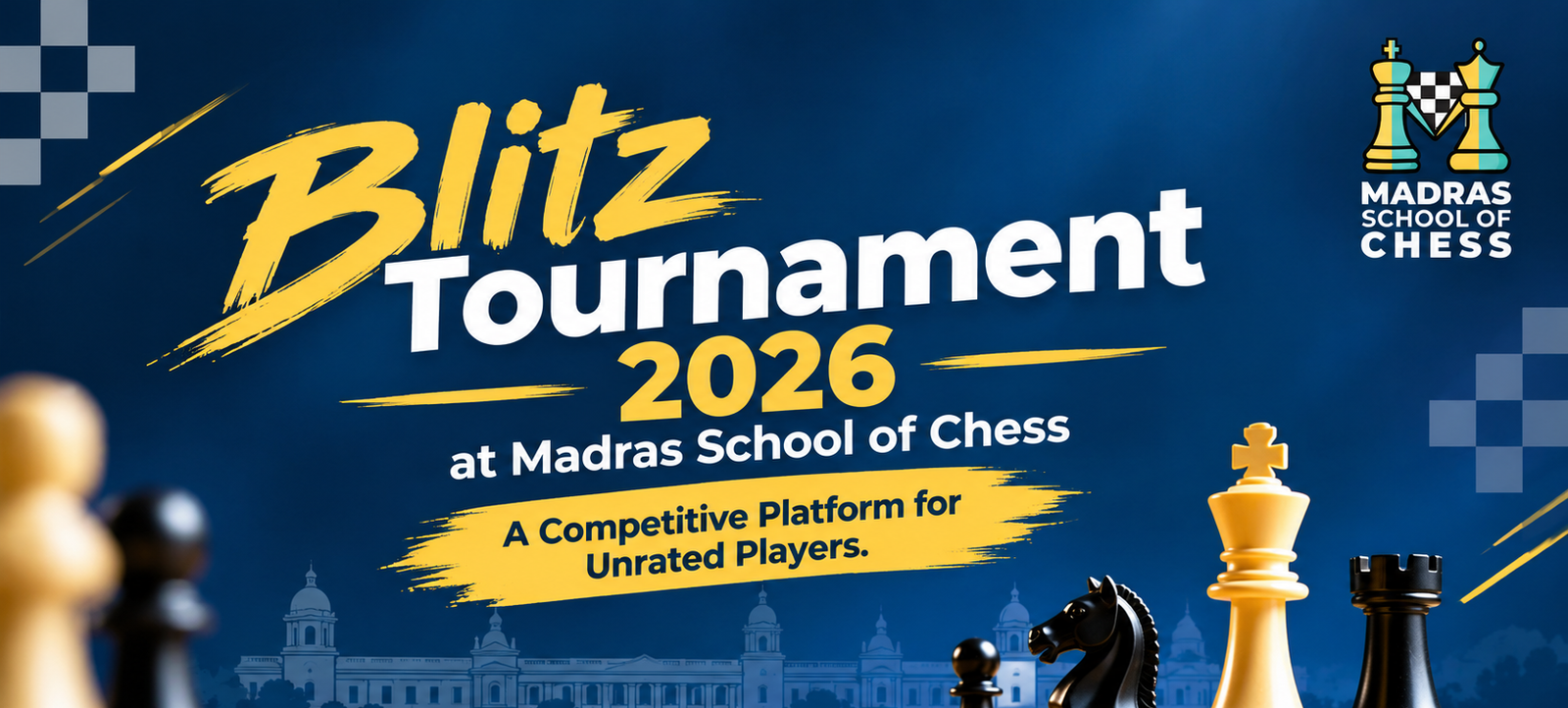
Blitz Tournament 2026 at Madras School of Chess: A Competitive Platform for Unrated Players.
Sep 10th, 2026
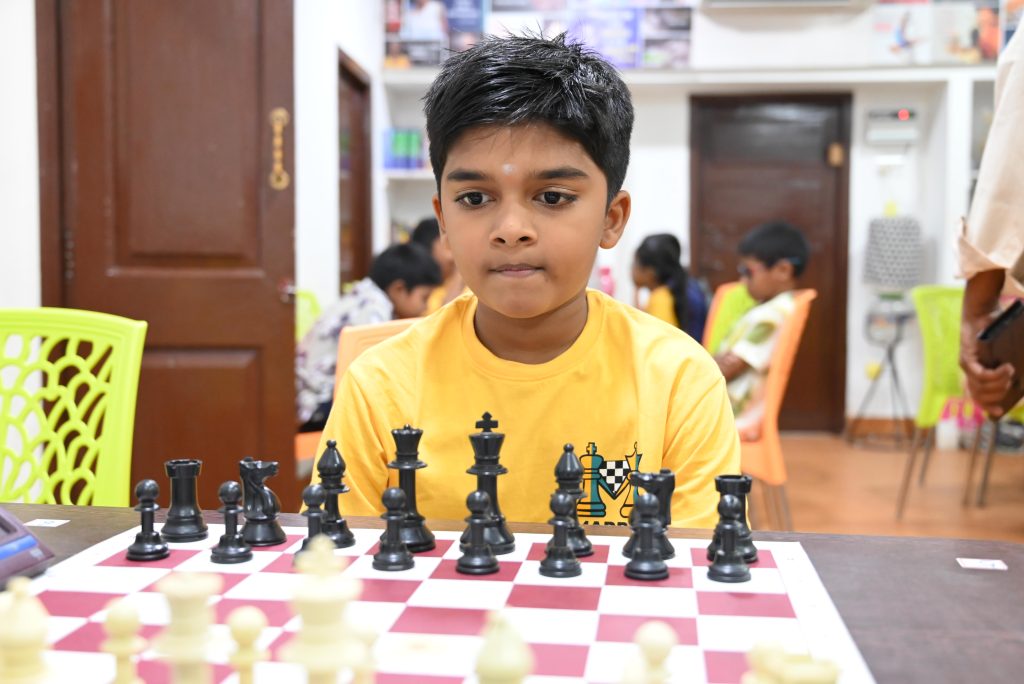
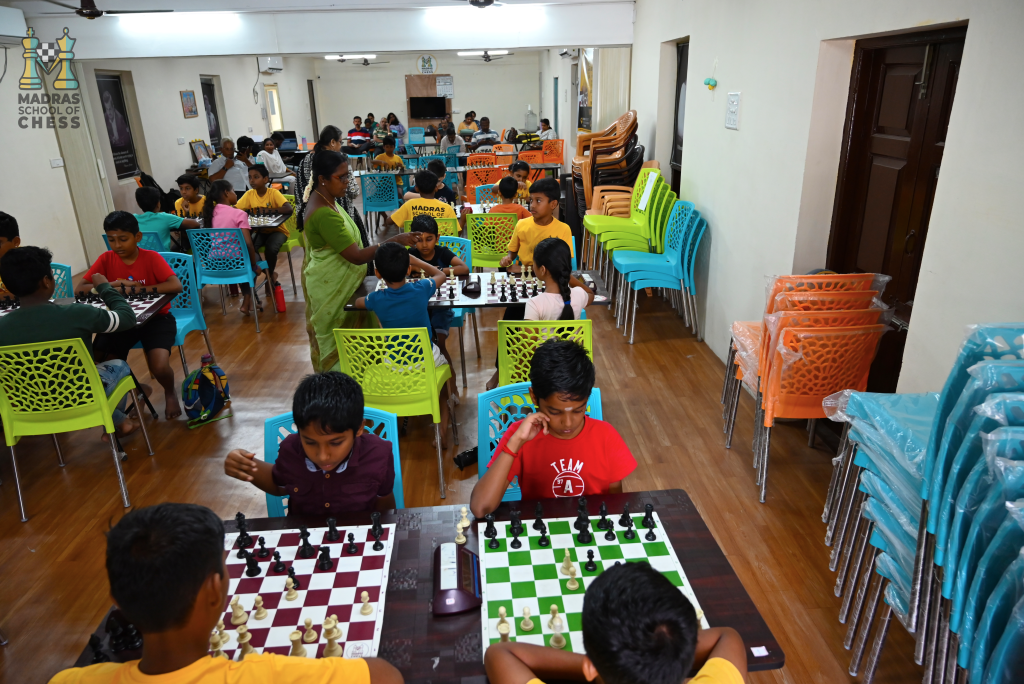
Madras School of Chess is set to host the Blitz Tournament 2026 on 12th September 2026 (Saturday) at its T. Nagar premises in Chennai. The tournament is specially organised for unrated chess players, giving young players an opportunity to experience competitive chess, test their skills and build confidence over the board.
What Is an Unrated Chess Player?
In chess, a rating is a numerical measure used to indicate a player’s playing strength based on their results in rated competitions. Players who participate in official rated tournaments can earn a recognised chess rating. A player who has not yet played in such rated competitions, or has not yet received an official rating, is generally known as an unrated player.
However, being unrated does not mean that a player is a beginner. Many children learn chess for several years through schools, chess academies, coaching programs and local competitions without having an official rating. They may already have good chess knowledge and tournament experience, but simply have not entered the rated chess circuit yet.
An unrated tournament provides these players with a suitable platform to compete against others at a similar stage of their chess journey.
Why Unrated Tournaments Matter
For young players, entering the competitive side of chess for the first time can be an exciting but challenging experience. An unrated tournament offers a good opportunity to become familiar with the atmosphere of competitive chess without immediately stepping into a field dominated by experienced rated players.
Players get to experience the importance of time management, concentration, decision-making and handling pressure. They also learn how to respond when a game does not go according to plan and how to stay focused until the final move.
These experiences are valuable because chess improvement does not come only from coaching and practice. Playing actual tournament games is an important part of a player’s development.
The Excitement of Blitz Chess
Unlike longer-format chess games, blitz chess is played at a much faster pace. Players have limited time to think, which means every second on the clock becomes important.
Blitz requires players to make quick decisions while still maintaining accuracy. Players need to recognise tactical opportunities, react to their opponent’s moves, manage their clock and avoid unnecessary mistakes.
For young players, blitz can also make competitive chess more exciting and engaging. It encourages them to think quickly, remain alert and develop confidence in making decisions on the board.
More Than Just Winning
While winning is certainly exciting, the real value of an unrated tournament lies in the experience gained from every game.
A player might discover a weakness in their opening preparation, miss a tactical opportunity or struggle with time management. These moments can become useful learning experiences. Similarly, a well-played game against a strong opponent can give a player greater confidence in their own abilities.
Tournament participation helps children understand their strengths and identify areas that need more work. With every competition, they become more comfortable with the pressure of playing against different opponents and handling different positions.
For many players, this experience can become an important stepping stone towards participating in official rated tournaments in the future.
A Step Forward in the Chess Journey
Every chess player starts somewhere. For an unrated player, participating in a tournament can be the beginning of a more serious competitive journey.
Regular tournament exposure helps players become familiar with competitive chess and understand what it takes to perform under pressure. As they continue to play, learn and improve, they can eventually progress towards rated competitions and work towards earning an official chess rating.
The Blitz Tournament 2026 at Madras School of Chess is therefore not simply another chess event. It is an opportunity for young unrated players to play their first competitive games, gain valuable experience, meet other young chess enthusiasts and take another step forward in their chess journey.
Tournament Details
The tournament will be conducted at the Madras School of Chess – T. Nagar Branch in Chennai.
Date: 12th September 2026 (Saturday) Time: 10:00 AM Venue: Madras School of Chess, T. Nagar Eligibility: Unrated Players Age Categories:
5–10 Years
11–15 Years
Entry Fee: ₹500/-
To make the tournament even more exciting, attractive trophies will be awarded to the Top 10 players. Participants will also receive free snacks and beverages during the event.
Venue
Madras School of Chess – T. Nagar Branch 2, Guild Street, Postal Colony, T. Nagar, Chennai – 600017
For registration and enquiries: 9840403376 | 7305213376
Get Ready for the Board
Whether a child is taking their first step into competitive chess or already has experience playing in local events, the Blitz Tournament 2026 offers an opportunity to put their skills to the test.
Come prepared to think fast, play confidently and enjoy the game. On September 12, the boards are ready at Madras School of Chess for the next generation of chess players.
Ready to Level Up Your Game? 𝐉𝐨𝐢𝐧 𝐌𝐚𝐝𝐫𝐚𝐬 𝐒𝐜𝐡𝐨𝐨𝐥 𝐨𝐟 𝐂𝐡𝐞𝐬𝐬 𝐭𝐨 𝐝𝐞𝐟𝐞𝐚𝐭 𝐲𝐨𝐮𝐫 𝐨𝐩𝐩𝐨𝐧𝐞𝐧𝐭 𝐰𝐢𝐭𝐡 𝐛𝐫𝐢𝐥𝐥𝐢𝐚𝐧𝐜𝐞 𝐚𝐧𝐝 𝐩𝐫𝐞𝐜𝐢𝐬𝐢𝐨𝐧!
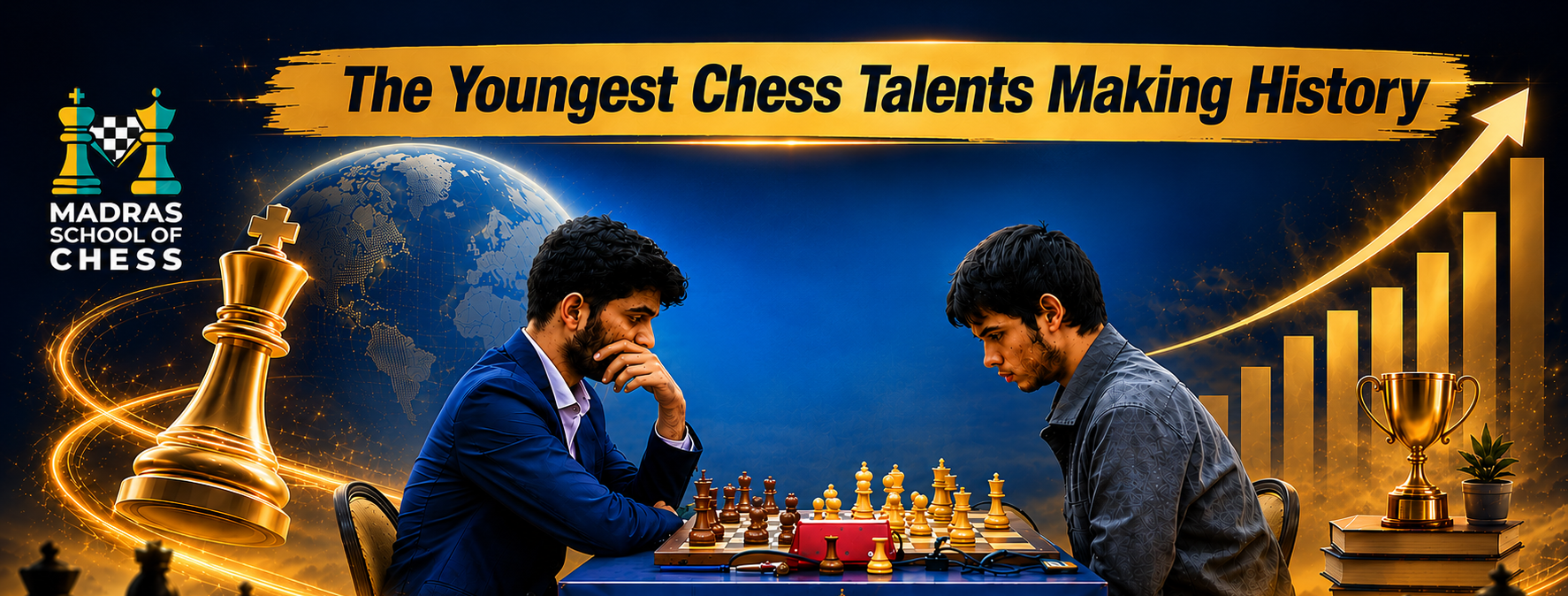
Akash Ganesan: India’s Youngest National Chess Champion
At just 16 years and 14 days, G. Akash made history in 2012 by becoming the youngest National Chess Champion in India.
He won the National Senior Chess Championship, surpassing the previous record held by Viswanathan Anand and setting a remarkable milestone in Indian chess.
Today, Akash Ganesan is one of the founders of Madras School of Chess, inspiring the next generation of young chess players through his experience, passion, and achievements.
Gukesh Dommaraju: The Youngest World Chess Champion in History
At just 18 years and 142 days, Gukesh Dommaraju made history in 2024 by becoming the youngest World Chess Champion ever.
After winning the 2024 Candidates Tournament at the age of 17, Gukesh challenged reigning champion Ding Liren in the World Championship match.
His historic victory made him the youngest player to ever claim the World Chess Championship title.
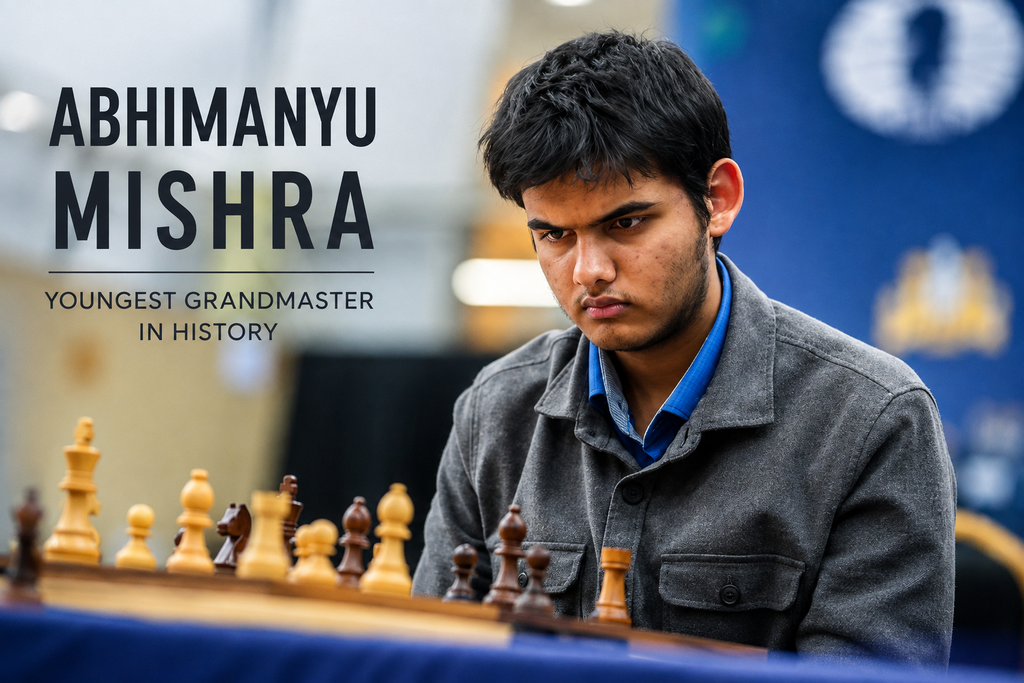
Abhimanyu Mishra: The Youngest Grandmaster in History
At just 12 years, 4 months, and 25 days old, Abhimanyu Mishra made chess history in 2021 by becoming the youngest Grandmaster ever.
His remarkable achievement came after he surpassed the long-standing record previously held by Sergey Karjakin, whose record had remained unbeaten for nearly 19 years.
Mishra’s historic accomplishment marked a new milestone in the world of chess and showcased his extraordinary talent at a remarkably young age.
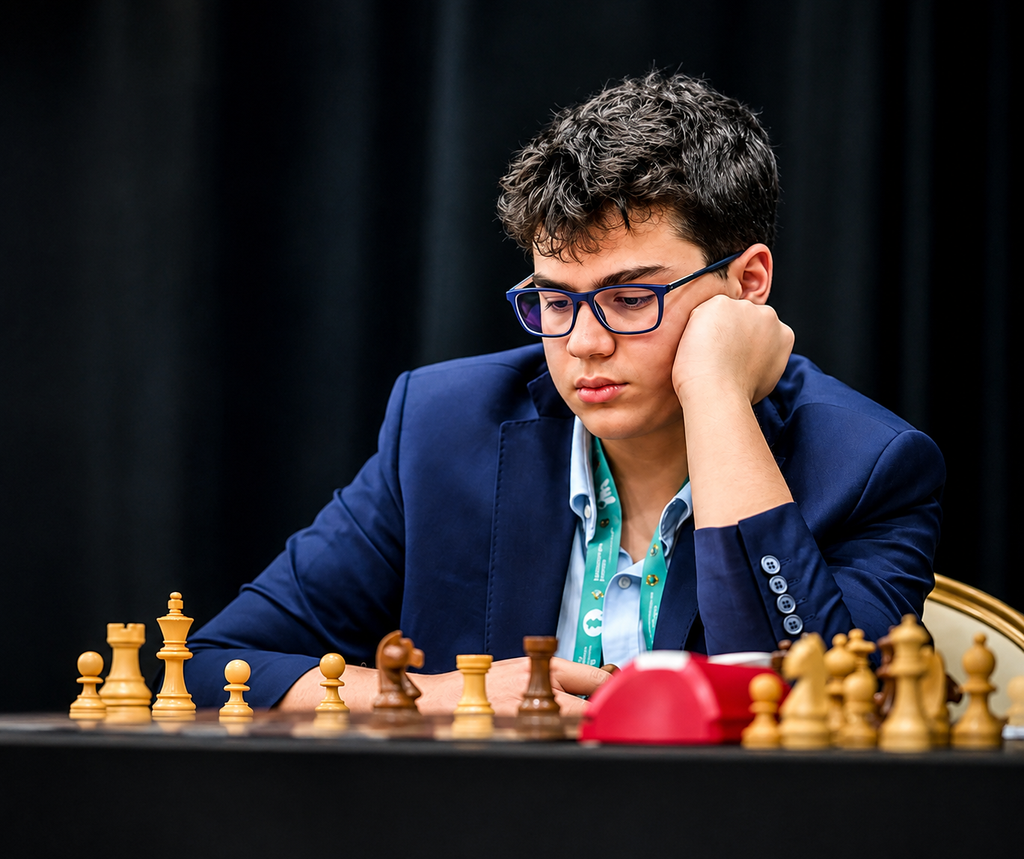
Yağız Kaan Erdoğmuş: The Youngest Player to Cross 2700 Elo in Chess History
Yağız Kaan Erdoğmuş 🇹🇷
At just 14 years, 10 months, and 28 days, Yağız Kaan Erdoğmuş made history in 2026 by becoming the youngest player ever to cross the 2700 Elo rating.
He broke Wei Yi’s previous record by nearly a year, marking a remarkable milestone and highlighting his exceptional rise in the modern chess world.
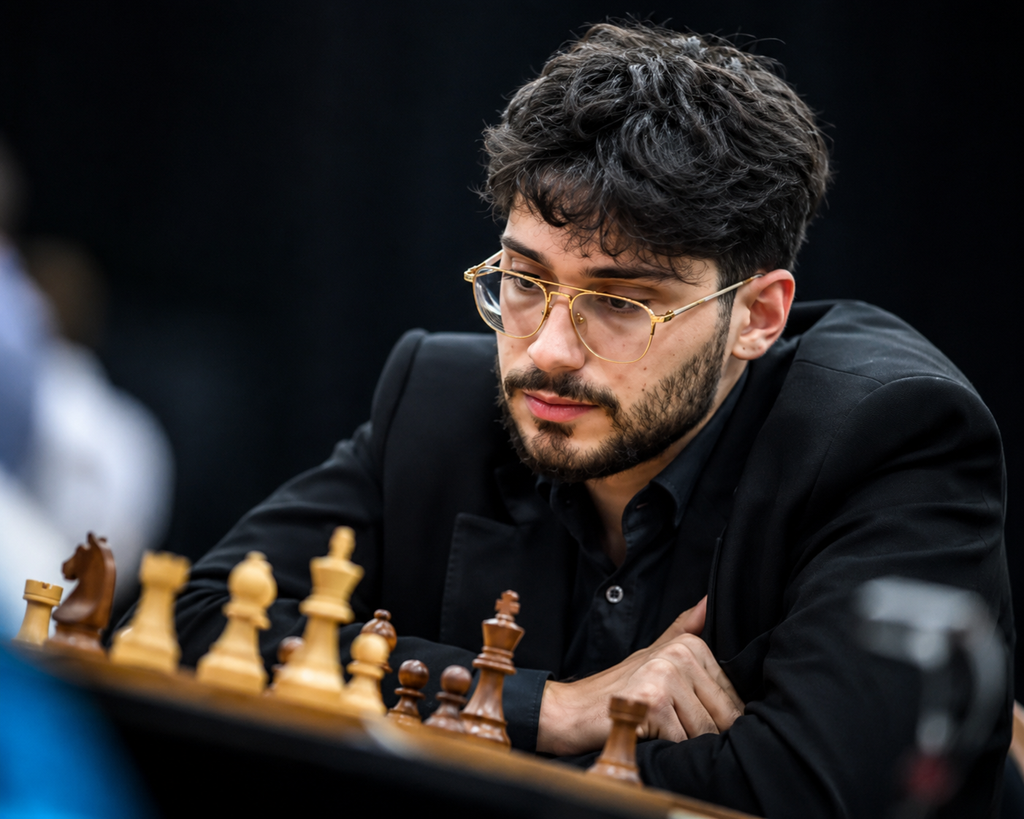
Alireza Firouzja: The Youngest Player to Cross 2800 Elo in History
At just 18 years and 5 months old, Alireza Firouzja made chess history in 2021 by becoming the youngest player ever to surpass the 2800 Elo rating barrier.
He broke the previous record held by Magnus Carlsen by more than five months, earning his place among the elite group of players to reach this prestigious milestone at such a young age.
His achievement highlighted his exceptional strength and established him as one of the brightest young talents in modern chess.
Sarwagya Singh Kushwaha: The Youngest Player to Receive a FIDE Rating in History
At just 3 years, 7 months, and 20 days old, Sarwagya Singh Kushwaha made chess history in 2025 by becoming the youngest chess player to receive a FIDE rating.
He made his debut on the December 2025 FIDE rating list with a rapid rating of 1572, surpassing the previous record held by Anish Sarkar.
His remarkable achievement at such a young age highlights his exceptional early talent and marks an exciting milestone in the world of chess.
Roman Shogdzhiev: The Youngest International Master in History
At just 10 years, 3 months, and 21 days old, Roman Shogdzhiev made chess history in 2025 by becoming the youngest player ever to earn the International Master (IM) title.
He surpassed the previous record set by Faustino Oro, establishing a new benchmark for young chess players.
His extraordinary achievement at such a young age highlights his exceptional talent and rapid rise in the competitive chess world.
Ready to Level Up Your Game? 𝐉𝐨𝐢𝐧 𝐌𝐚𝐝𝐫𝐚𝐬 𝐒𝐜𝐡𝐨𝐨𝐥 𝐨𝐟 𝐂𝐡𝐞𝐬𝐬 𝐭𝐨 𝐝𝐞𝐟𝐞𝐚𝐭 𝐲𝐨𝐮𝐫 𝐨𝐩𝐩𝐨𝐧𝐞𝐧𝐭 𝐰𝐢𝐭𝐡 𝐛𝐫𝐢𝐥𝐥𝐢𝐚𝐧𝐜𝐞 𝐚𝐧𝐝 𝐩𝐫𝐞𝐜𝐢𝐬𝐢𝐨𝐧!
In some ways Larry Evans’ journalism is of a superior quality. The trouble is that although his best is very good, Evans is not very often at it. The Facts about Larry Evans by Edward Winter
This is my take on the greatest chess authors of all time…and some who didn’t quite check the box. Today I present the 9th in this new series, presented one at a time and in alphabetical order…mostly…unless I add someone midway through, or just felt like mixing things up. Rephrase the paragragh
INTRODUCTION
Is he a chess writing goat? Or isn’t he? Who gets to decide? So, who are the chess writing GOATs? Who didn’t quite make the cut, but certainly merited consideration? Do you have an opinion? What about those who wrote prolifically, but not necessarily great stuff? Or perhaps their subject matter just didn’t appeal to me or thee, or at least to peers of mine when I was a rising teen. Hey, it’s no problem if you haven’t considered the issue! I’m more than willing to fill that particular void in your thoughts with my own opinions!! An opinion informed by decades of chess and a (diminished) chess library that takes up multiple shelves in my library. And if you don’t fully agree with my opinions (though I can hardly imagine such a contumacious state of mind) then chess.com generously provided a comments section so you can express your agreements, disagreements, quibbles, corrections, expansions, nominations, and questions. Some of which I will respond to! rephrase the paragtraph
The Tools of a GOAT Author—or Just Gimmickry?
A word of caution: not all of these authors were particularly pleasant, accurate, or even ethical. As this series unfolds, you’ll encounter a notorious plagiarizer and at least one famous player who rewrote history, presenting brilliant analytical variations as though they had actually been played in the game. Others simply couldn’t be bothered to establish the facts properly or provide analysis that was both sound and genuinely relevant.
And when it comes to the ancient authors, we can’t even be certain how many games were entirely invented. They certainly did not follow modern standards of plagiarism, since such concepts had little, if any, moral significance in their time. Moreover, some modern-day “authors” relied heavily on ghostwriters for works presented as their own.
So, when judging a GOAT chess author, perhaps the tools of the trade—and how honestly they were used—matter just as much as the final product.
The Author – Larry Evans
It’s time to introduce our tenth potential Chess Author GOAT—or perhaps he doesn’t quite make the cut? As we meet these authors in alphabetical order, our next subject is none other than Larry Melvyn Evans.
GM, five-time U.S. Champion, four-time U.S. Open Champion, author, and former world #19
Larry Melvyn Evans (March 22, 1932 – November 15, 2010) was an American Grandmaster, author, and chess journalist. He won or shared the U.S. Championship five times and captured four U.S. Open titles. FIDE records his peak rating as 2631 in October 1978, with a highest official ranking of #30 in January 1977. However, ChessMetrics estimates that Evans reached a peak rating of 2673 in August 1952, well before the introduction of the FIDE rating system—a performance that would have placed him approximately #19 in the world.
Evans also enjoyed considerable success in international team competition. He won an individual gold medal on board six at the 1950 Olympiad, followed by individual silver and bronze medals in 1958 and 1976. Across eight U.S. Olympiad appearances, he contributed to both team gold and team silver medal finishes.
Beyond the board, Evans became one of the most recognizable American chess writers and journalists of his generation. He also served as Bobby Fischer’s second during the Candidates matches leading up to the World Championship, although the two eventually disagreed and parted ways before Fischer’s championship match.
The Books!
I won’t provide a complete list of every book written by these authors. Some produced nearly a hundred titles, and I’m neither inclined to squeeze that many book covers onto a single page nor interested in overwhelming the casual reader with endless bullet points.
Larry Evans is the first author in this series whose writing has faced substantial scrutiny and criticism. So, let’s begin with some basic facts before exploring the questions surrounding his credibility as a reliable and useful chess writer. To be fair, I’ll also include the views of those who defended him.
Evans wrote or co-authored more than twenty books. Remarkably, his first two books were completed by the time he was just 18: David Bronstein’s Best Games of Chess, 1944–1949 and Vienna International Tournament, 1922. One can imagine that, after analyzing so many games at such a young age, Evans realized he already had enough material to turn his work into books.
Perhaps his most significant contribution as an author was the tenth edition of Modern Chess Openings, which he co-authored with Walter Korn.
Evans was also an extraordinarily prolific chess journalist. He helped establish American Chess Quarterly and edited Chess Digest for portions of two decades. He also wrote a monthly question-and-answer column for Chess Life. I sometimes enjoyed the column, although at other times I found it too basic to maintain my interest. Among my chess-playing peers, Evans eventually acquired a reputation similar to Fred Reinfeld—an author we often criticized despite the fact that most of those peers went on to become National Masters, while I took the less glamorous route into ordinary professional life.
Our doubts about Evans’ writing were hardly unique to a group of ambitious young players. International Master John Watson was highly critical of several aspects of Evans’ books and columns, accusing him of “long histories of ignoring and distorting evidence” and referring to some of his arguments as “absurd.” Watson’s comments appeared in Chess and Politics (Kingpin, Spring 1999, pp. 33–38), as discussed by Edward Winter in The Facts about Larry Evans.
Chess historian Edward Winter also identified factual inaccuracies in Evans’ work and raised questions about possible plagiarism. In one case, Evans acknowledged an error but defended it by saying, “you must admit it makes a good story.” That response does little to strengthen confidence in an author’s commitment to accuracy.
In 2000, Yasser Seirawan was similarly scathing about Evans’ response to an open letter concerning the FIDE presidency, writing that experienced “Evans-watchers” would recognize what he described as a pattern of untruth and distortion.
Yet Evans certainly had his defenders. NM Bruce Pandolfini and IM Anthony Saidy were among those who spoke positively about his work, with Pandolfini being particularly enthusiastic about New Ideas in Chess. Evans’ reputation also received official recognition: in 2000, he was named the US Chess Federation’s Chess Journalist of the Year.
His books have continued to receive recognition as well. Ideas Behind the Chess Openings appeared on a 2025 list of the 100 Best Chess Books of All Time, although it ranked only 75th.
Bottom Line
So, does Larry Evans belong among the GOATs of chess writing?
That’s ultimately for you to decide. He doesn’t make my personal list of chess-writing GOATs. But I’ve progressed from being a dismissive chess-playing teenager to becoming what I affectionately call The Grumpy Old Man (The GOM). Perhaps that means my vote should be taken with at least a small grain of salt!
Some Quotes
As one should expect, Evans’ offered a few memorable quotes…surprisingly few, imo. Accordingly, he wasn’t a candidate for my Chess Quotemasters (QMs) Hall of Fame series. However, I’ll share a few of his sayings that gained at least limited traction in the chess echosphere.
Fischer is the strongest player in the world. In fact, the strongest player who ever lived. Ibid
Fischer wanted to give the Russians a taste of their own medicine. Ibid
Chess first of all teaches you to be objective.
Playing for complications is an extreme measure that a player should adopt only when he cannot find a clear and logical plan. (This sounds like something others said before him. I don’t blame that on Evans, I blame it on the difficulty with pinning down who first said something.)
As a rule, so-called “positional” sacrifices are considered more difficult, and therefore more praise-worthy, than those which are based exclusively on an exact calculation of tactical possibilities. (This also sounds like something others said before him. Again, that’s a problem of sourcing, not an issue of Evans committing plagiarism.)
While some are as loathe to trade a Bishop for a Knight as a Cadillac for a Chevrolet, others are prepared to do so without hesitation. Quotes About Chess Bishops.
Wrap-Up
We Were Young Once
And that’s a wrap!
I’ve tried to keep these profiles relatively short, so I hope you’ve enjoyed this look at Larry Evans. If you’d like to explore more about Evans, I’ve curated a selection of links below—although, if we’re being pedantic about my occasional abuse of the King’s English (the language, not the opening), it’s probably more than a “few”!
The list is arranged alphabetically, so the big question is: who do you think will be next?
Another GOAT? Or perhaps someone who didn’t quite make the cut for my list of the greatest chess authors?
Ready to Level Up Your Game? 𝐉𝐨𝐢𝐧 𝐌𝐚𝐝𝐫𝐚𝐬 𝐒𝐜𝐡𝐨𝐨𝐥 𝐨𝐟 𝐂𝐡𝐞𝐬𝐬 𝐭𝐨 𝐝𝐞𝐟𝐞𝐚𝐭 𝐲𝐨𝐮𝐫 𝐨𝐩𝐩𝐨𝐧𝐞𝐧𝐭 𝐰𝐢𝐭𝐡 𝐛𝐫𝐢𝐥𝐥𝐢𝐚𝐧𝐜𝐞 𝐚𝐧𝐝 𝐩𝐫𝐞𝐜𝐢𝐬𝐢𝐨𝐧!
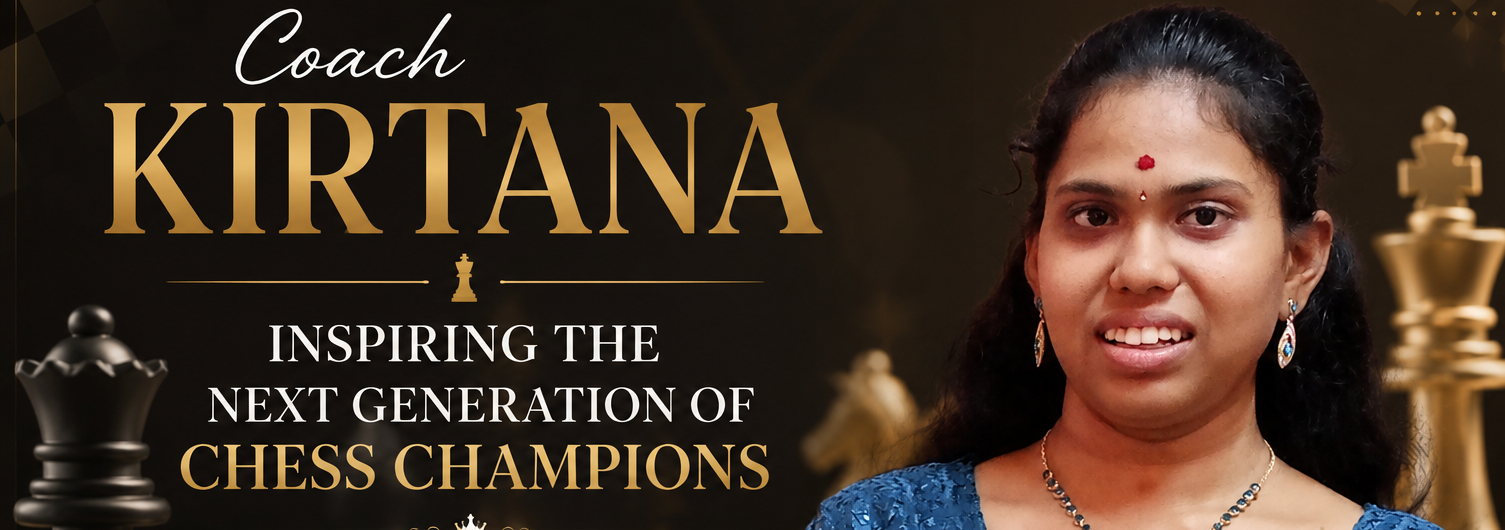
Coach Kirtana: Inspiring the Next Generation of Chess Champions.
Jul 25th, 2026
1. Coach Kirtana’s Outstanding Achievement
Madras School of Chess proudly congratulates Coach Kirtana on her remarkable performance at the 21st Tamil Nadu State Under-25 Girls FIDE Rated Chess Championship 2026. Demonstrating exceptional determination and consistent play against some of the state’s strongest competitors, she secured 4th place, earned a cash prize of ₹1,500, and improved her FIDE rating to 1801. This achievement reflects her dedication to the game and her commitment to continuous improvement. Coach Kirtana’s success is an inspiration to every student she mentors, proving that a great coach continues to grow as a competitive player while guiding the next generation of chess talent.
2. The Importance of State-Level Chess Tournaments
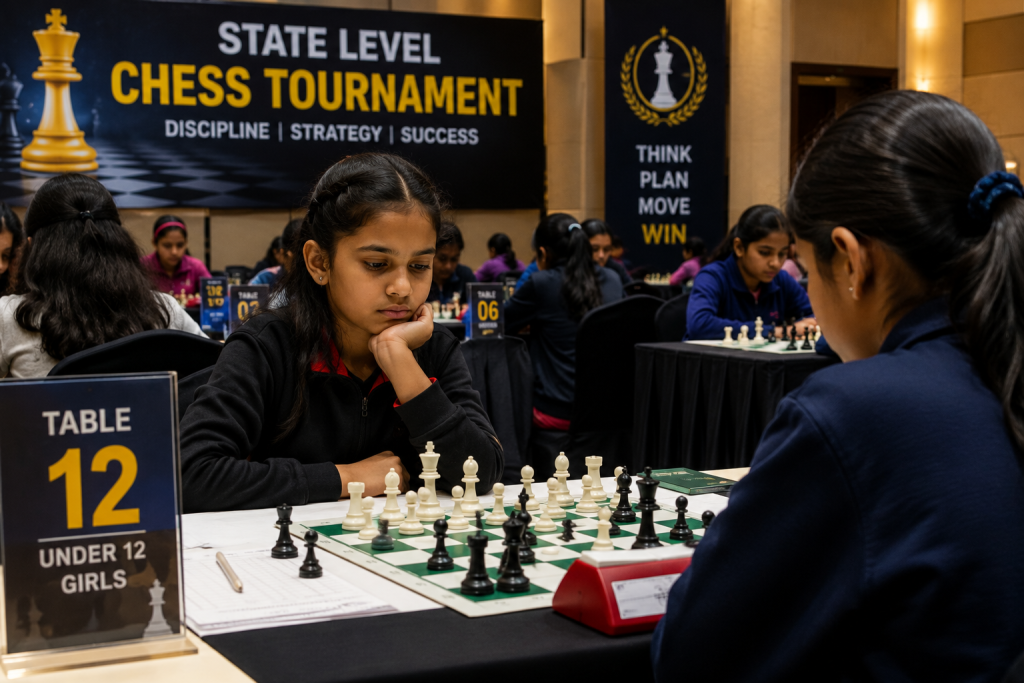
State-level chess tournaments are among the most competitive platforms for aspiring players. They bring together talented participants from different districts, providing an opportunity to compete against strong opposition, gain valuable tournament experience, improve FIDE ratings, and develop strategic thinking under pressure. Every game played at this level helps players sharpen their analytical skills, time management, and decision-making abilities. Such tournaments serve as stepping stones toward national and international competitions, making them an essential part of every serious chess player’s journey.
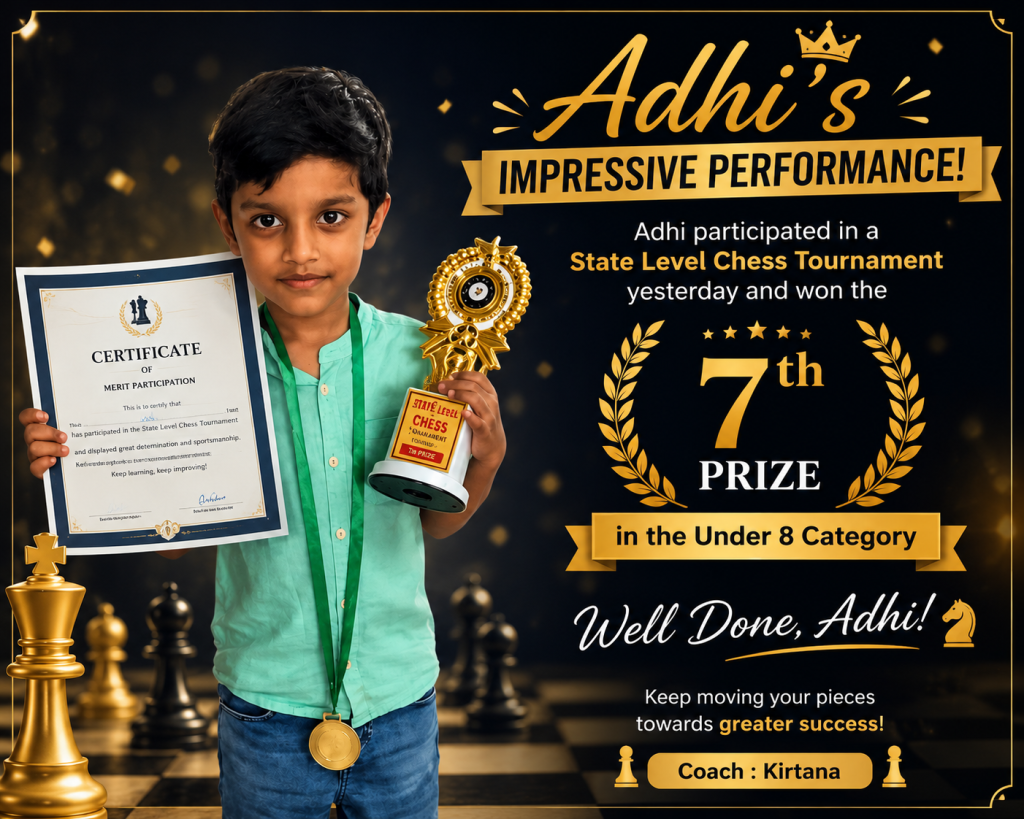
3. Adhi’s Impressive Performance Under Coach Kirtana
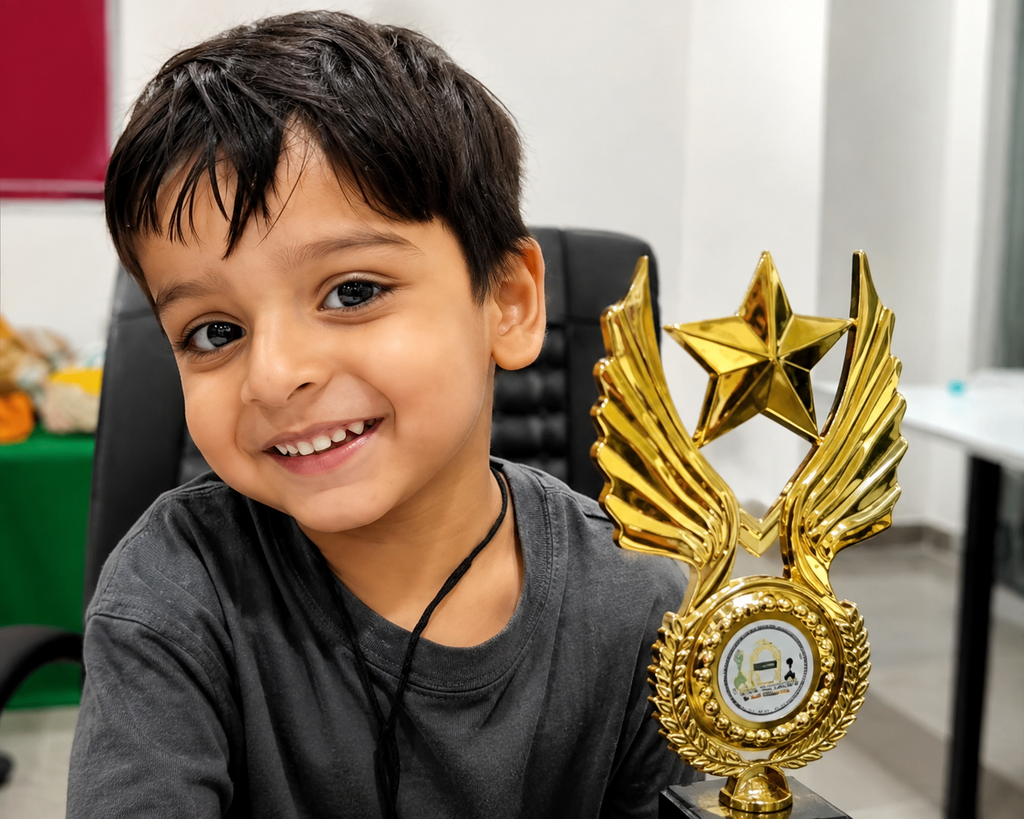
Continuing the academy’s success, Adhi delivered an excellent performance by securing the 7th prize in the Under-8 category at a recent state-level chess tournament. This achievement reflects Adhi’s hard work, disciplined practice, and growing confidence over the board. Behind this success is the dedicated guidance of Coach Kirtana, whose experience as both a competitive player and an accomplished coach has helped nurture young talents with the right balance of technical knowledge, tactical understanding, and tournament preparation. Adhi’s achievement is another proud milestone that showcases the positive impact of quality coaching and consistent training.
4. Chess: A Game That Builds Champions for Life
Chess is much more than a board game—it is a powerful educational tool that develops logical reasoning, concentration, creativity, patience, and problem-solving skills. Every tournament teaches players valuable life lessons, including resilience, discipline, sportsmanship, and the ability to learn from both victories and defeats. As players gain experience through regular competition, they become more confident, adaptable, and mentally strong. These qualities not only help them succeed in chess but also contribute to their academic performance and personal growth.
5. Madras School of Chess – Shaping Future Champions
At Madras School of Chess, every achievement is celebrated as a step toward excellence. With a structured curriculum, experienced coaches, regular practice sessions, tournament preparation, and individual mentoring, the academy provides an ideal environment for players of all levels to thrive. The success of Coach Kirtana and her student Adhi perfectly reflects the academy’s mission of developing skilled, confident, and competitive chess players. Madras School of Chess remains committed to inspiring young minds, nurturing talent, and creating future champions who will proudly represent the academy at state, national, and international levels.
Ready to Level Up Your Game? 𝐉𝐨𝐢𝐧 𝐌𝐚𝐝𝐫𝐚𝐬 𝐒𝐜𝐡𝐨𝐨𝐥 𝐨𝐟 𝐂𝐡𝐞𝐬𝐬 𝐭𝐨 𝐝𝐞𝐟𝐞𝐚𝐭 𝐲𝐨𝐮𝐫 𝐨𝐩𝐩𝐨𝐧𝐞𝐧𝐭 𝐰𝐢𝐭𝐡 𝐛𝐫𝐢𝐥𝐥𝐢𝐚𝐧𝐜𝐞 𝐚𝐧𝐝 𝐩𝐫𝐞𝐜𝐢𝐬𝐢𝐨𝐧!
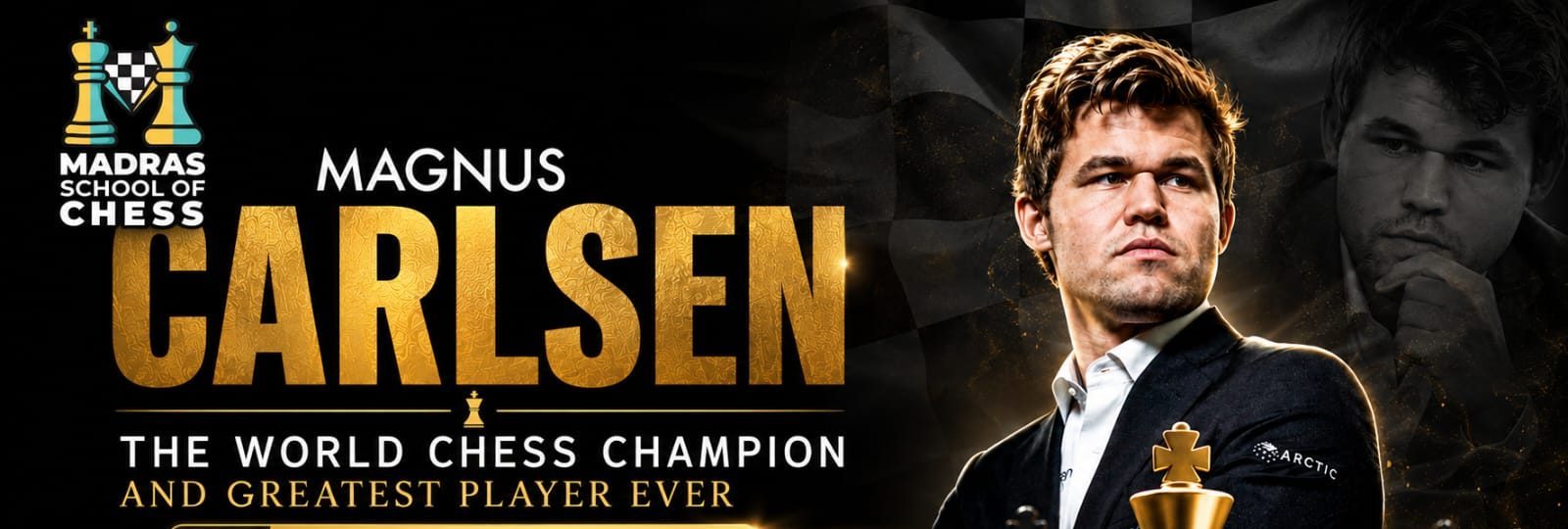
Magnus Carlsen: World Chess Champion and Greatest Player Ever
Jul 11th, 2026
Introduction
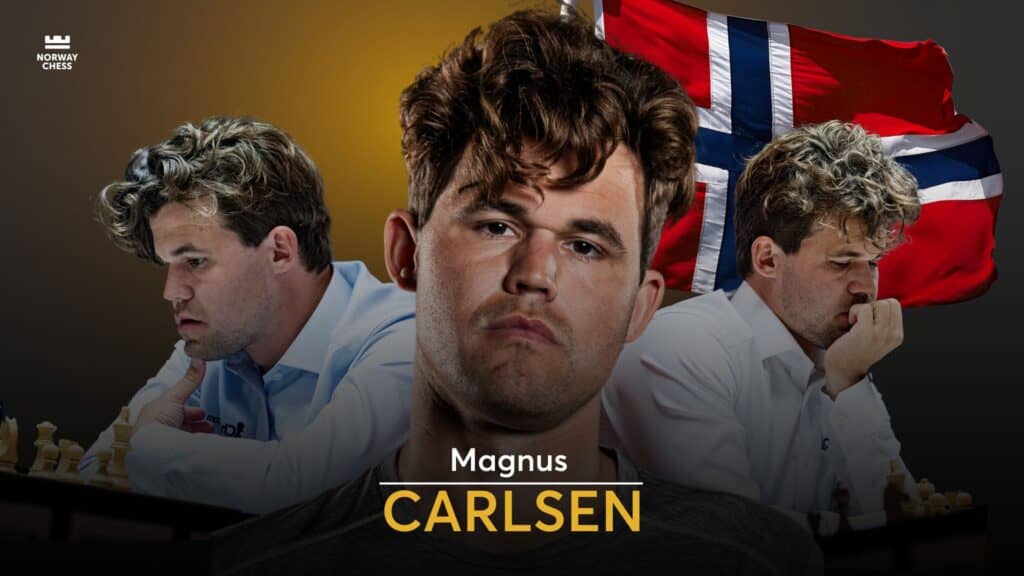
When it comes to modern chess, Magnus Carlsen is a name that stands out above the rest. For over a decade, he has been the dominant force in the chess world, earning admiration for his exceptional consistency, outstanding endgame skills, and remarkable ability to convert balanced positions into winning ones.
Many consider Carlsen the greatest chess player of all time, while others believe that legends such as Garry Kasparov or Bobby Fischer deserve that honor. Regardless of personal opinions, there is no denying the lasting impact Carlsen has had on the game and the way chess is played today.
From a talented young boy in Norway to a multiple-time World Chess Champion and one of the sport’s most influential figures, Magnus Carlsen’s journey is nothing short of extraordinary. In this article, we’ll take a closer look at his early life, rise to the top, major achievements, unique playing style, and the legacy that continues to inspire chess players around the world.
Early Life
Born on November 30, 1990, in Tønsberg, Norway, Magnus Carlsen showed remarkable intellectual abilities from an early age. His exceptional memory allowed him to recall maps, countries, and various facts with impressive accuracy, surprising those around him.
Magnus was introduced to chess by his father when he was five years old. Although the game didn’t capture his interest immediately, he soon became fascinated by its endless strategic possibilities. As his passion for chess grew, so did his skills, and within a few years, his extraordinary talent set him apart from his peers.
Becoming a Grandmaster
Magnus Carlsen’s rise through the world of chess was both rapid and remarkable. In 2004, at just 13 years old, he earned the prestigious Grandmaster title, becoming one of the youngest grandmasters in history at the time.
His exceptional talent and strategic brilliance quickly attracted the attention of the global chess community. Recognizing his immense potential, former World Chess Champion Garry Kasparov later mentored Magnus, helping him refine his skills and accelerate his journey toward becoming one of the greatest chess players of all time.
The Rise to World Number One
Magnus Carlsen’s rise to the top of the chess world was nothing short of extraordinary. In 2010, he became the highest-rated chess player in the world, a distinction he maintained for many years through his consistent excellence.
What set Carlsen apart was his distinctive playing style. Rather than relying heavily on complex opening preparation, he preferred simple, solid openings and trusted his exceptional positional understanding to outplay opponents as the game progressed.
His remarkable ability to convert seemingly equal positions into winning ones earned him the nickname “The Endgame King.” With unmatched patience, precision, and confidence, Carlsen consistently found opportunities where others saw none, making him one of the toughest players in chess history to defeat.
World Championship Success
Magnus Carlsen reached the pinnacle of the chess world in 2013 when he defeated Viswanathan Anand to become the 16th World Chess Champion. His commanding performance marked the beginning of a remarkable era in modern chess.
Over the next several years, Carlsen successfully defended his world title against some of the game’s strongest competitors, including Viswanathan Anand, Sergey Karjakin, Fabiano Caruana, and Ian Nepomniachtchi. Each championship match highlighted not only his exceptional chess skills but also his resilience, composure, and ability to perform under intense pressure.
After nearly a decade of dominating classical chess, Carlsen decided not to defend his World Championship title in 2023, stating that the championship cycle no longer inspired him. Despite stepping away from the title, he continues to compete at the highest level, consistently proving why he remains one of the world’s greatest chess players.
Playing Style
Magnus Carlsen is admired around the world for his exceptional versatility and deep understanding of chess. His ability to adapt to any position makes him one of the most complete players in the history of the game.
When opportunities arise, Carlsen attacks with precision and creativity. In difficult positions, he defends with remarkable accuracy and composure. Above all, he has an extraordinary talent for converting even the smallest advantages into winning positions.
Rather than depending on flashy sacrifices or risky tactics, Carlsen builds his success through outstanding fundamentals. His victories are often the result of superior piece coordination, a strong pawn structure, exceptional endgame technique, endless patience, and remarkable psychological resilience.
Many top grandmasters have described facing Magnus as mentally exhausting because he constantly searches for even the slightest opportunity to improve his position and pressure his opponent until the very end.
Records and Achievements
Throughout his extraordinary career, Magnus Carlsen has built an impressive collection of records and accomplishments, cementing his place among the greatest chess players of all time.
His most notable achievements include becoming the World Chess Champion, winning multiple World Rapid and World Blitz Championships, and achieving the highest classical chess rating in history (2882). He also holds one of the longest unbeaten streaks in elite-level chess and has received multiple Chess Oscar awards in recognition of his outstanding performances.
In addition, Carlsen has won numerous prestigious tournaments across the globe, consistently proving his dominance against the world’s strongest players. His ability to remain at the top of international chess for over a decade is a remarkable achievement that very few players in history have matched.
Beyond Competitive Chess
Magnus Carlsen’s influence extends far beyond tournament halls. Through his online presence, live streams, and participation in major internet chess events, he has played a significant role in bringing the game to a global audience.
His engaging style and consistent success have inspired millions of people, especially young players, to learn and enjoy chess. By making elite-level competition more accessible and entertaining, Carlsen has helped reshape the public perception of the game.
Whether competing in traditional classical tournaments or thrilling fans with fast-paced rapid and blitz games online, Magnus continues to captivate audiences worldwide and remains one of the most influential ambassadors for chess today.
Why Many People Consider Magnus Carlsen the GOAT
The debate over the greatest chess player of all time is one that continues to inspire discussion among chess enthusiasts. Every era has produced legendary champions, each leaving a lasting mark on the game.
Supporters of Garry Kasparov often emphasize his extraordinary dominance throughout the 1980s and 1990s, while admirers of Bobby Fischer highlight his historic World Championship triumph in 1972. Other chess legends, including José Raúl Capablanca, Anatoly Karpov, and Mikhail Tal, are also celebrated for their unique contributions to the sport.
What sets Magnus Carlsen apart is his remarkable combination of achievements and consistency. He has demonstrated exceptional versatility across classical, rapid, and blitz chess, maintained elite-level performance for well over a decade, and reached the highest classical rating in chess history. His ability to perform at the highest level across every format, combined with his longevity and sustained success, has led many modern chess fans and experts to regard him as one of the greatest players the game has ever seen.
Fun Facts About Magnus Carlsen
Magnus Carlsen’s remarkable career is filled with fascinating achievements and interests beyond the chessboard. Here are a few interesting facts about him:
He earned the prestigious Grandmaster title at just 13 years of age, becoming one of the youngest grandmasters in history.
His peak classical rating of 2882 remains the highest ever achieved in chess.
Throughout his career, he has defeated nearly every elite grandmaster of his generation.
Outside of chess, Magnus enjoys football, fantasy sports, and poker.
He has also appeared in commercials, documentaries, and media productions, helping bring chess to a broader audience.
Final Thoughts
Magnus Carlsen’s journey is a remarkable example of natural talent, relentless dedication, and an unwavering passion for excellence. From a curious young boy in Norway to one of the most celebrated chess players in history, he has inspired millions of players around the world.
Whether you consider him the greatest chess player of all time or simply one of the greatest, there is no denying his extraordinary impact on the game. His innovative style, consistent success, and record-breaking achievements have shaped modern chess and inspired a new generation of enthusiasts.
As future champions rise through the ranks, Magnus Carlsen’s games will continue to serve as invaluable lessons for anyone striving to master the game at the highest level.
♟️ Ready to Level Up Your Game? 𝐉𝐨𝐢𝐧 𝐌𝐚𝐝𝐫𝐚𝐬 𝐒𝐜𝐡𝐨𝐨𝐥 𝐨𝐟 𝐂𝐡𝐞𝐬𝐬 𝐭𝐨 𝐝𝐞𝐟𝐞𝐚𝐭 𝐲𝐨𝐮𝐫 𝐨𝐩𝐩𝐨𝐧𝐞𝐧𝐭 𝐰𝐢𝐭𝐡 𝐛𝐫𝐢𝐥𝐥𝐢𝐚𝐧𝐜𝐞 𝐚𝐧𝐝 𝐩𝐫𝐞𝐜𝐢𝐬𝐢𝐨𝐧!
Odisha State Under-11 Chess Champion 2026: AIM Raghav Biswal’s Inspiring Success Story | Madras School of Chess
Jun 27th, 2026
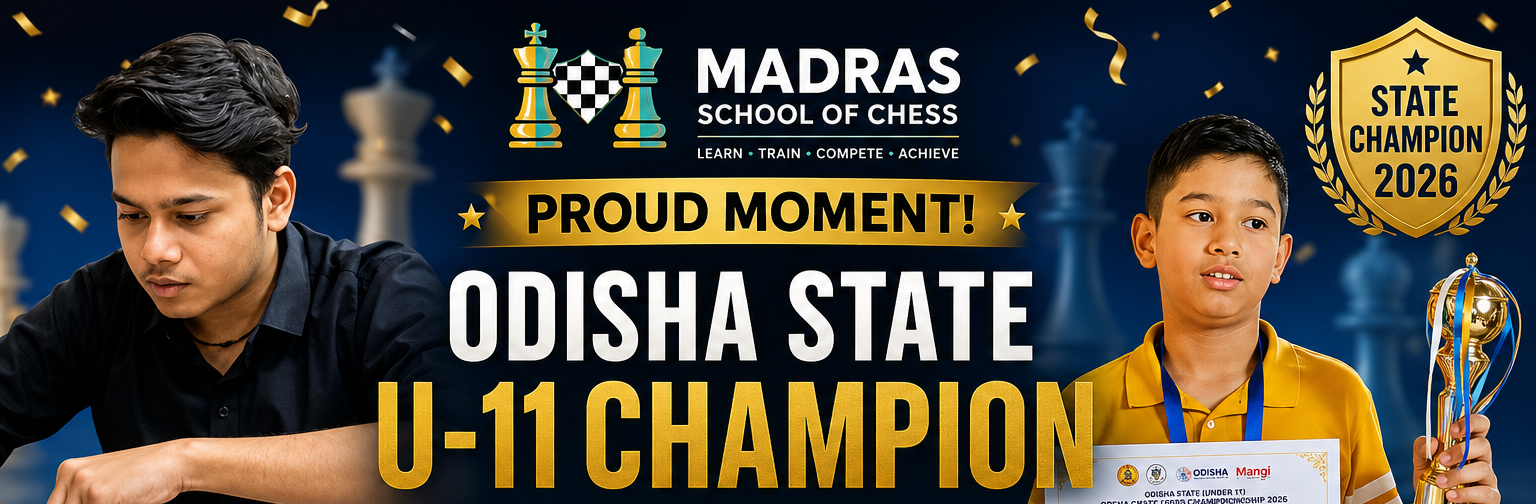
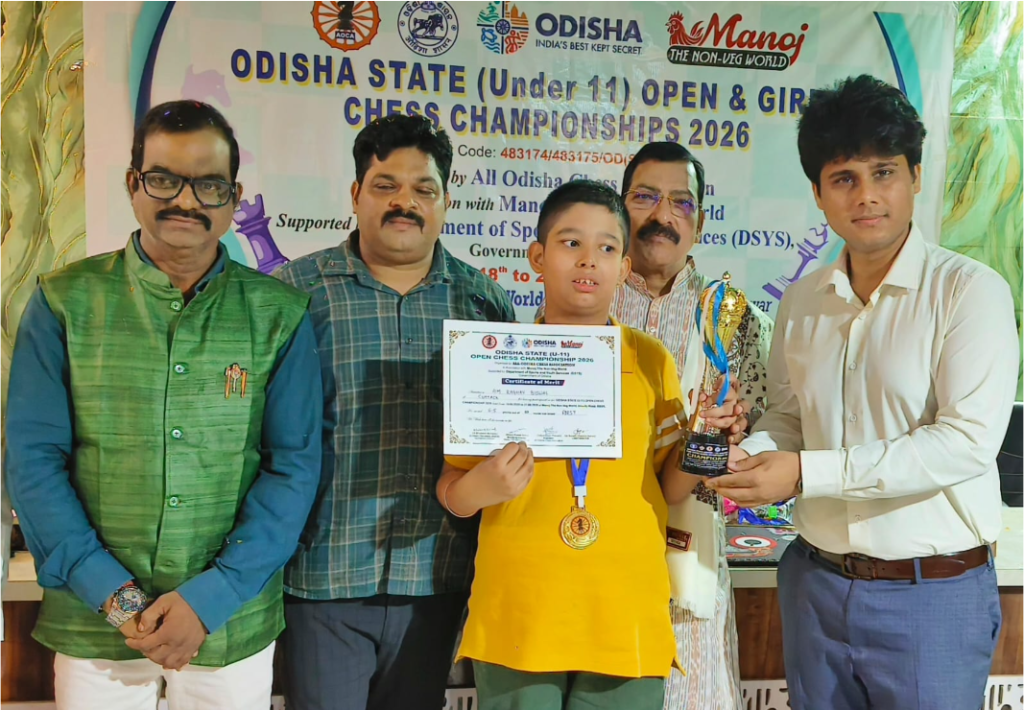
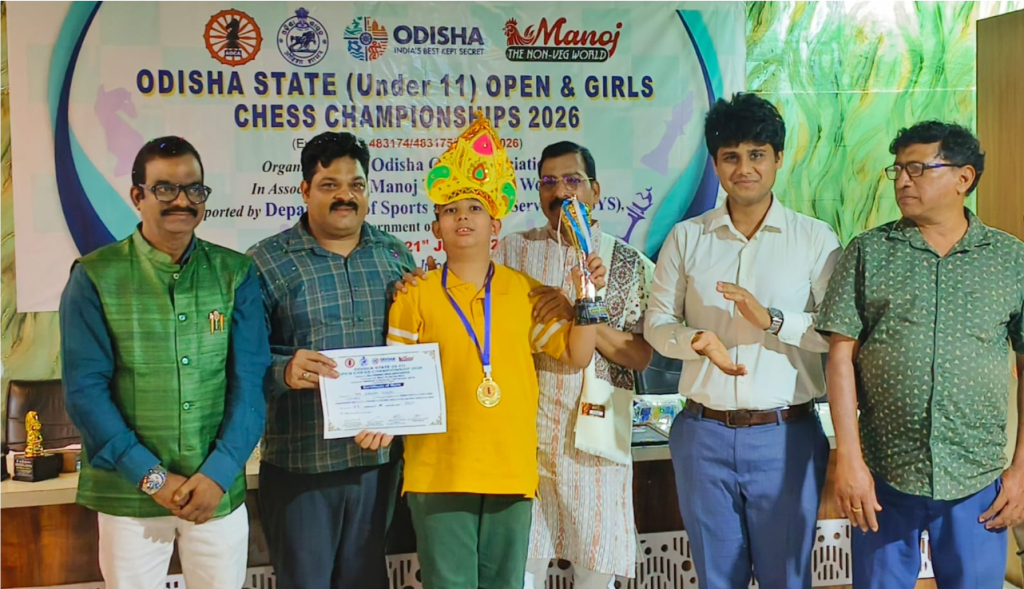
Raghav Biswal Wins Odisha State Under-11 Chess Championship 2026
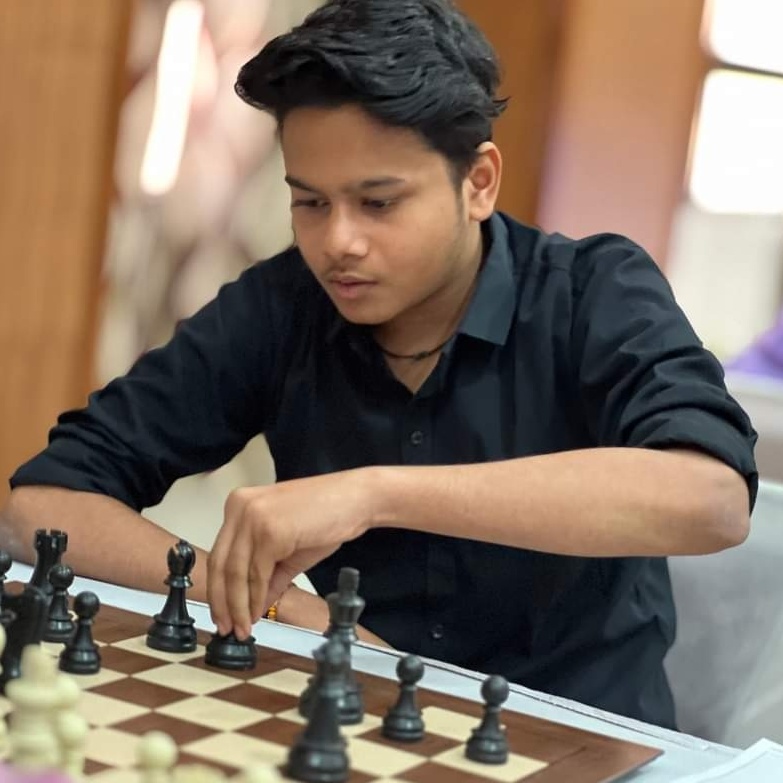
The Madras School of Chess (MSC) proudly congratulates AIM Raghav Biswal on his remarkable victory at the Odisha State Under-11 Open & Girls Chess Championship 2026.
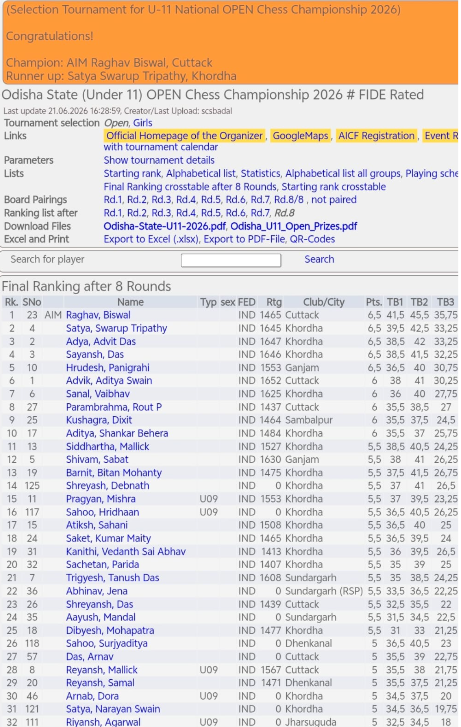
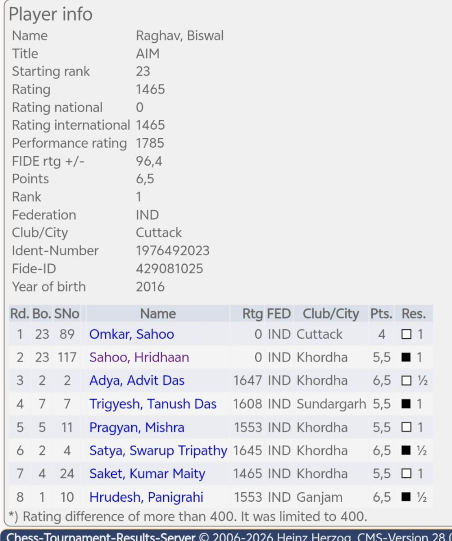
Competing against the state’s strongest young chess talents, Raghav delivered an outstanding performance to emerge as the Odisha State Under-11 Open Champion. Entering the tournament with a FIDE rating of 1465, he scored an impressive 6.5 points out of 8 rounds, secured 1st place, and achieved a phenomenal performance rating of 1785, gaining +96.4 FIDE rating points.
This exceptional result has also earned Raghav qualification for the National Under-11 Open Chess Championship 2026, marking another significant milestone in his rapidly growing chess career.
A Journey Built on Dedication and Expert Coaching
Behind every champion is a combination of hard work, discipline, and quality coaching.
Raghav has been training under the expert guidance of Coach Vrashank from the Madras School of Chess Academy, where structured training, advanced opening preparation, tactical improvement, endgame mastery, and tournament-oriented practice have played a key role in shaping his success.
His championship victory reflects not only his immense talent and determination but also the effectiveness of a professional training system designed to develop competitive chess players.
Tournament Highlights
Event: Odisha State Under-11 Open & Girls Chess Championship 2026
Champion: AIM Raghav Biswal
Score: 6.5/8
Final Rank: 1st Place
Starting Rating: 1465
Performance Rating: 1785
FIDE Rating Gain: +96.4
Qualification: National Under-11 Open Chess Championship 2026
Madras School of Chess – Where Champions Are Created
Success stories like Raghav’s are a testament to the training philosophy at the Madras School of Chess.
Our academy focuses on developing complete chess players through:
FIDE-rated and experienced coaches
Personalized training plans
Tactical and positional mastery
Opening preparation and endgame training
Regular practice tournaments
Performance analysis after every event
Online and offline classes for players across India and abroad
Proven success in producing district, state, national, and international champions
Whether your child is taking the first step into chess or preparing for elite-level tournaments, Madras School of Chess provides the right environment to unlock their full potential.
Begin Your Champion’s Journey Today!
Every Grandmaster was once a beginner. Every champion started with a single move.
If you’re looking for the best chess academy in Chennai or a trusted platform for professional chess coaching anywhere in India, Madras School of Chess is the destination where talent meets excellence.
Join the Madras School of Chess today and train with expert coaches who build champions—not just players.
Madras School of Chess – Learn. Compete. Achieve. Become the Next Champion.
Why “Improve Your Worst Piece” Is Often Not Enough
Jun 10th, 2026
One of the most common pieces of advice in chess is: “Improve your worst piece.” It is a principle taught by coaches around the world because, in many positions, it works remarkably well. If one of your pieces is inactive, trapped, or poorly placed, improving it often leads to better coordination and a stronger overall position. However, many players make the mistake of treating this principle as a universal rule rather than a guideline. Chess is far more complex than that.
The real challenge begins once players move beyond the opening phase. In the opening, plans are usually straightforward develop your pieces, control the center, and safeguard your king. But as the game progresses, positions become richer and more complicated. Suddenly, there are multiple plans available. You might improve a knight, gain space with a pawn advance, create pressure on a weak square, launch an attack against the king, or restrict an opponent’s active piece. The question is no longer whether a move is good; it is which good move matters most at that particular moment.
This is where many improving players struggle. They study tactics, strategy, pawn structures, and positional concepts, yet they still feel uncertain during real games. The reason is not a lack of knowledge. The problem is that several ideas often seem equally reasonable. Improving the worst piece may be one good idea, but another plan may address a far more urgent need. A player who spends several moves repositioning a knight might suddenly realize that the opponent has gained control of an important file, built a dangerous attack, or seized a critical strategic advantage elsewhere on the board.
Strong players understand something that many club players overlook: every position has a dominant factor. Sometimes king safety is the most important issue. In other situations, activity, space, pawn structure, or initiative takes priority. The strongest move is often the one that addresses the most urgent problem, not necessarily the one that follows the most famous principle. This ability to identify priorities is what separates advanced players from those who simply apply chess rules mechanically.
Consider a position where your knight is clearly your worst piece. Improving it appears logical. But what if your opponent is preparing a kingside attack? What if there is a tactical opportunity available right now? Spending three moves improving that knight may be strategically correct in theory, yet practically disastrous because the position was demanding immediate action elsewhere. Chess rewards players who understand what the position is asking rather than those who blindly follow principles.
This is why positional chess is often described as a battle of judgment. Principles provide direction, but they do not make decisions for you. A good player knows the rules. A strong player knows when a different factor is more important than the rule itself. The ability to evaluate a position, recognize its critical features, and prioritize the right plan is one of the most valuable skills a chess player can develop.
The next time you are tempted to improve your worst piece, pause for a moment and ask yourself a deeper question: “What is the most important thing happening on the board right now?” Sometimes the answer will indeed be improving that piece. But other times, the position may be demanding an attack, a defensive resource, a tactical strike, or a strategic transformation. Learning to recognize that difference is where true chess improvement begins.
At Madras School of Chess, we encourage students to think beyond memorized principles and develop genuine positional understanding. Chess is not about following rules automatically—it is about learning how to evaluate, prioritize, and make the right decision when multiple good choices are available. That skill not only creates stronger chess players but also stronger thinkers.
♟️ Ready to Level Up Your Game? 𝐉𝐨𝐢𝐧 𝐌𝐚𝐝𝐫𝐚𝐬 𝐒𝐜𝐡𝐨𝐨𝐥 𝐨𝐟 𝐂𝐡𝐞𝐬𝐬 𝐭𝐨 𝐝𝐞𝐟𝐞𝐚𝐭 𝐲𝐨𝐮𝐫 𝐨𝐩𝐩𝐨𝐧𝐞𝐧𝐭 𝐰𝐢𝐭𝐡 𝐛𝐫𝐢𝐥𝐥𝐢𝐚𝐧𝐜𝐞 𝐚𝐧𝐝 𝐩𝐫𝐞𝐜𝐢𝐬𝐢𝐨𝐧!
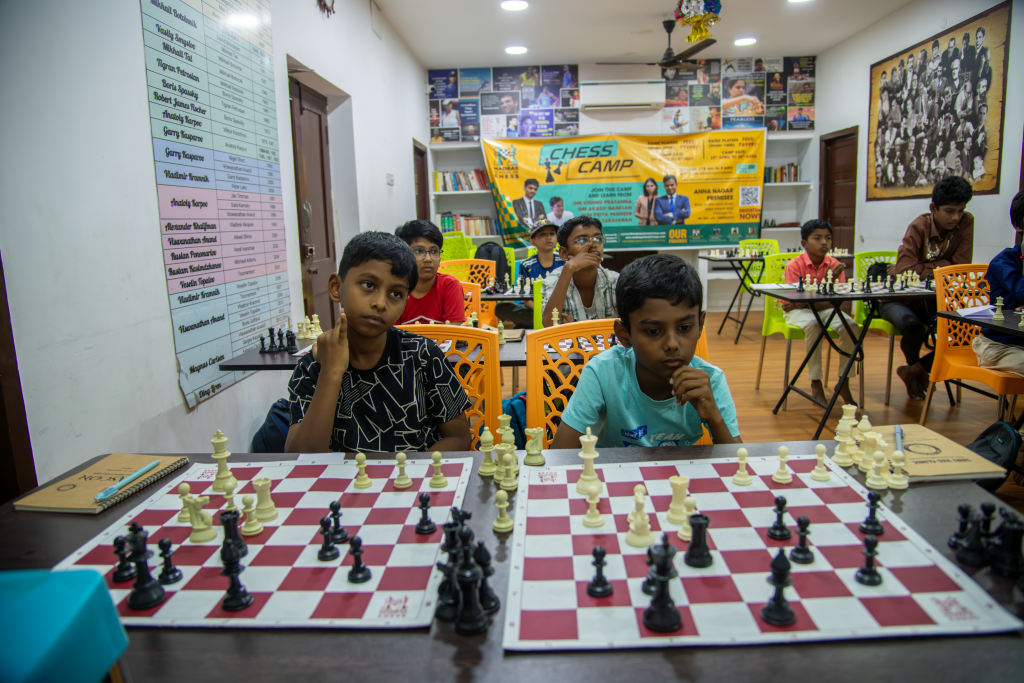
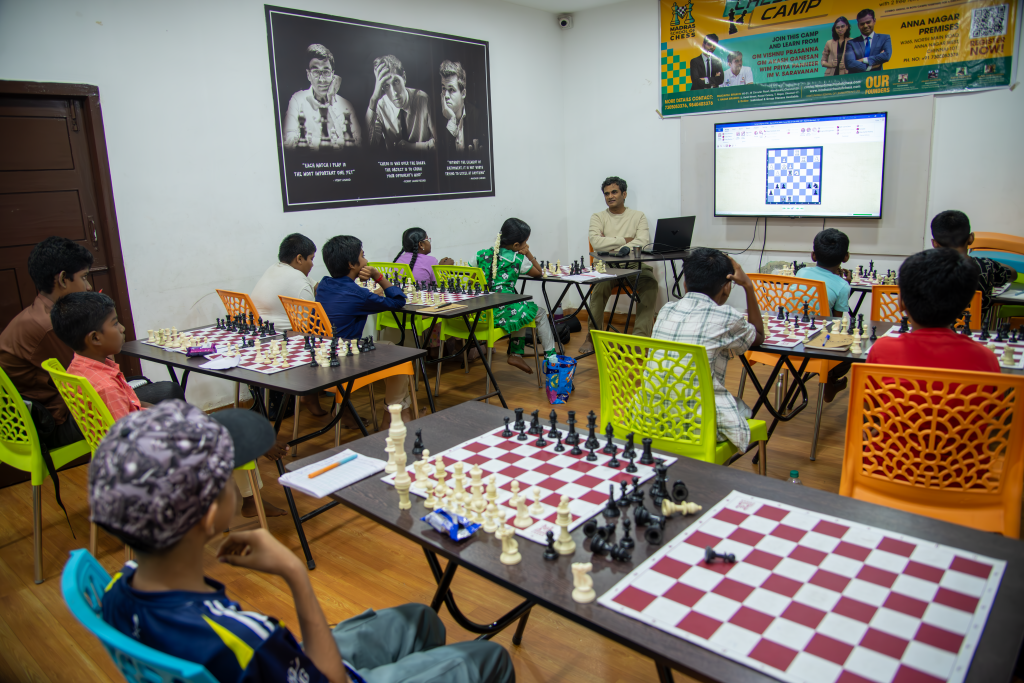
Best Summer Chess Camp in Chennai for Kids | Madras School of Chess
May 26th, 2026
Gain Your Child’s Strategic Thinking This Summer with Chess
In today’s fast-moving digital world, parents are constantly searching for activities that not only engage children but also improve their focus, discipline, confidence, and decision-making skills. Chess has become one of the most powerful learning tools for kids, helping them sharpen their minds while enjoying the thrill of competition and creativity.
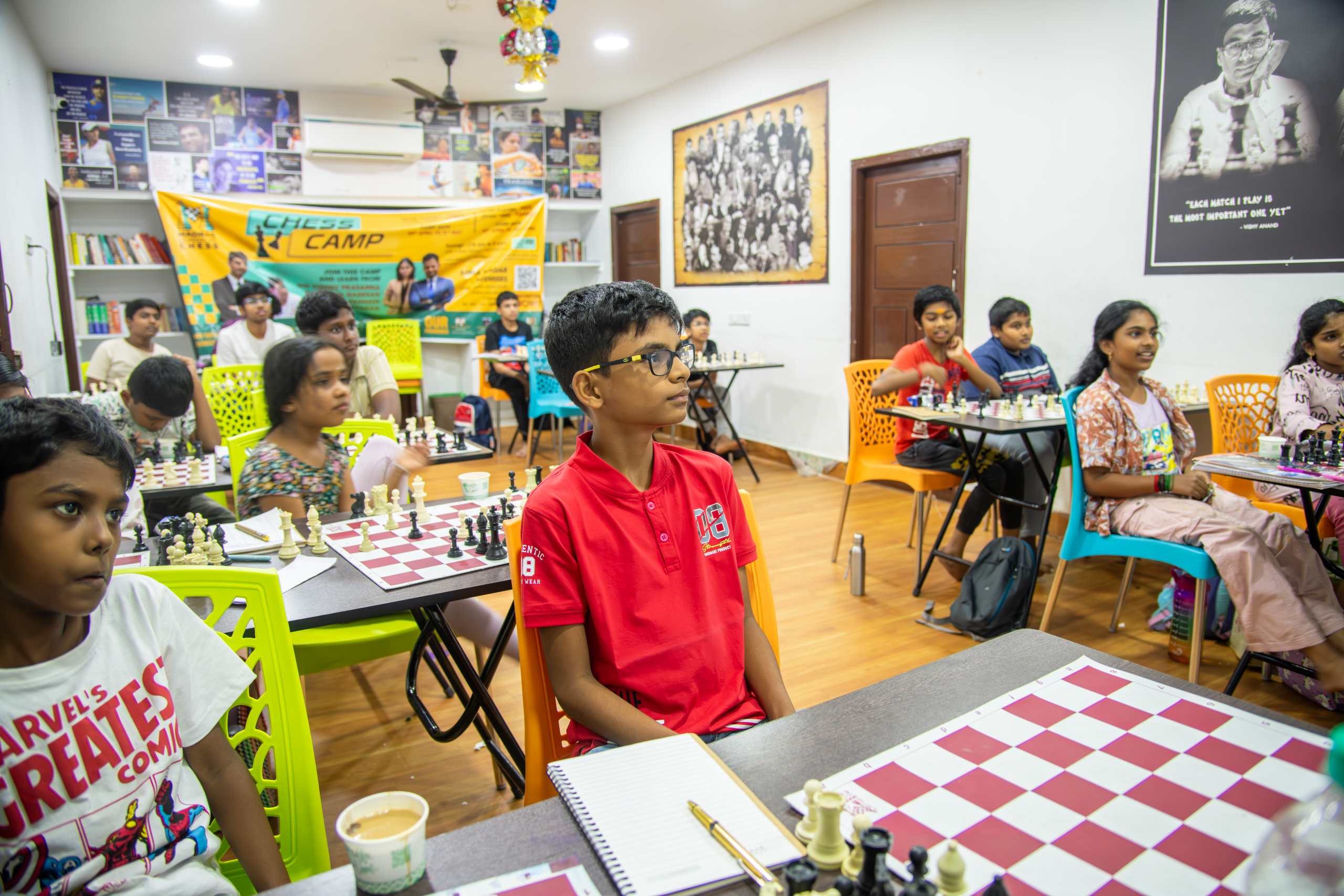
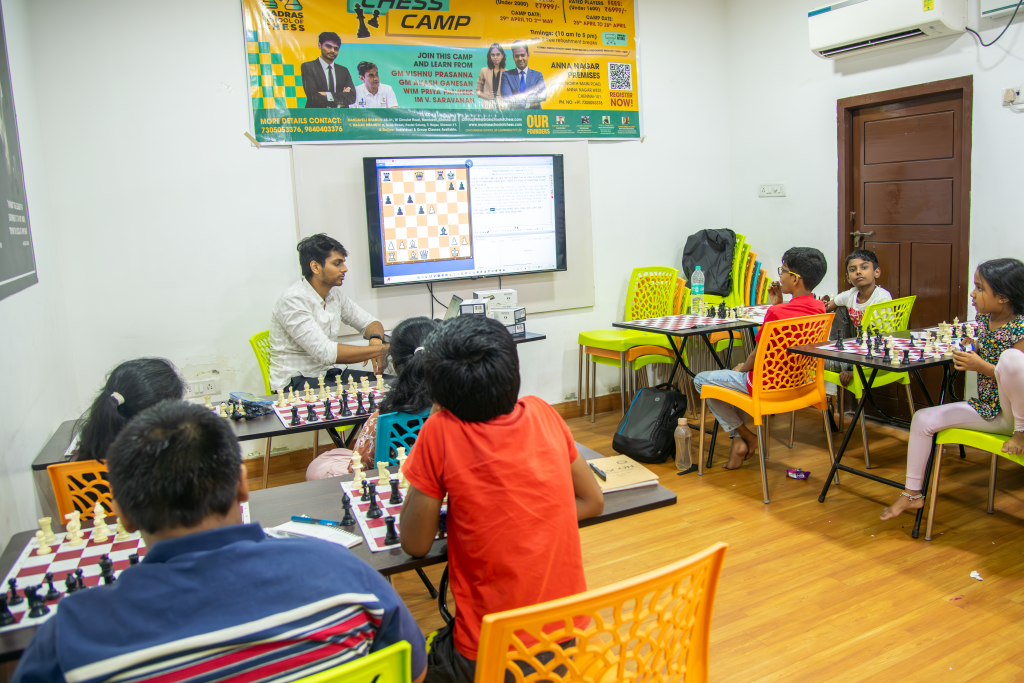
At Madras School of Chess (MSC), we believe every child has the potential to think like a champion. Our Summer Chess Camp for Unrated Players is specially designed to introduce young learners to the beautiful world of chess through structured training, interactive sessions, practical gameplay, and inspiring mentorship.
Why Chess is One of the Best Skills for Children?
Chess is much more than moving pieces on a board. It teaches children how to think ahead, solve problems calmly, stay patient under pressure, and make confident decisions. Many parents notice improvements in:
Concentration and memory
Academic performance
Logical and analytical thinking
Creativity and imagination
Sportsmanship and discipline
Self-confidence and patience
The lessons learned through chess often extend far beyond tournaments and classrooms. Children begin to approach challenges with confidence and clarity in everyday life.
Learn from Experienced Coaches and Inspiring Mentors
At Madras School of Chess, students are guided by passionate coaches who focus on both chess improvement and personal growth. Our training methods are designed to make learning enjoyable, interactive, and practical for every student.
Young players get exposure to:
Opening principles and tactical ideas
Checkmate patterns and combinations
Strategic planning and positional understanding
Tournament-style practice games
Real-game analysis and guided learning
Confidence-building activities
The academy’s teaching environment encourages students to ask questions, think independently, and develop a true love for the game.
A Perfect Chess Camp for Beginners and Aspiring Champions
Whether your child is touching the chessboard for the first time or already showing interest in competitive chess, MSC creates the perfect atmosphere for growth. Our summer camp focuses on making chess exciting, easy to understand, and motivating for children of all age groups.
Students learn through:
Interactive classroom sessions
Friendly practice matches
Puzzle-solving activities
Fun chess challenges
Group learning experiences
Personalized guidance from trainers
The energy inside the camp is filled with enthusiasm, curiosity, and the excitement of learning something new every day.
Building Future Champions Through Smart Learning
Madras School of Chess has become a trusted destination for parents looking for professional chess coaching in Chennai. With students training from different branches and online platforms, MSC continues to inspire young minds to dream bigger and think smarter.
Many students who started as beginners have gone on to participate confidently in tournaments, improve their ratings, and develop a strong passion for chess. Every move they learn becomes a step toward discipline, confidence, and achievement.
Join the Growing Chess Community at MSC
Chess is not just a game at MSC , it’s a journey of learning, growth, friendship, and achievement. Our summer camp creates a positive environment where children enjoy learning while building valuable life skills.
If you are looking for the best chess academy in Chennai, a place where children can learn from experienced coaches and grow with confidence, Madras School of Chess is the right choice.
♟️ Madras School of Chess
Branches: T. Nagar | Anna Nagar | Mandaveli | Online Classes Available 📞 Call: +91 98404 03376 Programs: Individual & Group Coaching for Kids Website:www.madrasschoolofchess.com
Train Smart. Think Sharp. Play Like a Champion.
Checkmate in Silence: The Chess Final That Turned Into a Murder Mystery | Madras School of Chess
May 11th, 2026
The hall was silent in the way only a chess tournament can be silent.
Not normal silence. Heavy silence. The kind where even the sound of a chess clock feels loud.
More than four hundred people sat frozen, watching two legends battle across sixty-four squares. Cameras rolled quietly. Commentators whispered behind glass walls. Nobody blinked for too long because one move could change history.
After nearly four hours of play, Grandmaster Viktor Karelin finally leaned forward.
Slowly.
Carefully.
He lifted his rook.
The piece slid across the board with a soft click.
“Checkmate.”
For a second, nobody reacted. Then the audience exploded into applause. After years of heartbreak and failed championship attempts, Karelin had finally defeated his greatest rival, Marcus Vale, the king of modern chess.
Karelin stood up with a tired smile and stretched out his hand for the traditional handshake.
He took one step.
Then collapsed.
Dead before he hit the floor.
The championship hall instantly transformed from a sporting arena into a crime scene.
And the most terrifying part?
The rook he touched was poisoned.
A Killer Who Understood Chess
Police quickly discovered something horrifying. Only one chess piece contained poison. Not the board. Not the table. Not the other pieces.
Only the rook.
That meant this was not a random attack.
Whoever planned it knew exactly which piece Karelin would touch at the exact final moment of the game. And if you know anything about chess, that should sound impossible.
A single match contains millions of possible moves. Even world champions cannot predict the ending with complete certainty.
So how could somebody know the rook would deliver checkmate hours before it happened?
That question changed the entire investigation.
Because now the detectives were not just looking for a murderer.
They were looking for someone who understood chess deeply enough to script an ending.
The Match Felt Wrong From the Beginning
When investigators reviewed the footage, strange details began appearing everywhere.
Karelin arrived unusually early and spent several minutes alone at the board, staring at the pieces without moving. Witnesses later described him as calm… almost too calm. Like a man who already knew how the story would end.
Then came the weirdest part.
During the game, Karelin avoided using his rook completely. Analysts reviewing the match were shocked. Several powerful attacking opportunities were ignored simply to keep the rook untouched.
For nearly four hours, the rook sat quietly like it was waiting for something.
Or someone.
Across the table, Marcus Vale behaved strangely too. Normally aggressive and fearless, he suddenly avoided critical attacking lines. At one point, he even played a move that allowed a forced checkmate sequence.
Commentators called it a blunder.
But detectives saw something else.
Not a mistake.
A decision.
Five People. Five Secrets.
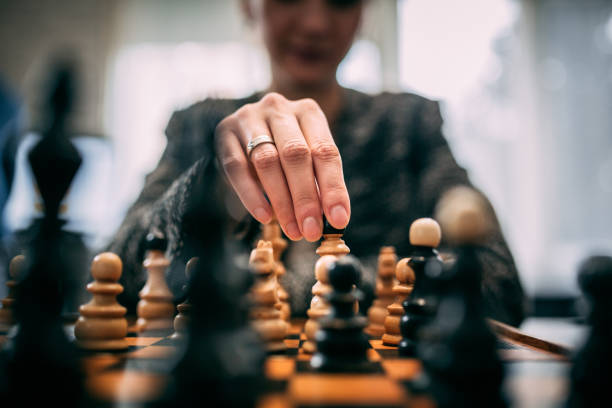
Woman playing chess
As the investigation deepened, every person near the board became suspicious.
The tournament organizer had massive gambling debts and mysteriously disappeared backstage before the match.
The veteran chess journalist claimed Karelin warned him earlier that morning:
“Today’s ending will be unforgettable.”
The coach who trained Karelin for thirty years had recently learned he was about to be replaced after the tournament ended.
Karelin’s ex-wife appeared at the venue with Marcus Vale himself, creating headlines before the match even began.
And then there was Vale.
The reigning champion.
The man who looked away just before Karelin touched the poisoned rook.
Not shocked.
Not confused.
Almost like he already knew what was about to happen.
The Real Twist
Days later, detectives gathered everyone back inside the empty championship hall.
The chessboard remained exactly where it had been during the final game. One square sat empty where the poisoned rook once stood.
The lead investigator finally revealed the truth.
Everyone had misunderstood the rook.
Most people think the rook represents a castle or tower. Something defensive. Something still.
But historically, the rook came from ancient war chariots — fast, aggressive weapons designed to destroy enemies from a distance.
That changed the meaning of everything.
The rook was never protection.
It was always the weapon.
And suddenly the investigators realized the horrifying truth:
The killer did not poison the rook to win the championship.
The championship itself was built to lead to the poisoned rook.
The entire game had been planned long before the players sat down at the board.
Why Chess and Mystery Work So Perfectly Together
Chess already feels like a thriller.
Every move hides an idea. Every sacrifice hides intention. Every calm face hides pressure.
That’s why chess stories have become so addictive online. They mix psychology, suspense, strategy, ego, revenge, and human emotion into one perfect battle of minds.
At Madras School of Chess, we believe chess is more than pieces and positions. It teaches imagination, observation, patience, and the ability to see what others miss.
Because sometimes the deadliest move on the board is not the one you notice.
It’s the one you never questioned.
♟️ Ready to Level Up Your Game? 𝐉𝐨𝐢𝐧 𝐌𝐚𝐝𝐫𝐚𝐬 𝐒𝐜𝐡𝐨𝐨𝐥 𝐨𝐟 𝐂𝐡𝐞𝐬𝐬 𝐭𝐨 𝐝𝐞𝐟𝐞𝐚𝐭 𝐲𝐨𝐮𝐫 𝐨𝐩𝐩𝐨𝐧𝐞𝐧𝐭 𝐰𝐢𝐭𝐡 𝐛𝐫𝐢𝐥𝐥𝐢𝐚𝐧𝐜𝐞 𝐚𝐧𝐝 𝐩𝐫𝐞𝐜𝐢𝐬𝐢𝐨𝐧!
















 Chat with us