Best Summer Chess Camp in Chennai for Kids | Madras School of Chess
May 26th, 2026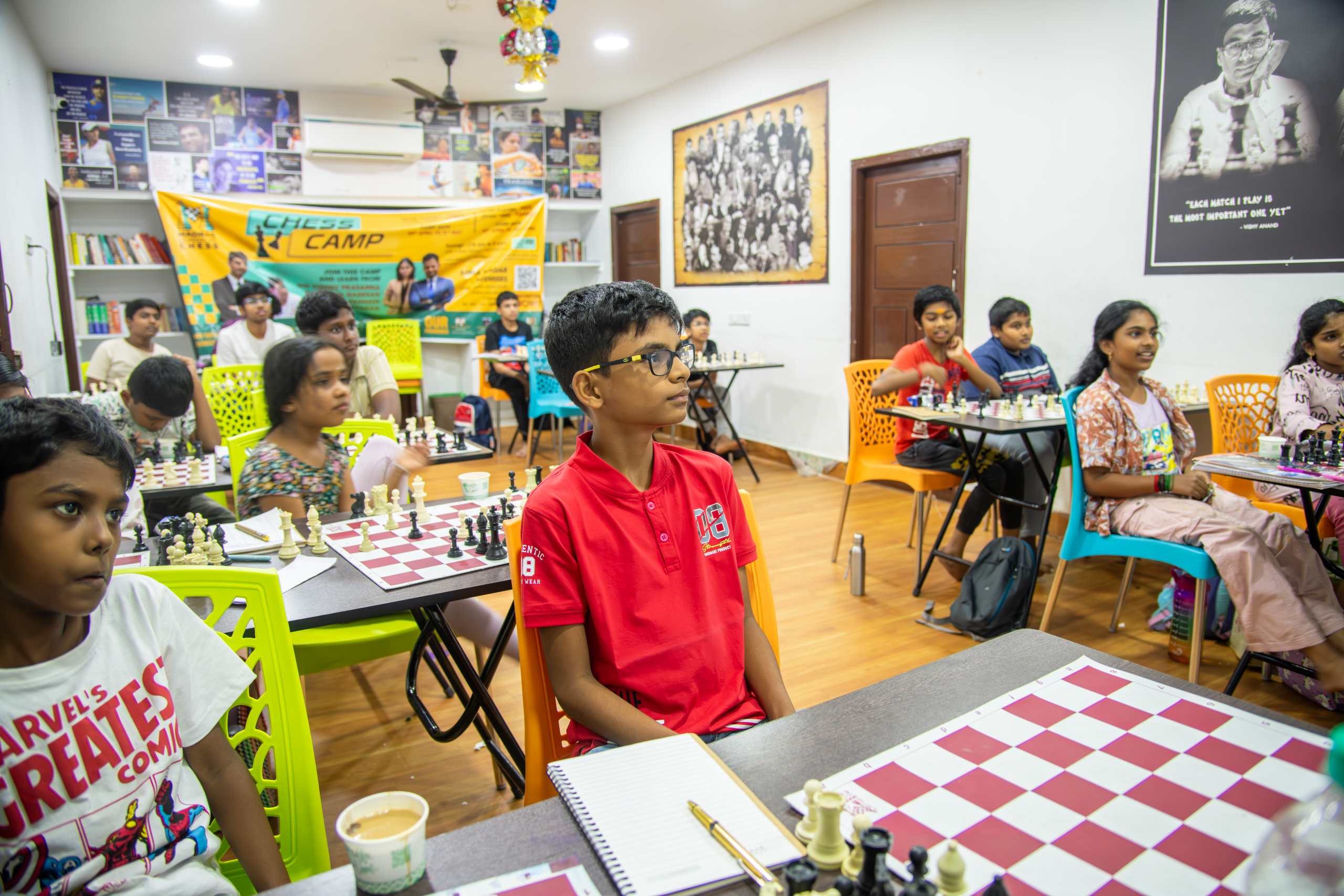
Gain Your Child’s Strategic Thinking This Summer with Chess
In today’s fast-moving digital world, parents are constantly searching for activities that not only engage children but also improve their focus, discipline, confidence, and decision-making skills. Chess has become one of the most powerful learning tools for kids, helping them sharpen their minds while enjoying the thrill of competition and creativity.
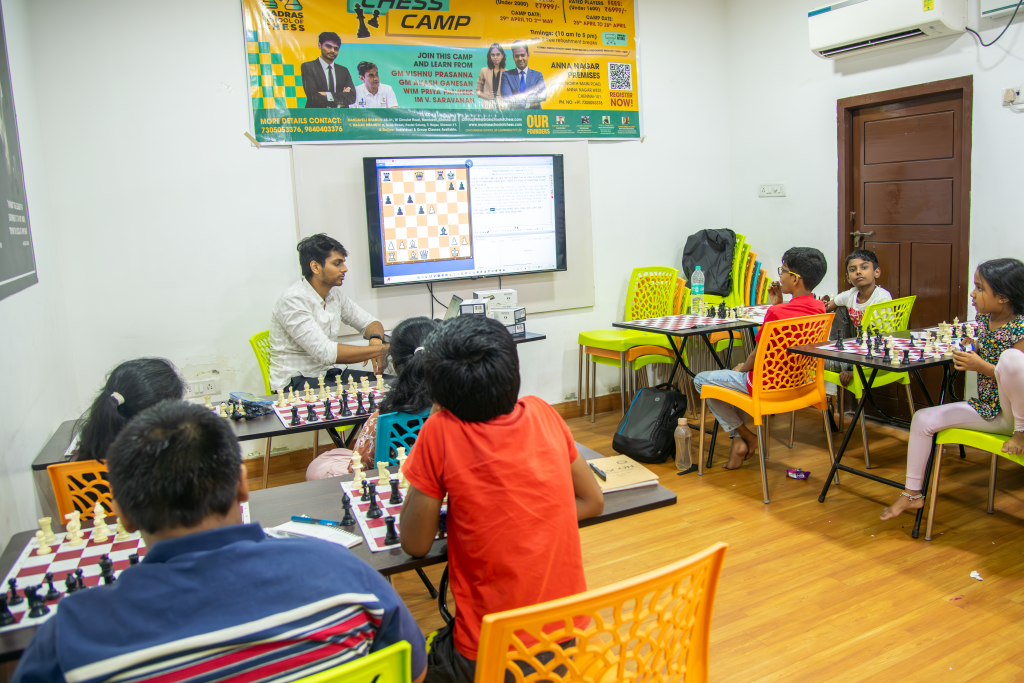
At Madras School of Chess (MSC), we believe every child has the potential to think like a champion. Our Summer Chess Camp for Unrated Players is specially designed to introduce young learners to the beautiful world of chess through structured training, interactive sessions, practical gameplay, and inspiring mentorship.
Why Chess is One of the Best Skills for Children?
Chess is much more than moving pieces on a board. It teaches children how to think ahead, solve problems calmly, stay patient under pressure, and make confident decisions. Many parents notice improvements in:
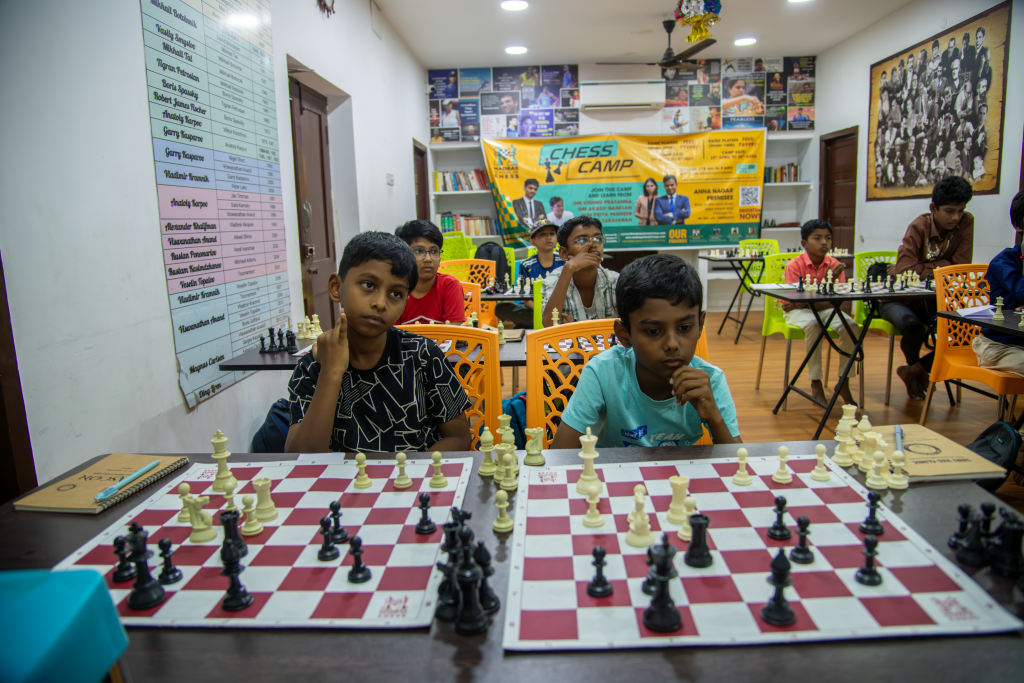
- Concentration and memory
- Academic performance
- Logical and analytical thinking
- Creativity and imagination
- Sportsmanship and discipline
- Self-confidence and patience
The lessons learned through chess often extend far beyond tournaments and classrooms. Children begin to approach challenges with confidence and clarity in everyday life.
Learn from Experienced Coaches and Inspiring Mentors
At Madras School of Chess, students are guided by passionate coaches who focus on both chess improvement and personal growth. Our training methods are designed to make learning enjoyable, interactive, and practical for every student.

Young players get exposure to:
- Opening principles and tactical ideas
- Checkmate patterns and combinations
- Strategic planning and positional understanding
- Tournament-style practice games
- Real-game analysis and guided learning
- Confidence-building activities
The academy’s teaching environment encourages students to ask questions, think independently, and develop a true love for the game.
A Perfect Chess Camp for Beginners and Aspiring Champions
Whether your child is touching the chessboard for the first time or already showing interest in competitive chess, MSC creates the perfect atmosphere for growth. Our summer camp focuses on making chess exciting, easy to understand, and motivating for children of all age groups.
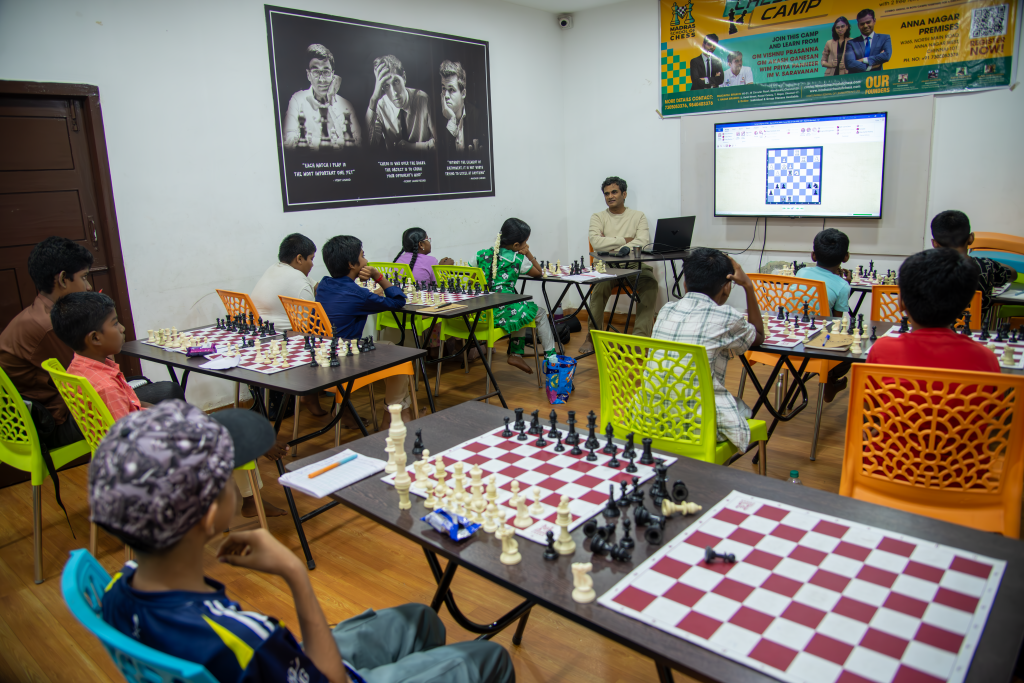
Students learn through:
- Interactive classroom sessions
- Friendly practice matches
- Puzzle-solving activities
- Fun chess challenges
- Group learning experiences
- Personalized guidance from trainers
The energy inside the camp is filled with enthusiasm, curiosity, and the excitement of learning something new every day.
Building Future Champions Through Smart Learning
Madras School of Chess has become a trusted destination for parents looking for professional chess coaching in Chennai. With students training from different branches and online platforms, MSC continues to inspire young minds to dream bigger and think smarter.
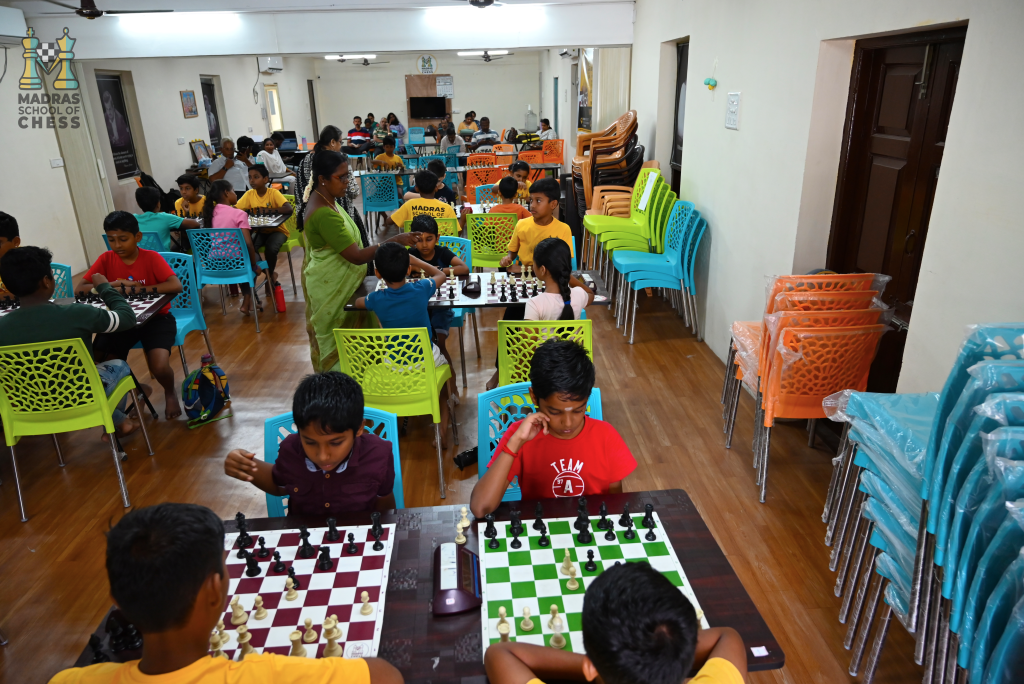
Many students who started as beginners have gone on to participate confidently in tournaments, improve their ratings, and develop a strong passion for chess. Every move they learn becomes a step toward discipline, confidence, and achievement.
Join the Growing Chess Community at MSC
Chess is not just a game at MSC , it’s a journey of learning, growth, friendship, and achievement. Our summer camp creates a positive environment where children enjoy learning while building valuable life skills.
If you are looking for the best chess academy in Chennai, a place where children can learn from experienced coaches and grow with confidence, Madras School of Chess is the right choice.
♟️ Madras School of Chess
Branches: T. Nagar | Anna Nagar | Mandaveli | Online Classes Available 📞 Call: +91 98404 03376
Programs: Individual & Group Coaching for Kids
Website: www.madrasschoolofchess.com
Train Smart. Think Sharp. Play Like a Champion.
Checkmate in Silence: The Chess Final That Turned Into a Murder Mystery | Madras School of Chess
May 11th, 2026
The hall was silent in the way only a chess tournament can be silent.

Not normal silence. Heavy silence. The kind where even the sound of a chess clock feels loud.
More than four hundred people sat frozen, watching two legends battle across sixty-four squares. Cameras rolled quietly. Commentators whispered behind glass walls. Nobody blinked for too long because one move could change history.
After nearly four hours of play, Grandmaster Viktor Karelin finally leaned forward.
Slowly.
Carefully.
He lifted his rook.
The piece slid across the board with a soft click.
“Checkmate.”
For a second, nobody reacted. Then the audience exploded into applause. After years of heartbreak and failed championship attempts, Karelin had finally defeated his greatest rival, Marcus Vale, the king of modern chess.
Karelin stood up with a tired smile and stretched out his hand for the traditional handshake.
He took one step.
Then collapsed.
Dead before he hit the floor.
The championship hall instantly transformed from a sporting arena into a crime scene.
And the most terrifying part?
The rook he touched was poisoned.
A Killer Who Understood Chess
Police quickly discovered something horrifying. Only one chess piece contained poison. Not the board. Not the table. Not the other pieces.
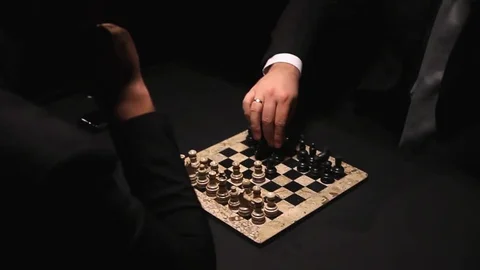
Only the rook.
That meant this was not a random attack.
Whoever planned it knew exactly which piece Karelin would touch at the exact final moment of the game. And if you know anything about chess, that should sound impossible.
A single match contains millions of possible moves. Even world champions cannot predict the ending with complete certainty.
So how could somebody know the rook would deliver checkmate hours before it happened?
That question changed the entire investigation.
Because now the detectives were not just looking for a murderer.
They were looking for someone who understood chess deeply enough to script an ending.
The Match Felt Wrong From the Beginning
When investigators reviewed the footage, strange details began appearing everywhere.
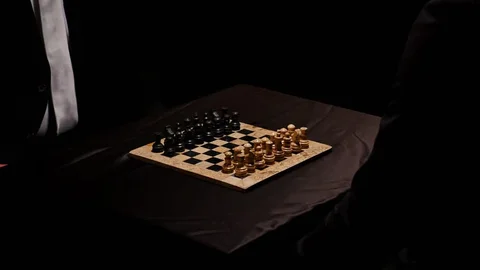
Karelin arrived unusually early and spent several minutes alone at the board, staring at the pieces without moving. Witnesses later described him as calm… almost too calm. Like a man who already knew how the story would end.
Then came the weirdest part.
During the game, Karelin avoided using his rook completely. Analysts reviewing the match were shocked. Several powerful attacking opportunities were ignored simply to keep the rook untouched.
For nearly four hours, the rook sat quietly like it was waiting for something.
Or someone.
Across the table, Marcus Vale behaved strangely too. Normally aggressive and fearless, he suddenly avoided critical attacking lines. At one point, he even played a move that allowed a forced checkmate sequence.
Commentators called it a blunder.
But detectives saw something else.
Not a mistake.
A decision.
Five People. Five Secrets.

As the investigation deepened, every person near the board became suspicious.
The tournament organizer had massive gambling debts and mysteriously disappeared backstage before the match.
The veteran chess journalist claimed Karelin warned him earlier that morning:
“Today’s ending will be unforgettable.”
The coach who trained Karelin for thirty years had recently learned he was about to be replaced after the tournament ended.
Karelin’s ex-wife appeared at the venue with Marcus Vale himself, creating headlines before the match even began.
And then there was Vale.
The reigning champion.
The man who looked away just before Karelin touched the poisoned rook.
Not shocked.
Not confused.
Almost like he already knew what was about to happen.
The Real Twist

Days later, detectives gathered everyone back inside the empty championship hall.
The chessboard remained exactly where it had been during the final game. One square sat empty where the poisoned rook once stood.
The lead investigator finally revealed the truth.
Everyone had misunderstood the rook.
Most people think the rook represents a castle or tower. Something defensive. Something still.
But historically, the rook came from ancient war chariots — fast, aggressive weapons designed to destroy enemies from a distance.
That changed the meaning of everything.
The rook was never protection.
It was always the weapon.
And suddenly the investigators realized the horrifying truth:
The killer did not poison the rook to win the championship.
The championship itself was built to lead to the poisoned rook.
The entire game had been planned long before the players sat down at the board.
Why Chess and Mystery Work So Perfectly Together
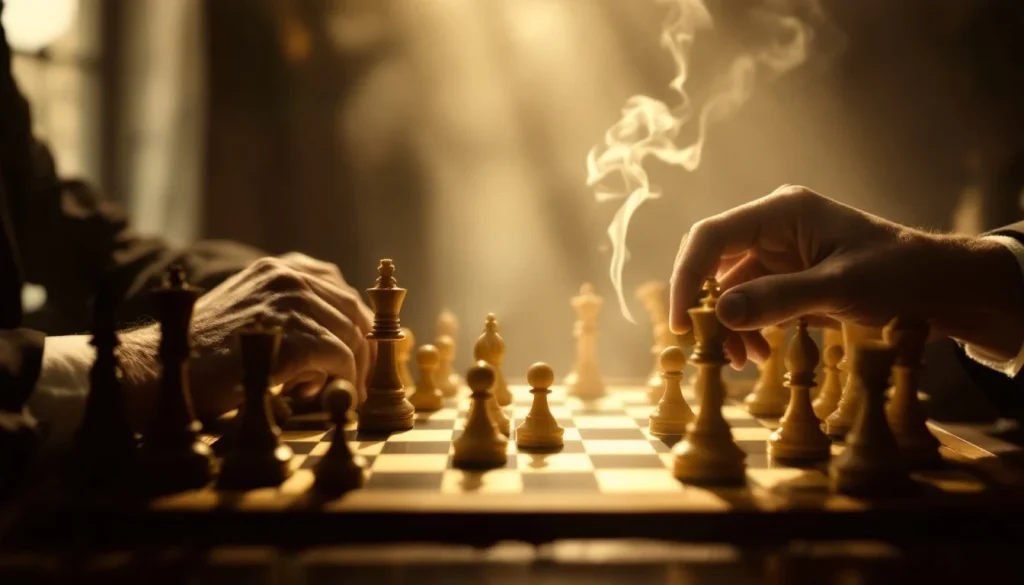
Chess already feels like a thriller.
Every move hides an idea. Every sacrifice hides intention. Every calm face hides pressure.
That’s why chess stories have become so addictive online. They mix psychology, suspense, strategy, ego, revenge, and human emotion into one perfect battle of minds.
At Madras School of Chess, we believe chess is more than pieces and positions. It teaches imagination, observation, patience, and the ability to see what others miss.
Because sometimes the deadliest move on the board is not the one you notice.
It’s the one you never questioned.
♟️ Ready to Level Up Your Game?
𝐉𝐨𝐢𝐧 𝐌𝐚𝐝𝐫𝐚𝐬 𝐒𝐜𝐡𝐨𝐨𝐥 𝐨𝐟 𝐂𝐡𝐞𝐬𝐬 𝐭𝐨 𝐝𝐞𝐟𝐞𝐚𝐭 𝐲𝐨𝐮𝐫 𝐨𝐩𝐩𝐨𝐧𝐞𝐧𝐭 𝐰𝐢𝐭𝐡 𝐛𝐫𝐢𝐥𝐥𝐢𝐚𝐧𝐜𝐞 𝐚𝐧𝐝 𝐩𝐫𝐞𝐜𝐢𝐬𝐢𝐨𝐧!
📍 Locations: T.Nagar | Anna Nagar | Mandaveli | Online
📞 Call: +91 98404 03376
🌐 Visit: www.madrasschoolofchess.com
📲 Follow us: @madrasschoolofchess
Grandmaster Chess Training Camp in Chennai for Rated Players | Madras School of Chess
Apr 29th, 2026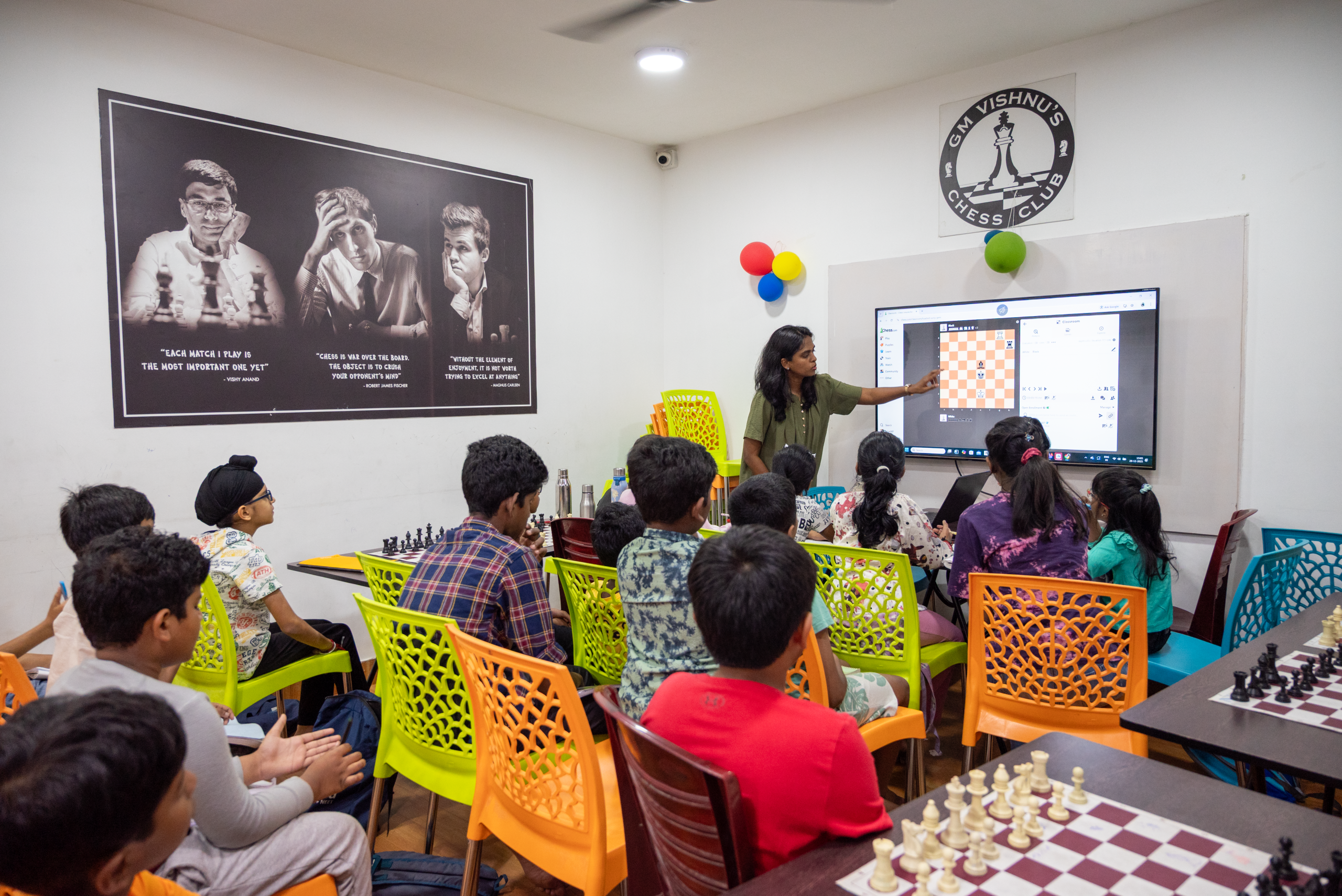
A Unique Opportunity for Serious Young Players to Train with Grandmasters in Chennai
Every young chess player dreams of one day sitting across the board with confidence, clarity, and the courage to outthink stronger opponents.
But championship thinking is not built in tournaments alone.
It is built in classrooms where discipline meets strategy, where every move is questioned, every mistake is studied, and every student learns directly from masters who have lived the competitive journey.
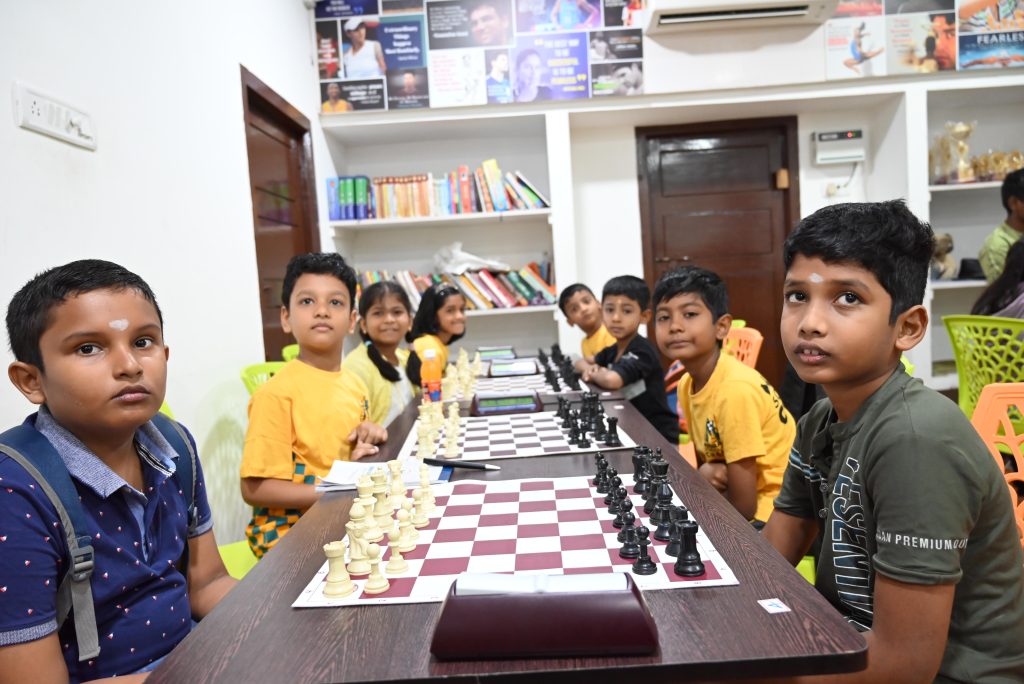
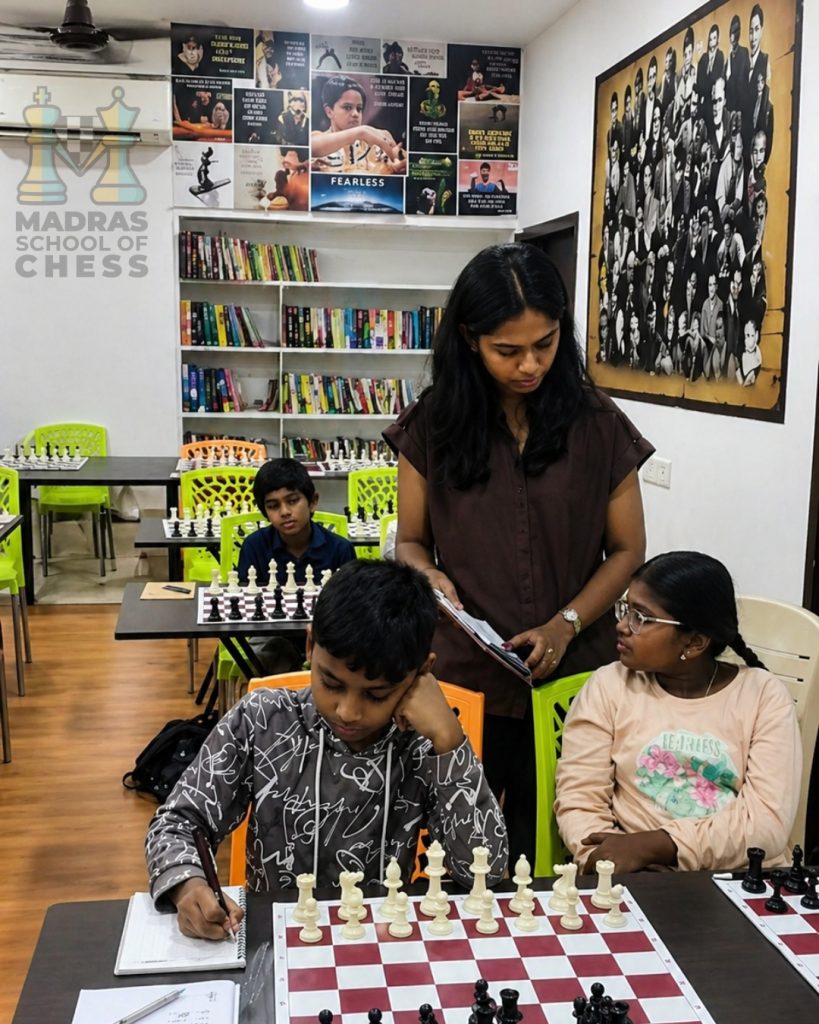
That is exactly the atmosphere currently unfolding at Madras School of Chess, Anna Nagar, where the much-awaited Summer Rated Chess Camp is now in full swing.
More than just a seasonal coaching session, this camp has become a high-intensity preparation ground for ambitious rated players who want to sharpen their tournament performance, deepen their understanding, and experience what professional chess training truly feels like.
A Camp Designed for Players Who Want More Than Just Practice
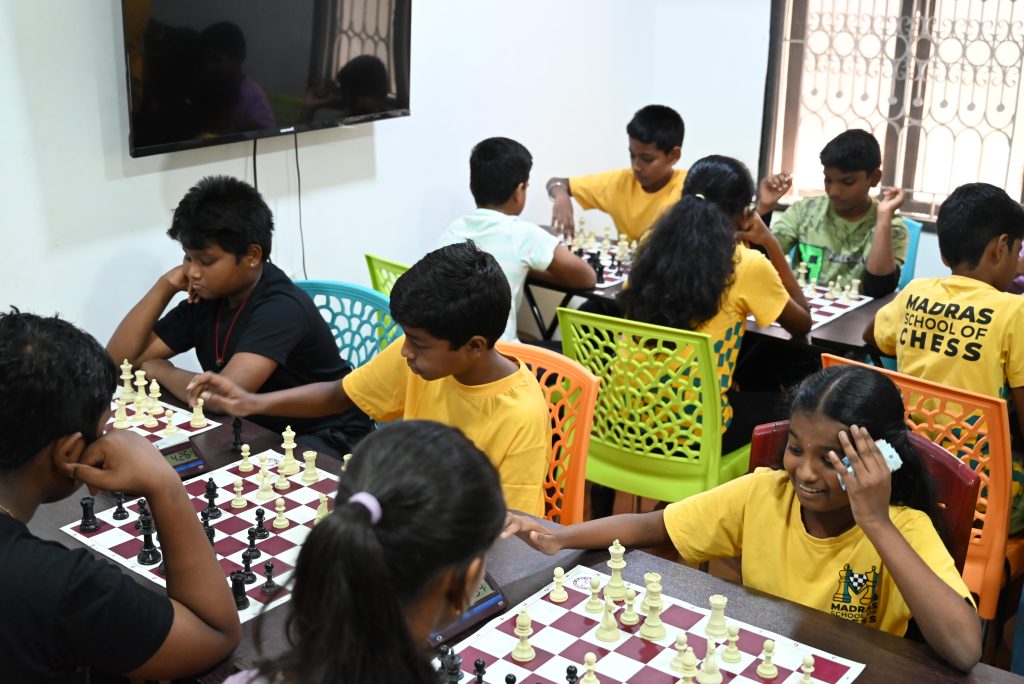
Unlike regular weekend chess classes, the Madras School of Chess Summer Camp has been carefully structured as an immersive tournament-oriented learning experience.
Here, students are not simply taught openings and tactics.
They are trained to:
- think deeper under pressure,
- calculate variations with discipline,
- understand strategic planning,
- identify practical tournament mistakes,
- improve endgame conversion,
- and most importantly, develop the mindset required to compete at rating events.
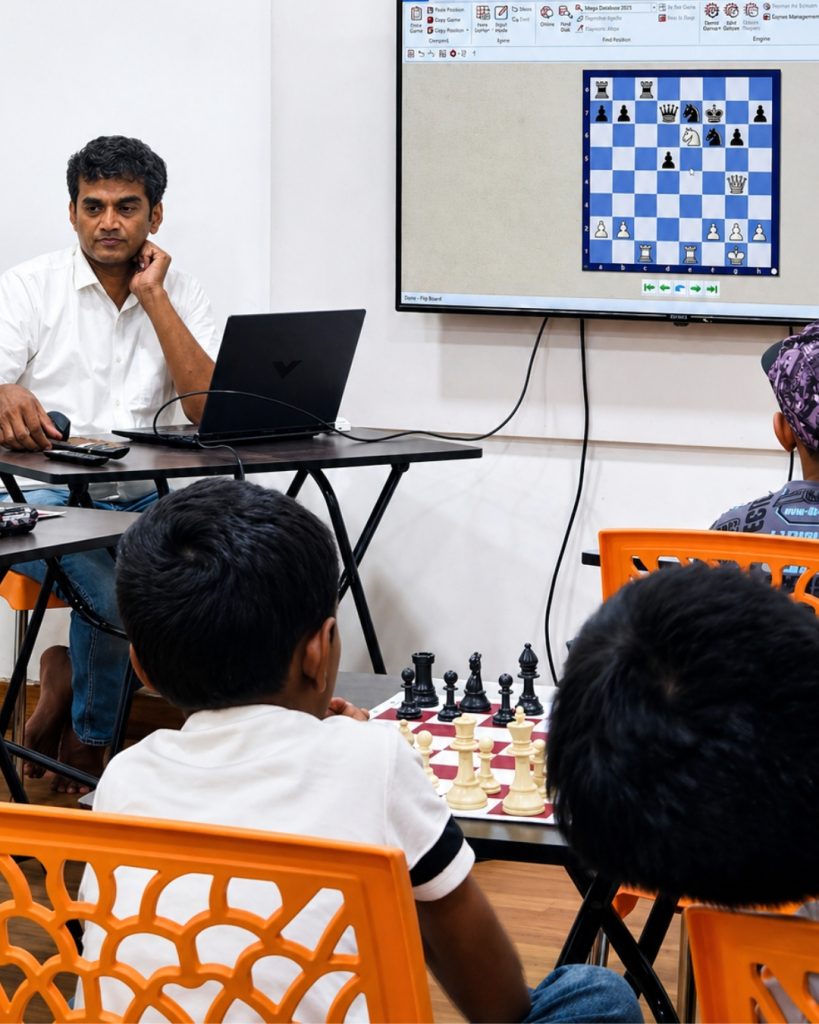
Every day inside the camp mirrors the seriousness of professional chess preparation — analysis boards, guided exercises, notation practice, interactive discussions, and live position breakdowns create an environment where students are constantly challenged to think like competitive players.
Learning Directly from India’s Respected Chess Minds
One of the strongest highlights attracting students and parents to this camp is the opportunity to learn under an exceptional panel of elite trainers.
Participants are being mentored by:
- GM Vishnu Prasanna
- GM Akash Ganesan
- IM V. Saravanan
- WIM Priya Panneer
This is not ordinary coaching.
This is direct exposure to Grandmaster-level thought processes, tournament psychology, practical decision-making, and modern preparation methods that young players rarely get access to in a normal classroom setting.
When a child listens to how a Grandmaster evaluates a position, chooses candidate moves, manages clock pressure, or handles tournament nerves, the learning goes far beyond textbook theory.
It becomes transformational.
Two Specialized Batches for Rated Players
To ensure that every participant receives training relevant to their competitive level, Madras School of Chess has designed the camp in two focused categories:
Rated Players – Under 1600
Camp Dates: April 25 to April 28
Fees: ₹6999
Rated Players – Under 2000
Camp Dates: April 29 to May 2
Fees: ₹7999
Each batch runs from 10 AM to 5 PM in a comfortable AC hall setup with refreshment breaks, allowing students to remain fully engaged through a complete day of serious chess immersion.
This long-format schedule gives coaches the time needed not only to teach concepts, but also to monitor practical understanding, conduct discussions, and correct recurring tournament errors personally.
What Makes This Camp Different from Every Other Summer Program?
There are many chess camps.
But very few create the feeling of stepping into a real professional chess ecosystem.
At Madras School of Chess, students are experiencing:
- full-day board work,
- notation discipline,
- trainer-supervised exercises,
- advanced middlegame themes,
- strategic lectures,
- practical endgame correction,
- and personalized exposure to high-level tournament preparation.
The academy has intentionally created an atmosphere where children stop feeling like casual learners and start feeling like serious competitors.
That change in self-belief is often the biggest turning point in a player’s growth.
Why Parents Are Showing Exceptional Response
Parents today are not just looking for children to “learn chess.”
They are looking for meaningful intellectual development.
Chess teaches patience, concentration, pattern recognition, emotional control, memory retention, decision-making, and problem solving — but only when taught in the right environment.
This camp offers exactly that:
an educational experience that combines competitive sport with brain development under some of India’s finest chess mentors.
That is why seats have been filling rapidly and the current sessions are witnessing highly enthusiastic participation from young rated talents across the city.
Anna Nagar – The Perfect Venue for Focused Learning
Hosted at the well-equipped Anna Nagar premises of Madras School of Chess, the camp offers a professional classroom atmosphere designed specifically for uninterrupted chess concentration.
Comfortable AC hall facilities, structured seating, digital demonstration boards, and focused trainer attention ensure that students remain inside a genuine learning zone throughout the day.
For many children attending, this is their first real glimpse into what disciplined tournament training looks like.
And for many parents, it is a reassuring sign that their child’s chess journey is being shaped with seriousness.
The Journey to Better Ratings Starts with Better Guidance
Ratings do not improve by chance.
Tournament wins do not happen by luck.
Behind every strong player is a period of deep correction, stronger guidance, and disciplined preparation.
That is what Madras School of Chess is delivering through this Summer Rated Chess Camp, a platform where young players are not just attending a camp, but actively building the foundation for their next leap in performance.
For students who aspire to move beyond ordinary play and step into stronger tournament confidence, this camp is proving to be a golden opportunity.
Registrations are actively ongoing for the upcoming sessions.
Serious rated players are encouraged to reserve their seats immediately.
♟️ Ready to Level Up Your Game?
𝐉𝐨𝐢𝐧 𝐌𝐚𝐝𝐫𝐚𝐬 𝐒𝐜𝐡𝐨𝐨𝐥 𝐨𝐟 𝐂𝐡𝐞𝐬𝐬 𝐭𝐨 𝐝𝐞𝐟𝐞𝐚𝐭 𝐲𝐨𝐮𝐫 𝐨𝐩𝐩𝐨𝐧𝐞𝐧𝐭 𝐰𝐢𝐭𝐡 𝐛𝐫𝐢𝐥𝐥𝐢𝐚𝐧𝐜𝐞 𝐚𝐧𝐝 𝐩𝐫𝐞𝐜𝐢𝐬𝐢𝐨𝐧!
📍 Locations: T.Nagar | Anna Nagar | Mandaveli | Online
📞 Call: +91 98404 03376
🌐 Visit: www.madrasschoolofchess.com
📲 Follow us: @madrasschoolofchess
Best Chess Academy in India – Madras School of Chess Creating Future Champions
Apr 10th, 2026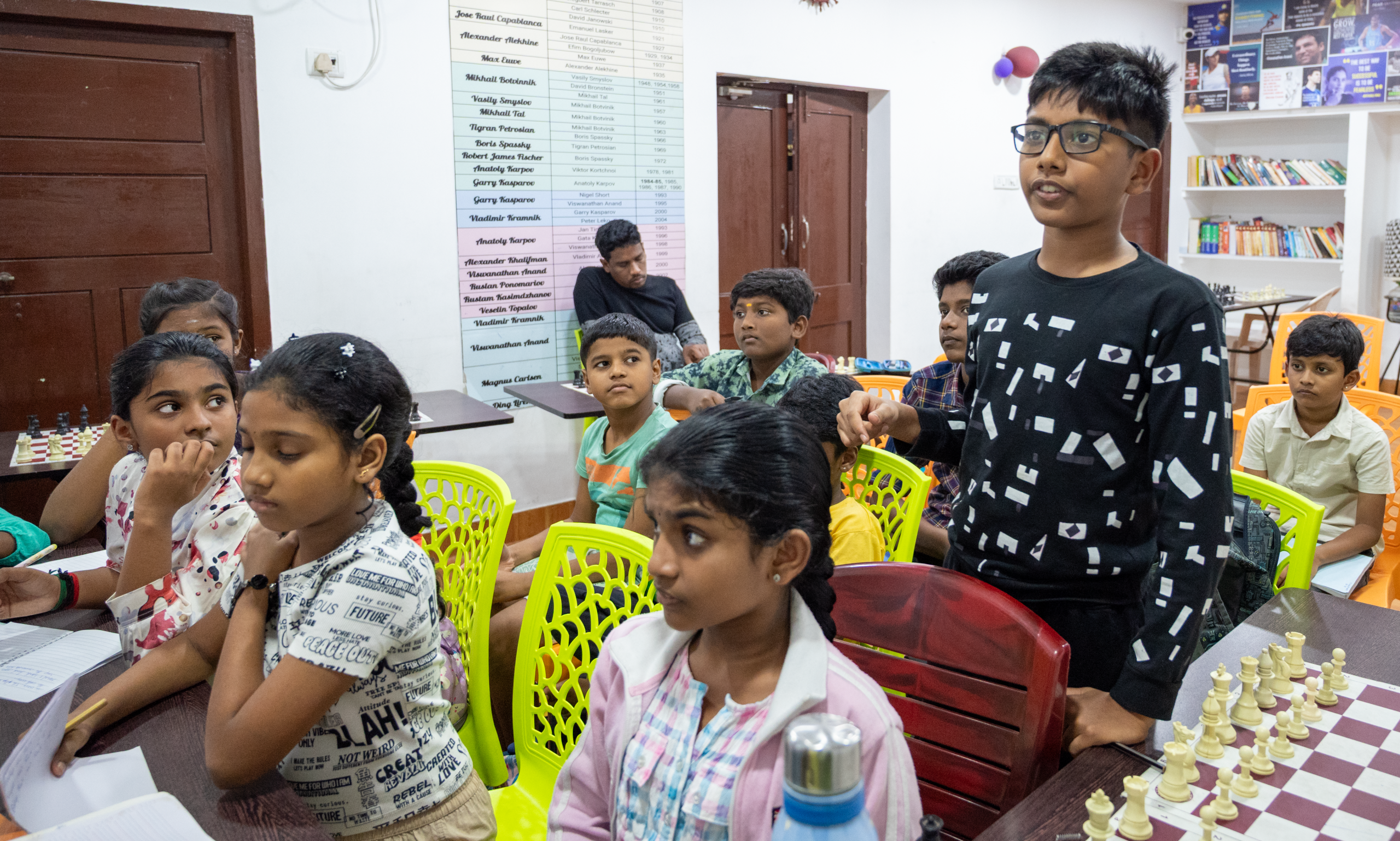
Where Learning Chess Becomes a Winning Journey
In today’s competitive world, children need more than just academics they need focus, strategy, and confidence.
Madras School of Chess (MSC) is one of India’s leading chess academies, shaping young minds into smart thinkers and strong competitors.
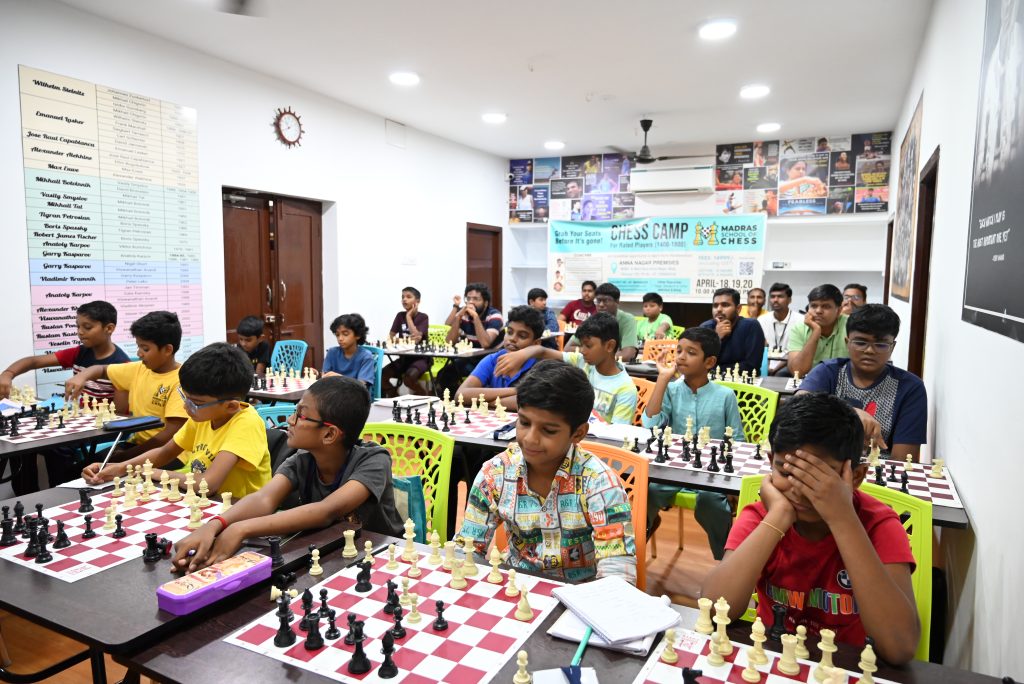
Founded by a powerful team of chess experts GM Vishnu Prasanna (former coach of World Champion Gukesh Dommaraju), GM Akash Ganesan, WIM Priya Panneer, and WIM Raghavi, MSC brings together elite-level experience and passion for teaching.
Learn from Grandmasters and Champions
At MSC, students are trained by highly experienced coaches and titled players who understand the game at the highest level.
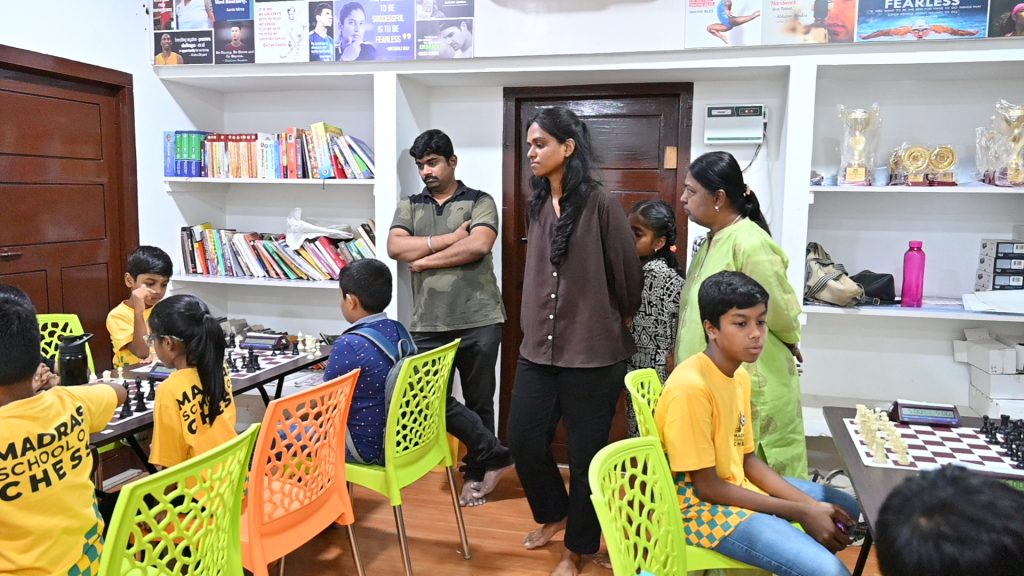
Training focuses on:
- Strong fundamentals
- Advanced strategies
- Real-game thinking skills
Students don’t just learn moves they learn how to think like champions.
Structured Coaching for Every Level
From beginners to advanced players, MSC offers well-designed programs tailored to each student’s level.
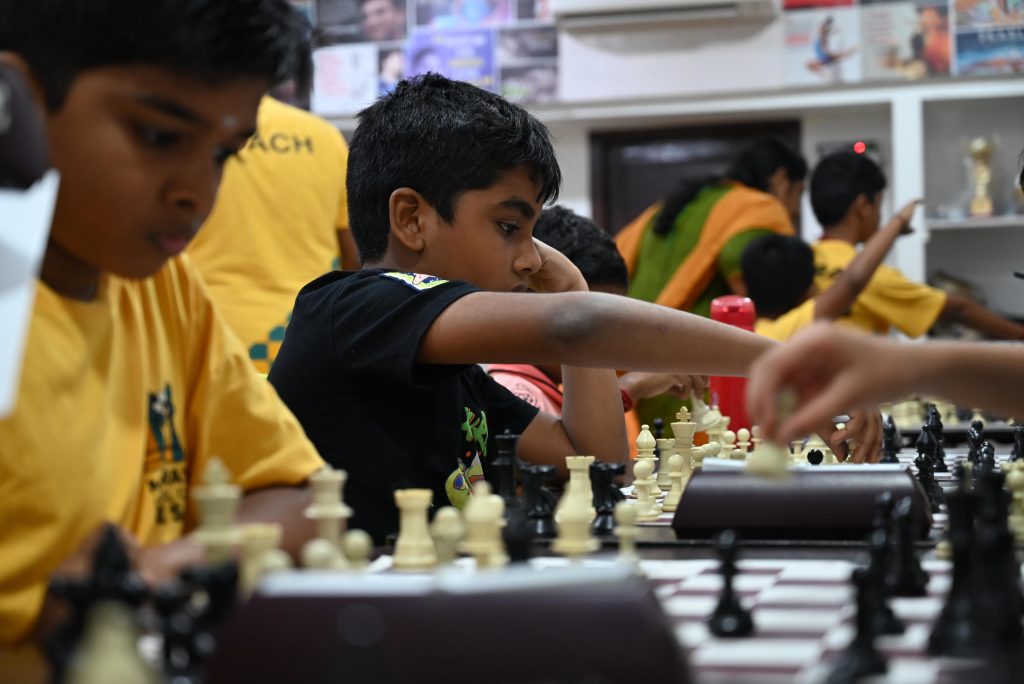
- Step-by-step learning approach
- Regular practice and assessments
- Personalized guidance
This ensures consistent improvement and confidence in every game.
Winning Trophies, Building Confidence
MSC students are consistently making their mark in:
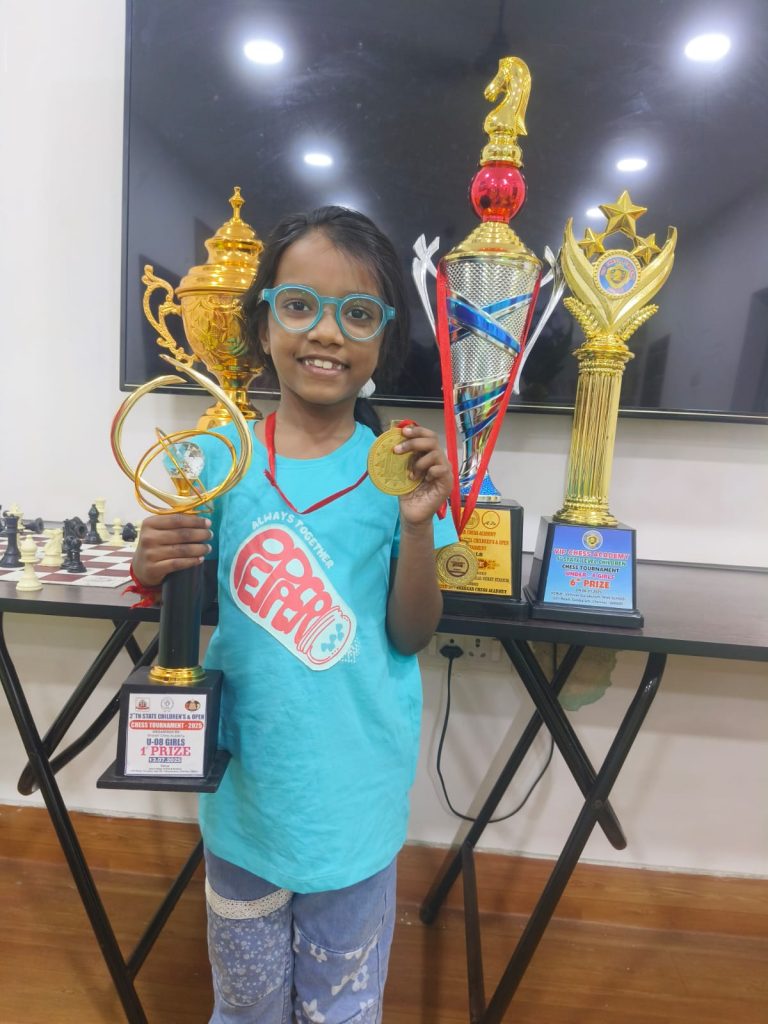
- District tournaments
- State championships
- National and international events
With numerous trophies, medals, and top rankings, the academy has built a strong reputation for delivering real results.
Every win reflects the academy’s dedication to excellence.
Real Chess Experience That Makes a Difference
What sets MSC apart is its focus on practical learning.
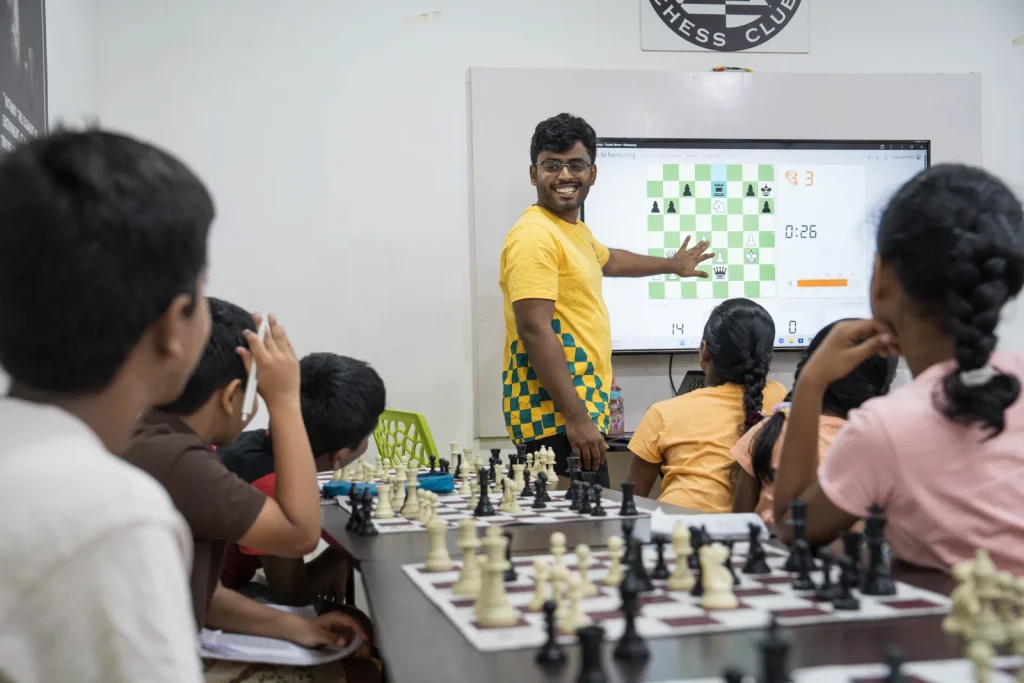
Students get:
- Tournament exposure
- Game analysis sessions
- Competitive practice environments
This helps them stay prepared, confident, and ready to perform under pressure.
More Than a Game – A Life Skill
Chess at MSC is not just about competition it’s about development.

Students improve:
- Concentration and memory
- Decision-making skills
- Patience and discipline
These skills go beyond chess and support success in academics and life.
Learn Anytime, Anywhere
With both online and offline classes, MSC makes world-class chess coaching accessible to students everywhere.
Interactive sessions, expert mentors, and consistent tracking ensure every student gets the best learning experience.
Why Madras School of Chess?
- Learn from Grandmasters and titled players
- Proven track record of student achievements
- Structured and professional coaching
- Strong focus on results and growth
Madras School of Chess is one of the best chess academies in India offering expert coaching from Grandmasters and titled players, with students consistently winning trophies at state, national, and international levels.
Start Your Winning Move Today
Every champion starts with the right guidance.
At Madras School of Chess, your child gets the training, mentorship, and confidence to succeed.
Join now and be part of a champion’s journey.
📍 Locations: T.Nagar | Anna Nagar | Mandaveli | Online
📞 Call: +91 98404 03376
🌐 Visit: www.madrasschoolofchess.com
📲 Follow us: @madrasschoolofchess
Madras School of Chess: Building Future Champions Through Strategy and Discipline
Mar 26th, 2026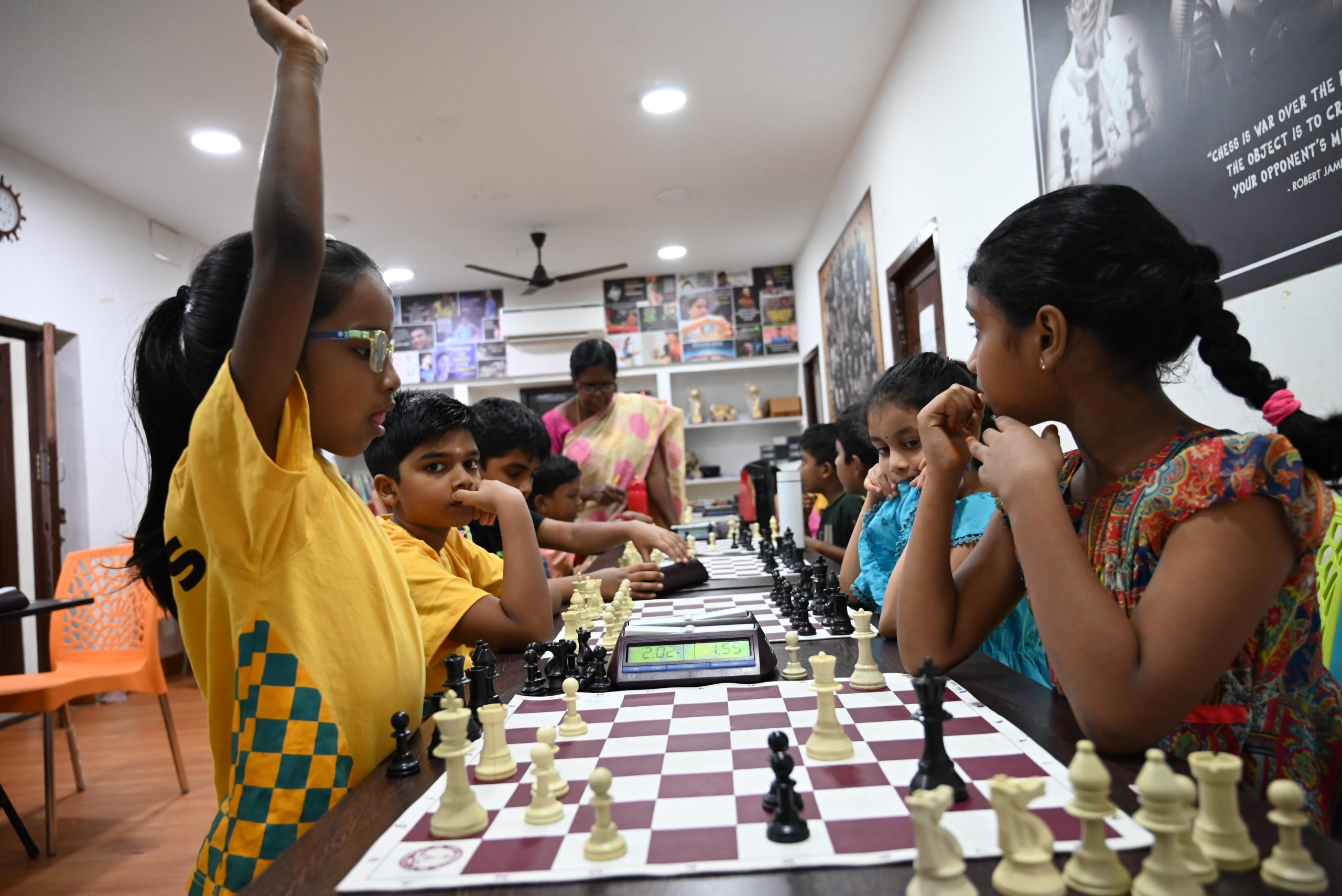
Madras School of Chess is one of Chennai’s leading chess academies, known for transforming beginners into confident and strategic players. With a strong focus on structured learning and competitive exposure, the academy is shaping the next generation of chess champions.
Why Choose Madras School of Chess?
At Madras School of Chess, students don’t just learn moves, they learn how to think. The academy emphasizes a balance between theory, practice, and real-game experience, helping students develop both skill and confidence.
Highlights of MSC:
- Structured coaching for beginners to advanced players
- Focus on strategic thinking and decision-making
- Regular tournaments and competitive exposure
- Personalized guidance for continuous improvement
Expert Coaching That Makes a Difference
The academy is guided by strong coaching expertise, with influence from top-level training methods including insights from Vishnu Prasanna, former coach of World Champion D Gukesh.
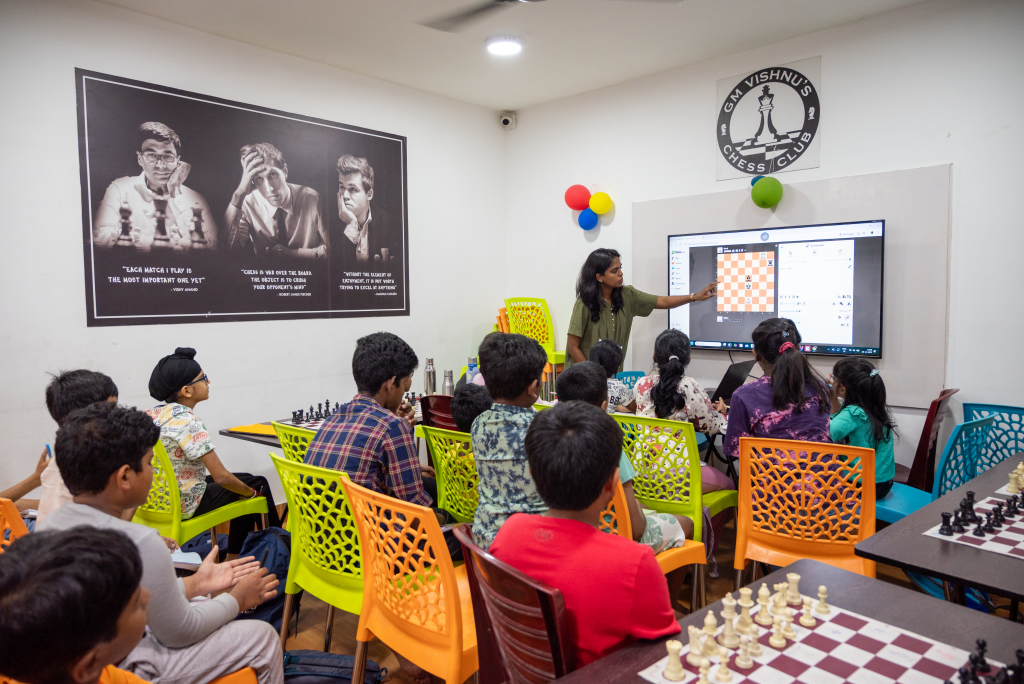
Students benefit from professional training techniques that focus on:
- Opening strategies and game planning
- Tactical awareness and combinations
- Endgame techniques
- Psychological preparation for tournaments
Tournaments That Shape Real Players
Competitive play is an essential part of learning at Madras School of Chess. Regular tournaments help students:
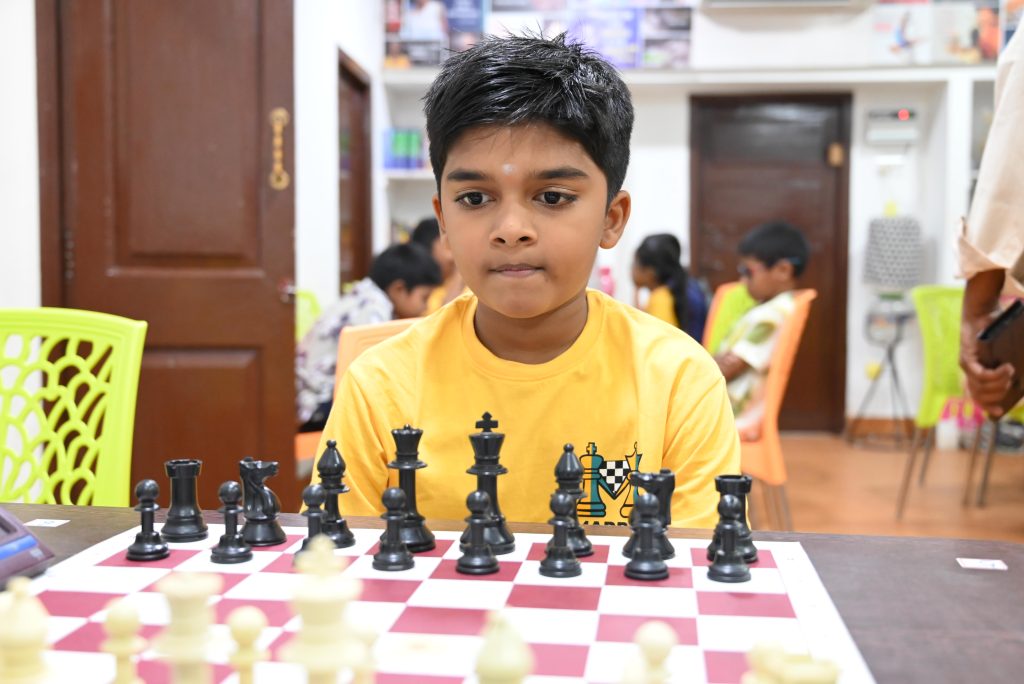
- Gain confidence in real match situations
- Improve time management skills
- Learn from wins and losses
- Adapt to different playing styles
These experiences are crucial in developing strong and resilient players.
More Than a Game: Life Skills Through Chess
Chess training at Madras School of Chess goes beyond the board. Students naturally develop:
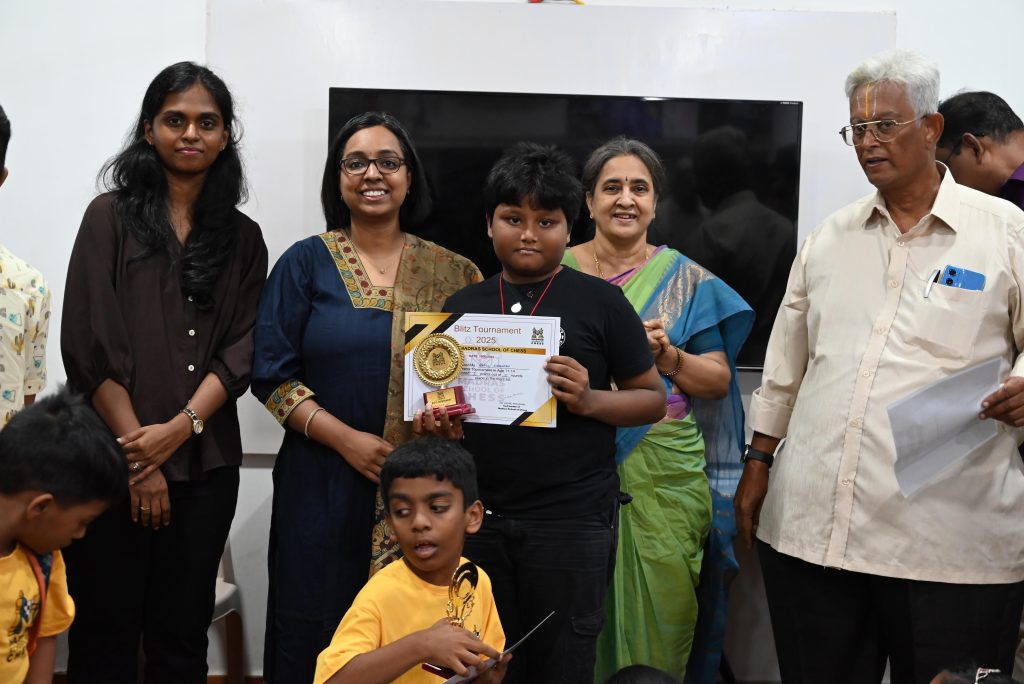
- Focus and concentration
- Patience and discipline
- Logical thinking
- Problem-solving abilities
These skills help students excel academically and personally.
A Growing Chess Community in Chennai
With a strong presence both offline and online, Madras School of Chess has built a vibrant community of young learners. Through engaging classes, creative content, and consistent mentorship, the academy continues to inspire more students to explore chess.
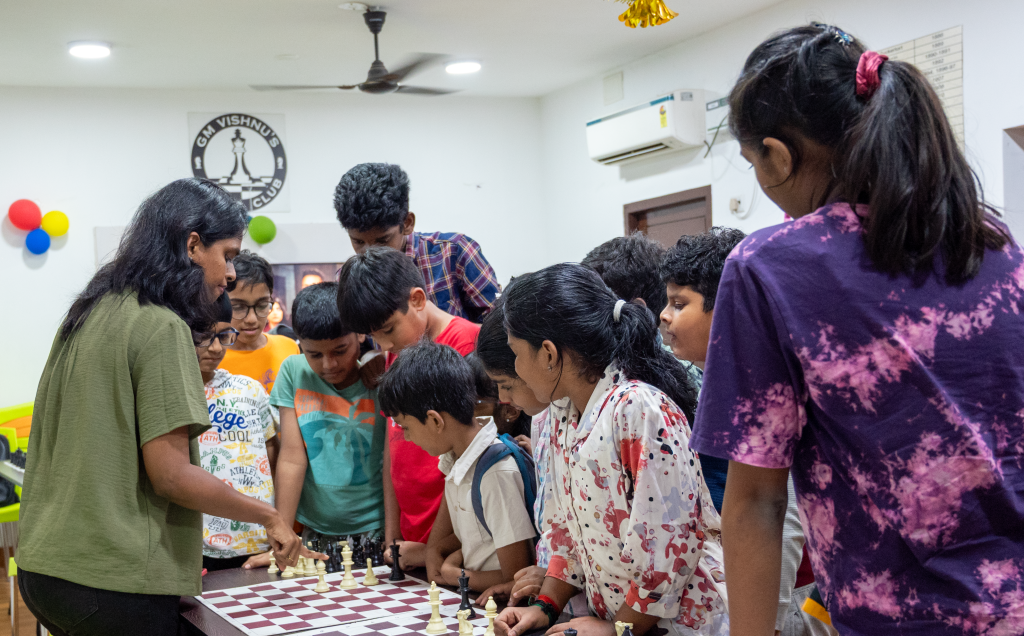
Start Your Chess Journey Today
Whether your goal is to learn chess, improve your skills, or compete at higher levels, Madras School of Chess provides the right platform.
Join today and turn your thinking into a winning strategy.
♟️ Ready to Level Up Your Game?
𝐉𝐨𝐢𝐧 𝐌𝐚𝐝𝐫𝐚𝐬 𝐒𝐜𝐡𝐨𝐨𝐥 𝐨𝐟 𝐂𝐡𝐞𝐬𝐬 𝐭𝐨 𝐝𝐞𝐟𝐞𝐚𝐭 𝐲𝐨𝐮𝐫 𝐨𝐩𝐩𝐨𝐧𝐞𝐧𝐭 𝐰𝐢𝐭𝐡 𝐛𝐫𝐢𝐥𝐥𝐢𝐚𝐧𝐜𝐞 𝐚𝐧𝐝 𝐩𝐫𝐞𝐜𝐢𝐬𝐢𝐨𝐧!
📍 Locations: T.Nagar | Anna Nagar | Mandaveli | Online
📞 Call: +91 98404 03376
🌐 Visit: www.madrasschoolofchess.com
📲 Follow us: @madrasschoolofchess
Madras School of Chess: Building Strong Minds Through Smart Practice and Strategic Thinking
Mar 11th, 2026
In chess, discipline is often considered the secret ingredient behind strong players. Many people believe that the more self-controlled and focused a player is, the higher their rating will be. While discipline certainly helps a player stay committed to training, modern chess insights and player data suggest that improvement in chess depends on several factors working together rather than discipline alone.

For students and aspiring players, this insight is encouraging. Success in chess is not determined by a single personality trait. Instead, it grows through structured learning, consistent practice, early exposure to the game, and the right guidance.
At Madras School of Chess, this philosophy shapes the way young players and adult learners develop their skills and grow into confident, strategic thinkers.
Beyond Discipline: What Really Improves Chess Strength
Self-control helps players stay focused during long games and maintain regular study habits. However, when competitive chess players are analyzed, discipline by itself does not strongly predict a player’s rating.
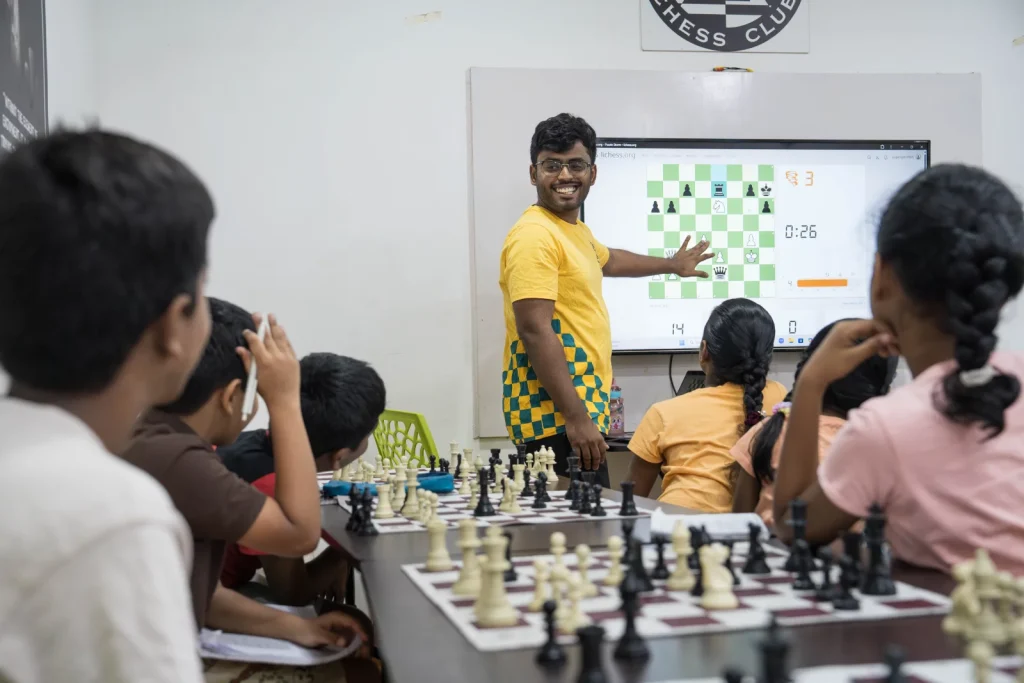
What matters more is how players practice.
Chess improvement is strongly connected to deliberate practice — focused training activities designed specifically to improve performance. This includes:
• Analyzing personal games to understand mistakes
• Solving tactical puzzles and calculation exercises
• Studying classic and modern master games
• Learning endgame techniques
• Receiving feedback from experienced coaches
This type of structured training helps players build pattern recognition, calculation ability, and strategic understanding — all essential skills for improving on the chessboard.
The Power of Starting Early
Another interesting pattern seen among strong players is the age at which they begin learning chess seriously. Players who start training earlier often reach higher levels later because they have more time to build experience and pattern recognition.

Young players naturally develop stronger visualization skills and faster decision-making when they practice chess consistently from an early age. This is one of the reasons why structured chess training for children can be so powerful in shaping their thinking skills.
At the same time, it is important to remember that chess improvement is possible at any age. Adults who practice consistently with the right training methods can still achieve significant progress.
Practice Brings Results — But With Diminishing Returns
Structured practice plays a major role in chess development, but improvement does not happen in a straight line. In the early stages of learning, players often see rapid progress because they are discovering new ideas and patterns.

As players become stronger, improvement slows down because each additional step requires deeper understanding and more advanced training. This is completely normal and happens in nearly every skill-based activity.
The key is quality practice rather than just quantity.
Studying with proper guidance, reviewing games carefully, and learning from mistakes can accelerate improvement far more than simply playing many random games online.
Confidence and Learning Mindset
Another factor that often influences progress in chess is a player’s belief in their own ability to learn and improve. Players who believe they can develop stronger thinking skills tend to invest more effort in structured training and problem-solving.

This positive learning mindset encourages players to tackle difficult positions, analyze complex games, and keep improving even after losses. Over time, this consistent effort builds deeper understanding and stronger performance.
How the Right Training Environment Helps
For young learners especially, having the right training environment can make a big difference. Structured chess coaching provides direction, feedback, and progressive learning paths that help students grow steadily.

At Madras School of Chess, students learn through a balanced approach that combines:
• Tactical training and puzzle solving
• Strategic understanding and positional play
• Game analysis and tournament preparation
• Logical thinking and decision-making skills
This approach ensures that students develop not only chess strength but also concentration, patience, and analytical thinking.
The Real Formula for Chess Improvement
Chess success rarely comes from a single factor. Instead, it is the result of several elements working together:
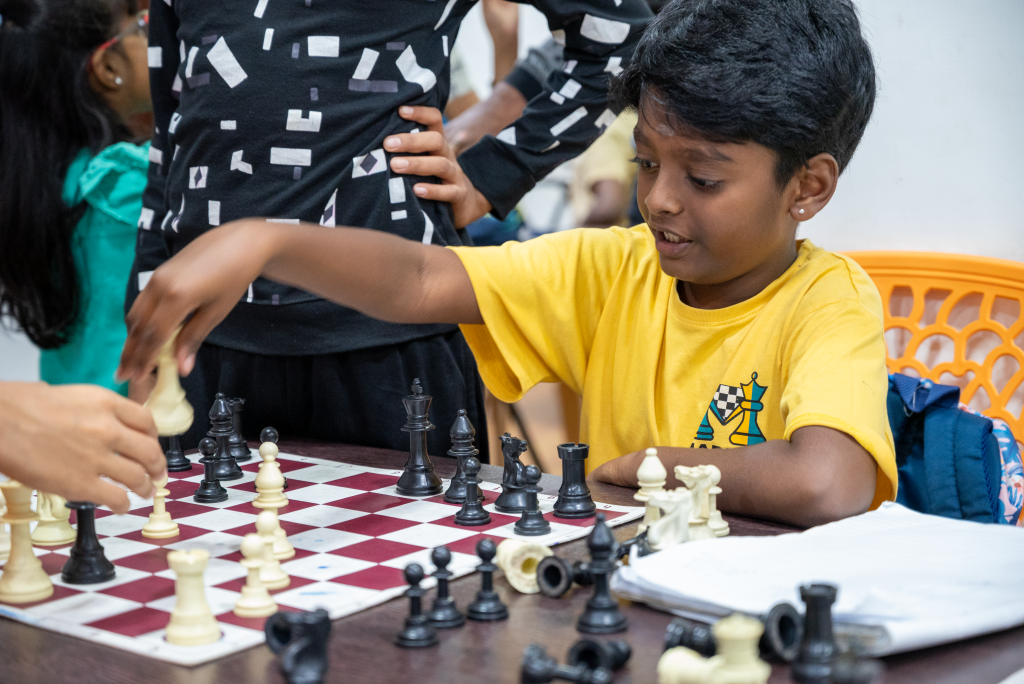
• Consistent and structured practice
• Early exposure and long-term learning
• Strong analytical thinking skills
• Positive learning mindset
• Expert guidance and coaching
When these factors combine, players gradually build the experience and understanding required to perform at higher levels.
Final Thoughts
Discipline is helpful in chess, but it is only one piece of a much larger puzzle. True improvement comes from structured learning, thoughtful practice, and continuous curiosity about the game.
For children and adults who want to explore the beauty of chess while sharpening their thinking skills, the right learning environment can make all the difference.
Join Madras School of Chess – Chennai’s leading chess academy – and start your journey toward smarter thinking, stronger strategy, and championship-level chess skills.
♟️ Ready to Level Up Your Game?
𝐉𝐨𝐢𝐧 𝐌𝐚𝐝𝐫𝐚𝐬 𝐒𝐜𝐡𝐨𝐨𝐥 𝐨𝐟 𝐂𝐡𝐞𝐬𝐬 𝐭𝐨 𝐝𝐞𝐟𝐞𝐚𝐭 𝐲𝐨𝐮𝐫 𝐨𝐩𝐩𝐨𝐧𝐞𝐧𝐭 𝐰𝐢𝐭𝐡 𝐛𝐫𝐢𝐥𝐥𝐢𝐚𝐧𝐜𝐞 𝐚𝐧𝐝 𝐩𝐫𝐞𝐜𝐢𝐬𝐢𝐨𝐧!
📍 Locations: T.Nagar | Anna Nagar | Mandaveli | Online
📞 Call: +91 98404 03376
🌐 Visit: www.madrasschoolofchess.com
📲 Follow us: @madrasschoolofchess
What If AI Could Guess Your Chess Rating… Move by Move?
Feb 25th, 2026
When a chess game ends, all we usually see is a number.
Rating up. Rating down. That’s it.
But every serious chess player knows the truth — your strength reveals itself long before the final result. It shows in your opening choices, your patience in quiet positions, your time management under pressure, and how you react when things go wrong.

So here’s a fascinating question:
If an AI watched your game move by move, how quickly could it figure out how strong you are?
At Madras School of Chess, we love exploring how technology can deepen our understanding of improvement. And this idea opens an exciting new chapter in chess learning.
Every Move Tells a Story
A single move is not random.
It carries information.

- How you evaluate a position
- What squares you value
- Whether you prioritize safety or initiative
- How you respond to threats
- How accurately you calculate
Now imagine feeding millions of chess games into an intelligent system and teaching it to recognize patterns behind decisions. Instead of judging only the final result, the AI studies each move as evidence of strength.
As the game progresses, the system gradually sharpens its estimate of a player’s rating — almost like a commentator who becomes more confident about a player’s level with every decision.
Early moves? Uncertain.
Midgame choices? Clearer signals.
Endgame precision? Strong confirmation.
Strength becomes visible before checkmate.
From Whole Games to Individual Decisions
Traditional rating systems measure outcomes.
But modern AI can measure decision quality.

By breaking games into half-moves (every single decision), models can analyze:
- Material balance changes
- King safety awareness
- Control of key squares
- Tactical accuracy
- Positional consistency
Instead of asking, “Who won?”
The deeper question becomes:
“What does this move reveal about the player behind it?”
And that’s where things become powerful for training.
Seeing the Board Through AI Eyes
To a human, a chessboard is one 8×8 grid.

To an AI model, it can be visualized as dozens of information layers:
- Where each piece stands
- Which squares are controlled
- Which lines are open
- How the last move changed the position
- Whether the balance shifted strategically
Each move creates a “shockwave” in the position.
Strong players create constructive shockwaves.
Weaker moves create structural weaknesses.
Over time, patterns emerge.
Beyond the Board: Time and Decision Pressure
Board position alone tells a lot — but not everything.
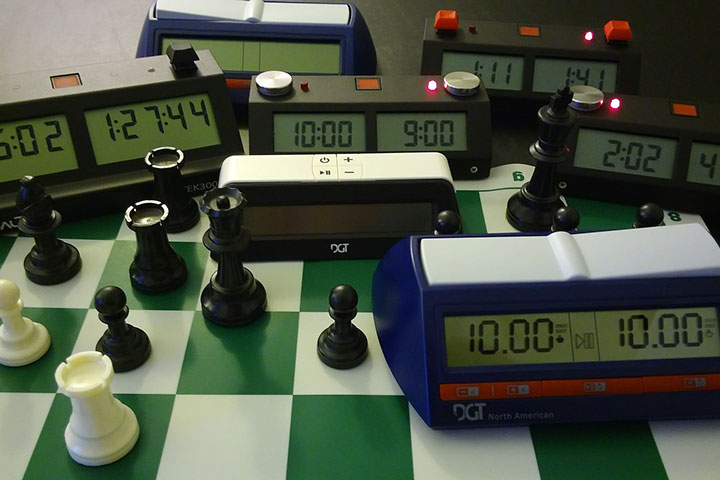
Time management adds another dimension:
- Do you rush critical moments?
- Do you spend too long on simple moves?
- Do your mistakes increase in time trouble?
Future AI-driven tools may combine position analysis with clock usage to understand not just how strong you are, but how you perform under stress.
That insight could transform chess coaching.
Why This Matters for Chess Improvement
At Madras School of Chess, we believe improvement is not about memorizing moves — it’s about understanding patterns.
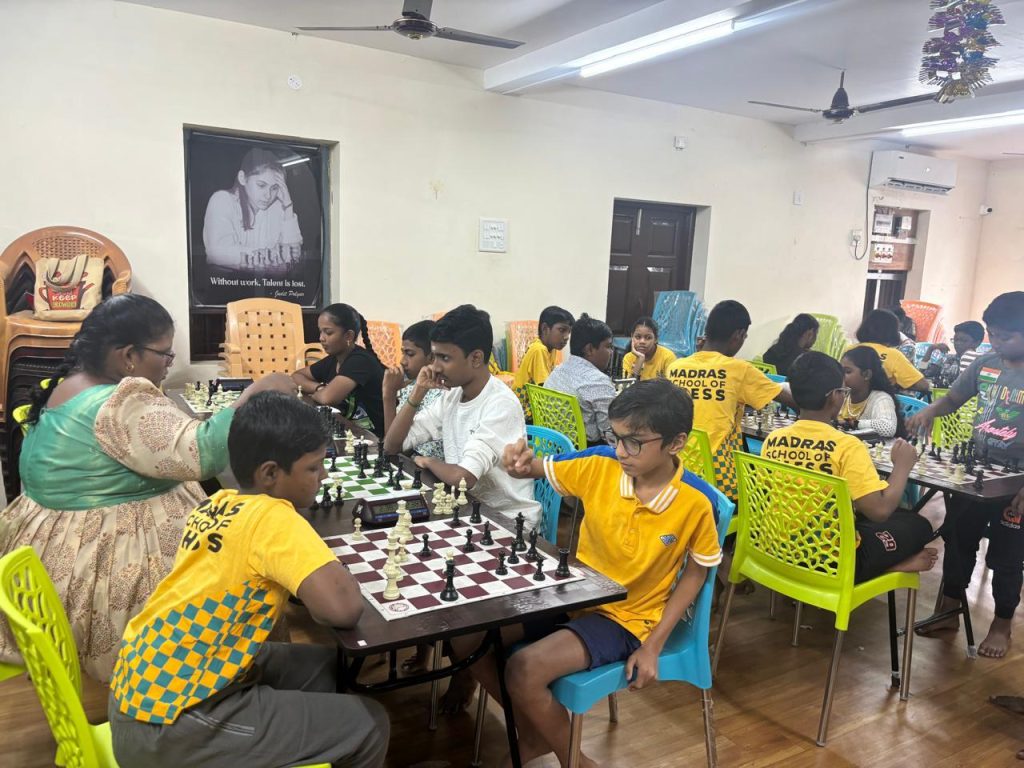
Imagine training tools that could tell you:
- “Your positional decisions are stronger than your rating.”
- “You lose accuracy only in tactical complications.”
- “Your opening play reflects higher strength than your endgames.”
- “Under time pressure, your rating effectively drops by 200 points.”
That level of feedback changes everything.
Chess becomes not just a game of results, but a mirror of decision-making quality.
Chess as a Laboratory for Human Thinking
Chess has always been more than a game.

It is:
- Pattern recognition
- Risk evaluation
- Strategic planning
- Emotional control
- Adaptive thinking
By studying how strength reveals itself move by move, AI isn’t just analyzing chess — it is studying human decision-making.
And that opens possibilities far beyond the board.
The Future of Training
The long-term goal isn’t to replace human coaching.

It’s to enhance it.
Imagine:
- Real-time strength tracking during practice games
- Personalized feedback based on decision patterns
- Visual strength graphs that evolve as you play
- Smarter training plans tailored to your unique weaknesses
The future of chess improvement is not just about playing stronger moves.
It’s about understanding why you play them — and what they say about you.
At Madras School of Chess
We constantly explore innovative ideas that push our students beyond conventional learning.
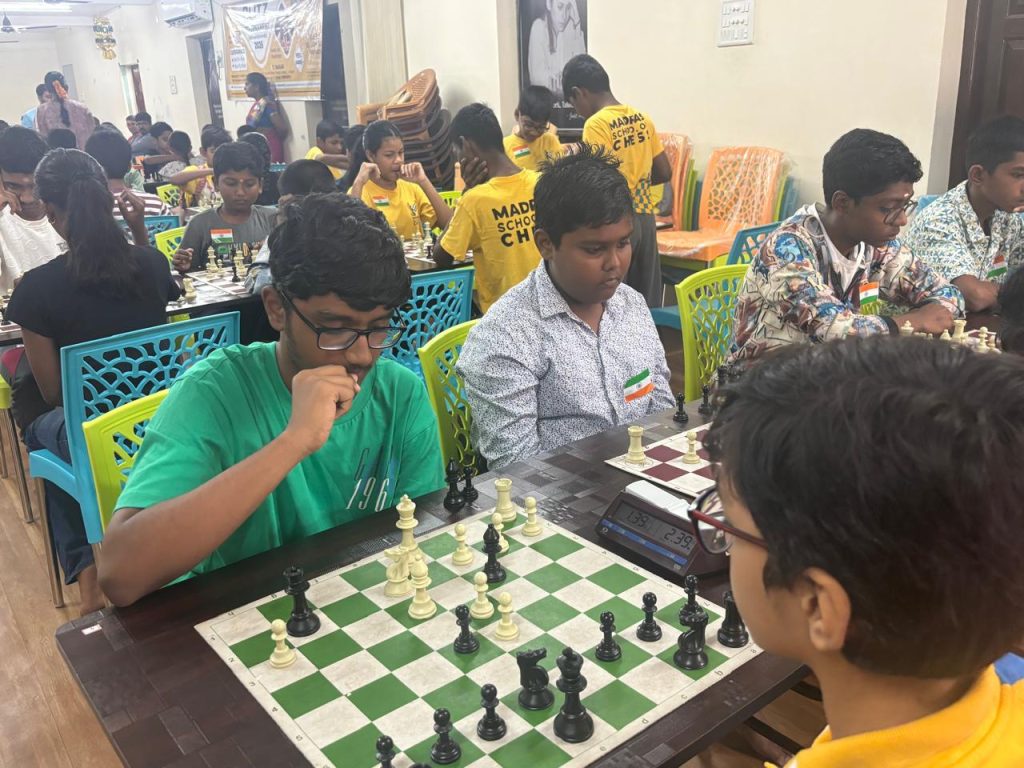
Because in chess, strength isn’t just revealed at checkmate.
It’s revealed move by move.
And the earlier you recognize it,
the faster you grow.
Ready to Level Up Your Game?
𝐉𝐨𝐢𝐧 𝐌𝐚𝐝𝐫𝐚𝐬 𝐒𝐜𝐡𝐨𝐨𝐥 𝐨𝐟 𝐂𝐡𝐞𝐬𝐬 𝐭𝐨 𝐝𝐞𝐟𝐞𝐚𝐭 𝐲𝐨𝐮𝐫 𝐨𝐩𝐩𝐨𝐧𝐞𝐧𝐭 𝐰𝐢𝐭𝐡 𝐛𝐫𝐢𝐥𝐥𝐢𝐚𝐧𝐜𝐞 𝐚𝐧𝐝 𝐩𝐫𝐞𝐜𝐢𝐬𝐢𝐨𝐧!
📍 Locations: T.Nagar | Anna Nagar | Mandaveli | Online
📞 Call: +91 98404 03376
🌐 Visit: www.madrasschoolofchess.com
📲 Follow us: @madrasschoolofchess
What Happens When a Child Learns to Think Before Every Move?
Feb 09th, 2026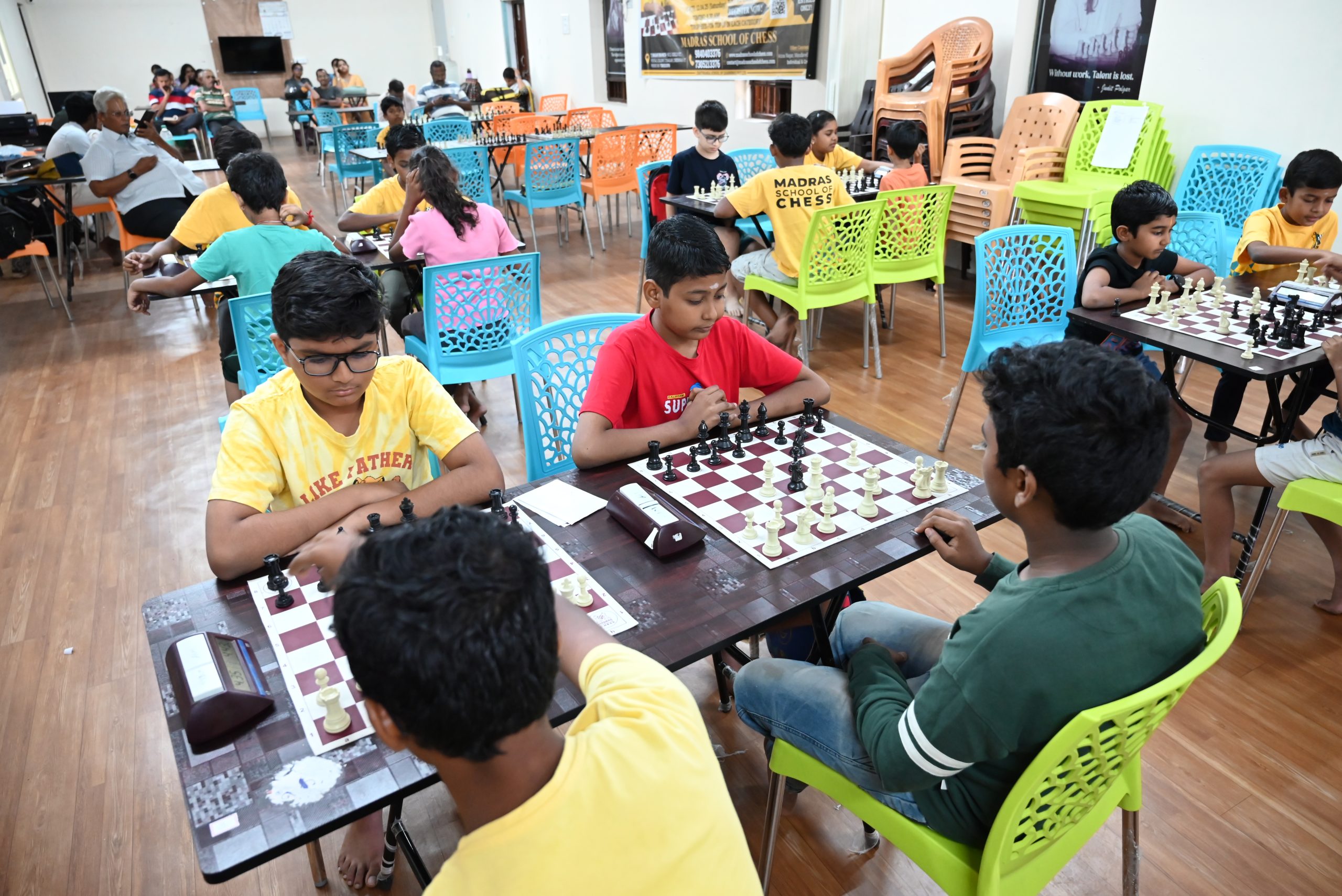
Chess is often seen as a game of black and white squares, quiet halls, and intense concentration. But for the students of Madras School of Chess, it is much more than that. It is a journey of growth, confidence, discipline, and self-belief—one move at a time.
At MSC, chess is not taught as a shortcut to trophies. It is taught as a thinking language—one that helps young minds understand decision-making, responsibility, and resilience both on and off the board.
Where Every Move Builds Character
Every student who walks into Madras School of Chess starts with a simple lesson:
Every move has a consequence.
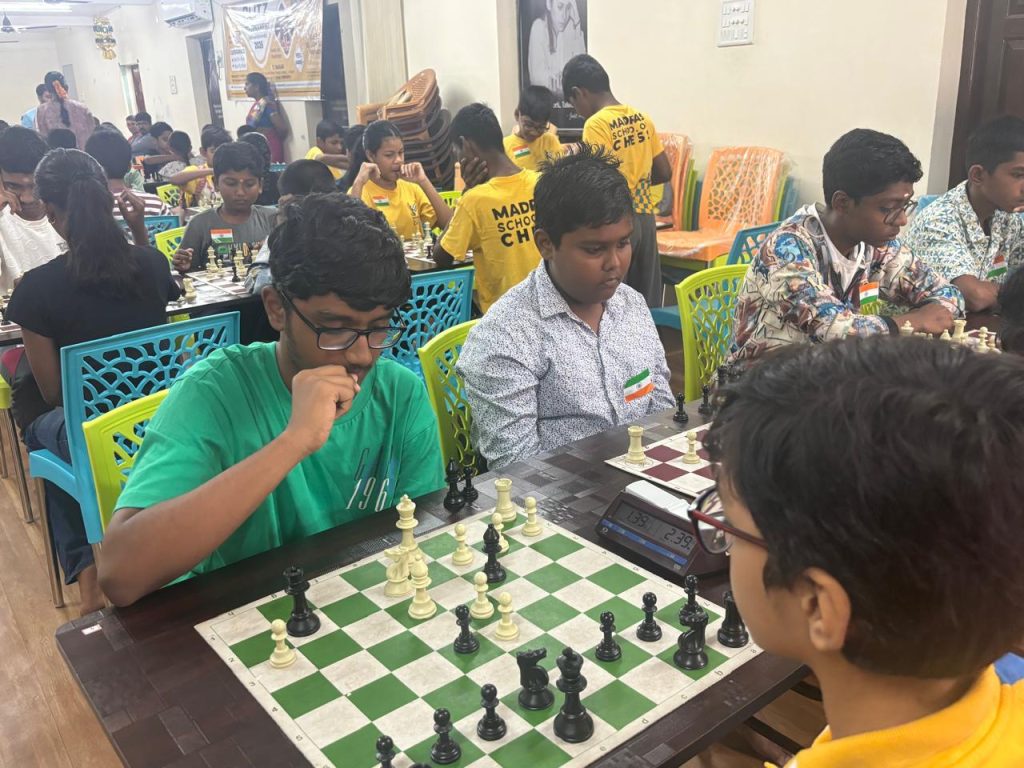
This principle goes far beyond chess pieces. Students learn to pause, evaluate, and choose wisely—skills that naturally translate into academics, relationships, and life decisions.
Through structured training sessions, students are encouraged to:
- Think independently instead of memorizing moves
- Take ownership of their decisions
- Learn from mistakes without fear
Learning to Lose, Learning to Rise
One of the most powerful lessons chess teaches is how to handle defeat.
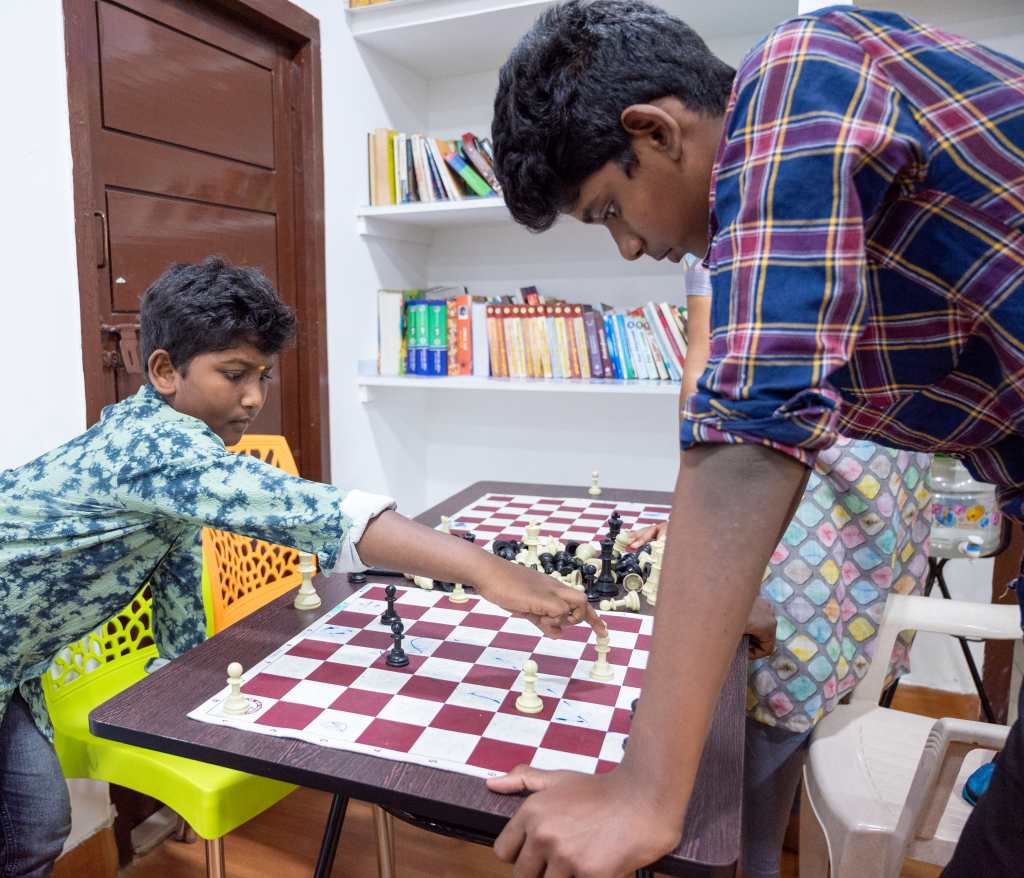
At MSC, losing a game is never treated as failure. Instead, it becomes a classroom. Students analyze their games, understand where they went wrong, and come back stronger. This process builds emotional strength and patience—qualities rarely taught in traditional classrooms.
Many parents notice this transformation early:
- Improved focus and calmness
- Better emotional control during exams or competitions
- Increased confidence when facing challenges
From Curiosity to Confidence
Most students begin their chess journey with curiosity. Over time, curiosity turns into confidence.
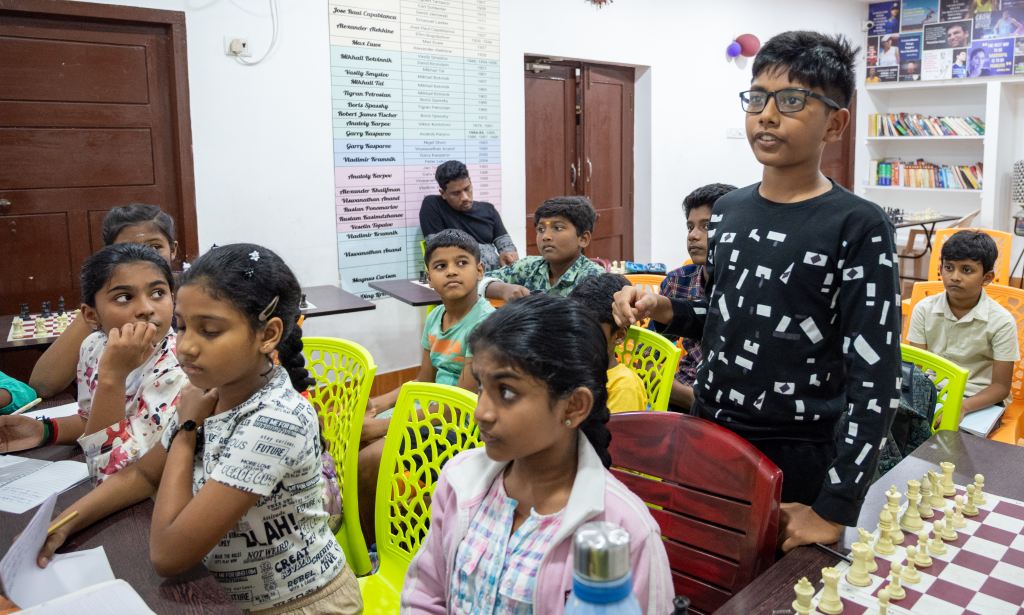
As students learn openings, tactics, and endgames, something deeper happens—they begin to trust their thinking. Solving a tough position or spotting a hidden tactic gives them the courage to believe in their abilities.
This confidence reflects in:
- Public speaking and communication
- Classroom participation
- Willingness to take healthy risks
Chess becomes a mirror that shows them what they are capable of.
Mentorship That Makes the Difference
Behind every growing student is a mentor who believes in them.
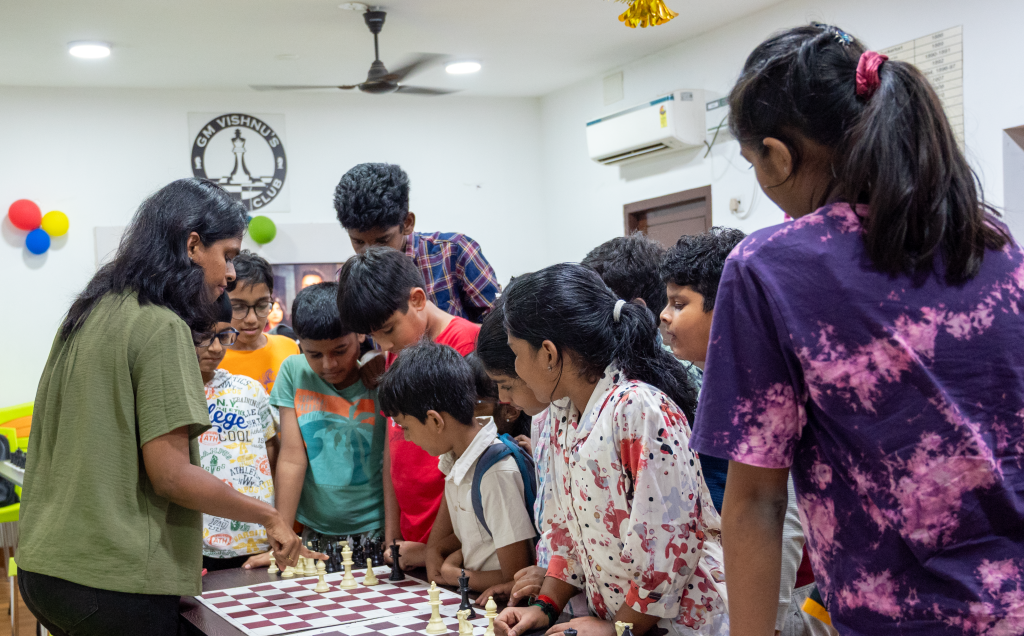
At Madras School of Chess, coaching is not limited to technical training. Coaches guide students through mindset, discipline, and tournament preparation. They understand that every child learns differently and grows at their own pace.
This personalized mentorship ensures that students don’t just improve their ratings—they grow as individuals.
A Community That Celebrates Growth
MSC is not just an academy—it is a community.
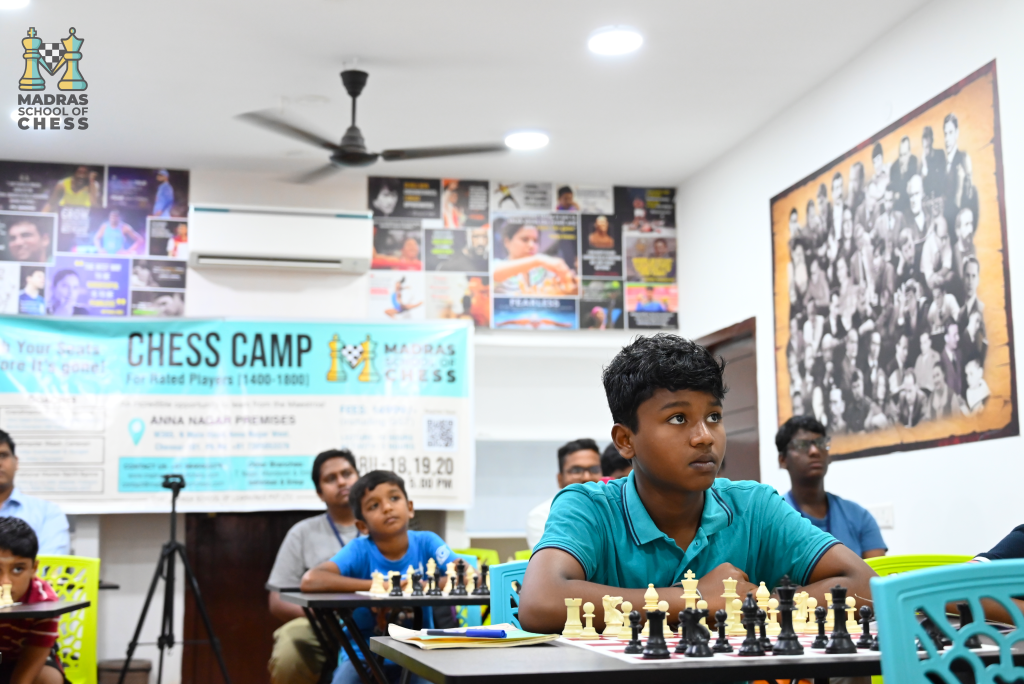
Students learn together, compete together, and celebrate each other’s progress. Whether it’s a first tournament, a well-fought draw, or a personal best performance, every milestone is valued.
This supportive environment motivates students to:
- Push beyond their comfort zones
- Stay consistent with practice
- Enjoy the learning process
Chess as a Life Skill, Not Just a Sport
In a world of fast screens and instant gratification, chess teaches patience.
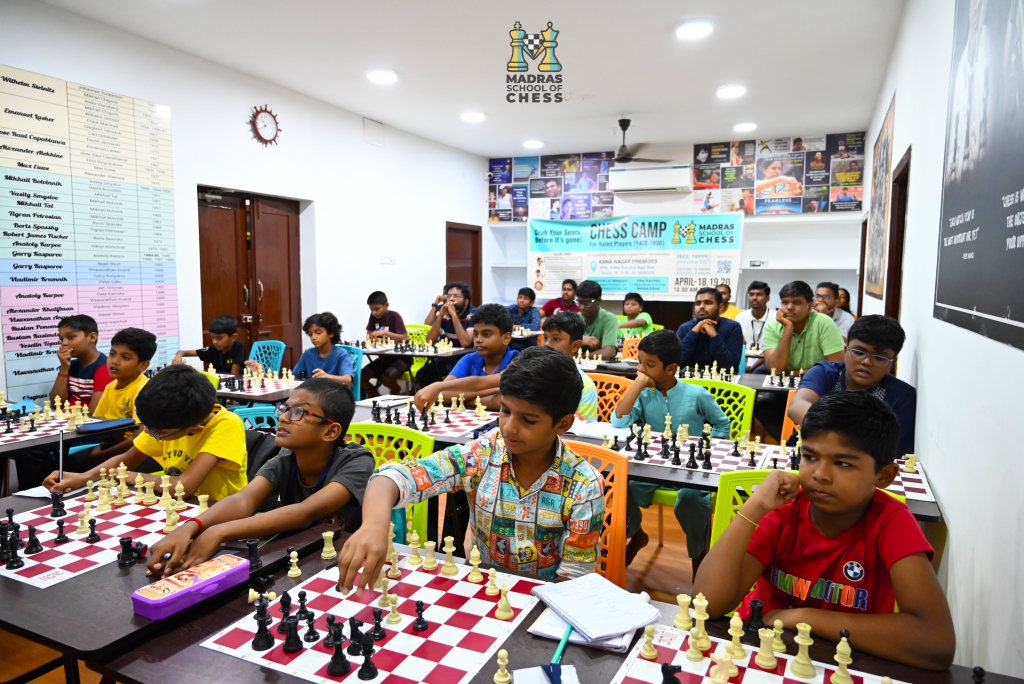
Students at MSC develop:
- Long-term thinking
- Problem-solving under pressure
- Time management
- Respect for opponents
These are life skills that stay with them long after the game ends.
The Journey Continues
Every student’s journey at Madras School of Chess is unique. Some dream of titles, some play for passion, and some simply enjoy the beauty of the game. No matter the goal, MSC ensures that every child leaves with a stronger mind and a confident heart.
Because at the end of the day, chess is not about winning every game—it’s about becoming better with every move.
Ready to Level Up Your Game?
𝐉𝐨𝐢𝐧 𝐌𝐚𝐝𝐫𝐚𝐬 𝐒𝐜𝐡𝐨𝐨𝐥 𝐨𝐟 𝐂𝐡𝐞𝐬𝐬 𝐭𝐨 𝐝𝐞𝐟𝐞𝐚𝐭 𝐲𝐨𝐮𝐫 𝐨𝐩𝐩𝐨𝐧𝐞𝐧𝐭 𝐰𝐢𝐭𝐡 𝐛𝐫𝐢𝐥𝐥𝐢𝐚𝐧𝐜𝐞 𝐚𝐧𝐝 𝐩𝐫𝐞𝐜𝐢𝐬𝐢𝐨𝐧!
📍 Locations: T.Nagar | Anna Nagar | Mandaveli | Online
📞 Call: +91 98404 03376
🌐 Visit: www.madrasschoolofchess.com
📲 Follow us: @madrasschoolofchess
The 88th Tata Steel Chess Championship 2026 — A Celebration of Mastery and Youthful Fire
Jan 27th, 2026
The chess world’s most iconic classical tournament — the Tata Steel Chess Championship 2026 — is once again captivating fans and players alike in Wijk aan Zee, Netherlands. Running from January 16 to February 1, 2026, this year’s edition marks the 88th anniversary of a tradition that has seen legends crowned and styles forged in the crucible of elite competition.
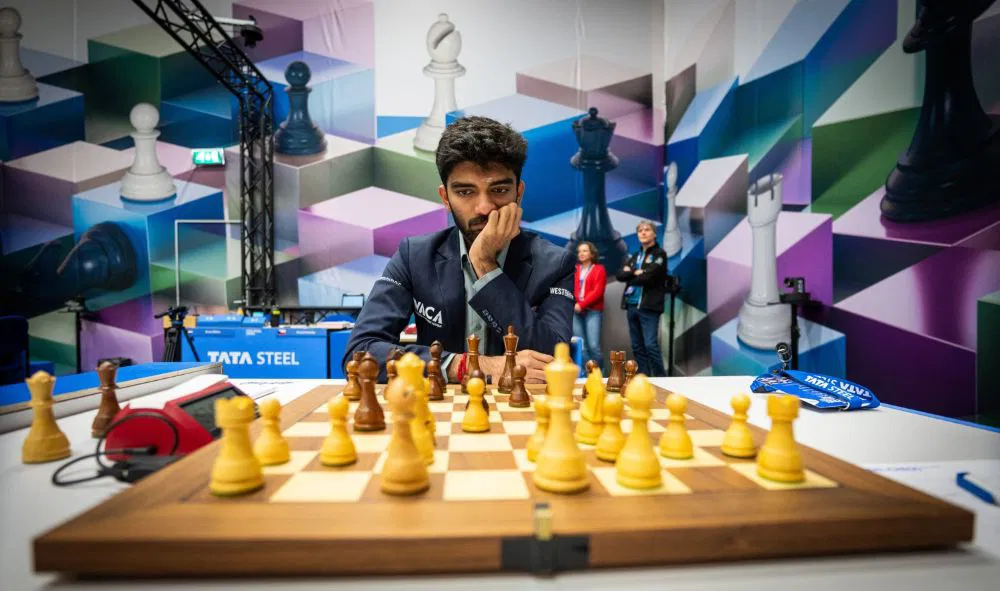
Often dubbed the “Wimbledon of Chess,” the Tata Steel Chess Masters brings together 14 of the world’s strongest Grandmasters in a round-robin classical format, where each game offers strategic battles stretching across hours of intense competition.
This year’s field is historically young — the youngest ever Masters lineup — reflecting a generational shift in top-level chess. With absentees like Carlsen, Nakamura, and Caruana, the spotlight gleams brightest on the rising stars of the game
A Tournament of Twists, Thrills, and Tactical Brilliance
From the early rounds, the tournament has been anything but predictable:

Leaders Emerged and Battles Intensified
- Uzbek prodigy Nodirbek Abdusattorov has led the standings for much of the event, showcasing fearless play and dynamic tactical vision.
- Close on his heels, Javokhir Sindarov and Hans Niemann have impressed with bold and creative games, sharing the lead at various stages.
Environmental Passion Meets Chess Spirit
Days before play began, Tata Steel Chess made headlines when environmental activists staged a protest outside the venue, underscoring modern society’s challenges — even in the calm world of chess.
Gukesh: World Champion on the Rise
At the heart of this year’s story is GM D Gukesh Dommaraju — the World Chess Champion and one of the brightest stars in modern chess. A player who mesmerized the globe with his World Championship triumph, Gukesh has brought his trademark creativity and resilience to Wijk aan Zee.
His journey in this edition has been a powerful mix of dramatic moments:
- After a challenging start, Gukesh notched up his first win in Round 5 with a gutsy exchange sacrifice that showed his deep strategic sense and tactical flair.
- Facing tough games against super-strong opponents like Nodirbek Abdusattorov and local favourite Anish Giri, he showed both vulnerability and character.
- In Round 8, Gukesh bounced back strongly with a convincing victory over Vladimir Fedoseev, demonstrating why he remains one of the most feared competitors on the circuit.
Every move from Gukesh echoes the journey of a prodigy who became a World Champion at a young age — a testament to years of hard work, passion, and unshakeable belief.
Behind the Champion: The Influence of GM Vishnu Prasanna

At Madras School of Chess, the story of Gukesh is especially close to our heart. The academy’s founder, GM Vishnu Prasanna, was one of Gukesh’s earliest coaches — a mentor who helped shape the now World Champion’s distinctive and dynamic playing style.
GM Vishnu Prasanna often describes Gukesh’s style as “harmonious chaos” — a blend of creative risk and precision that keeps opponents on their toes. This philosophy captures the heart of modern competitive chess: blend imagination with rigorous calculation, and never stop learning.
For every young player at our academy, this connection isn’t just inspiring — it’s proof that world-class talent grows from dedication, coaching, and a love for the game.
More Than Just a Tournament: Celebrating Chess Culture
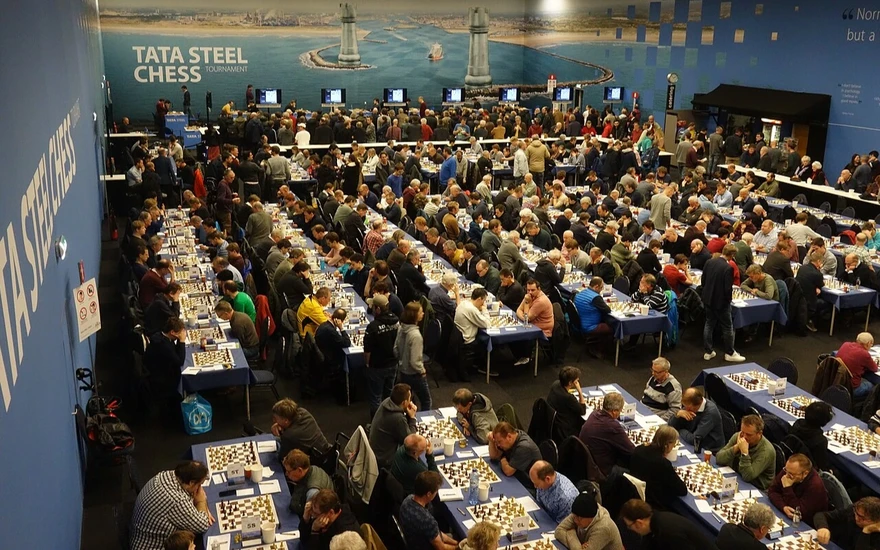
While the Masters battles for classical prestige, the Rapid and Blitz events earlier in India set the tone for a chess season filled with energy:
- Indian GM Nihal Sarin emerged victorious in the Tata Steel Chess Rapid in Kolkata, drawing with legendary GM Viswanathan Anand to clinch the title.
- Across blitz formats, strong performances and tactical fireworks thrilled spectators and players alike, showcasing the depth of modern Indian chess talent.
These events are more than snapshots of competition — they are a celebration of chess as a living art form, where every game tells a story of risk, resilience, and creative thought.
What This Means for Aspiring Players
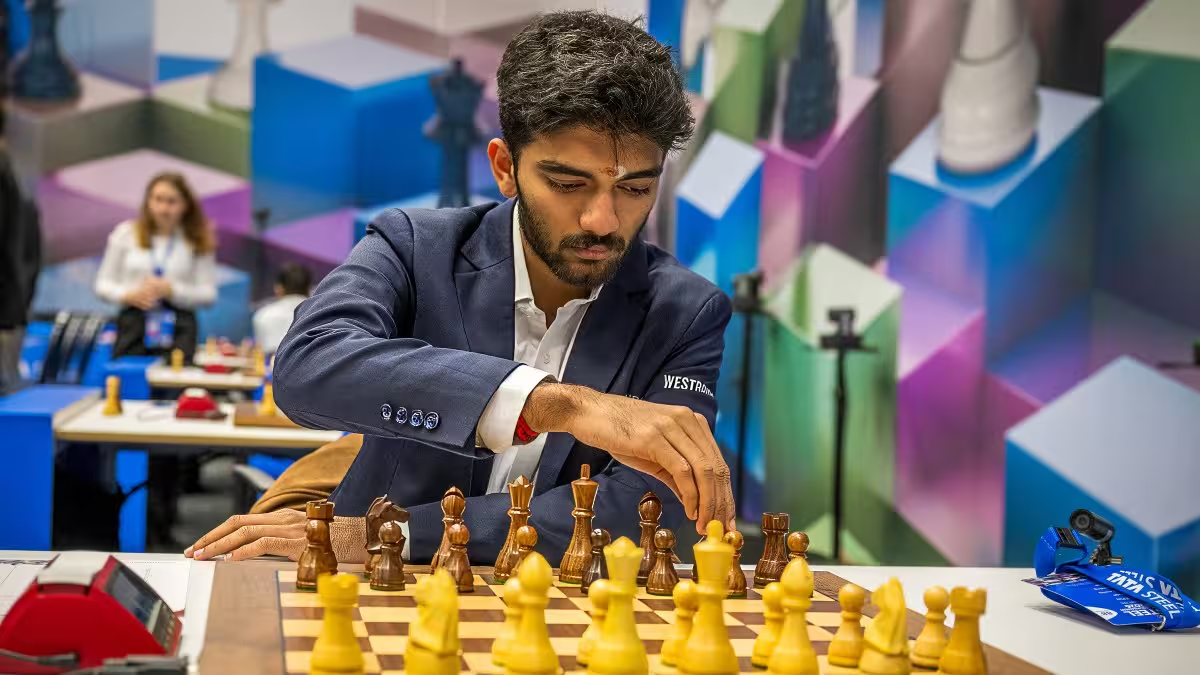
The Tata Steel Chess Championship 2026 stands as a beacon for players worldwide — especially the young minds training at academies like ours. What we learn from this event:
1. Courage in Complexity
Top players constantly navigate complexity with confidence — a reminder to embrace challenges rather than fear them.
2. Growth Through Adversity
Even champions like Gukesh face setbacks — but it’s the comeback, the adjustment, and the strategic growth that defines true greatness.
3. Value of Mentorship
Every grandmaster’s story carries the influence of mentors, coaches, and support systems — a core belief at Madras School of Chess, where every student’s journey is guided and uplifted.
Carrying the Legacy Forward

As the 2026 Tata Steel Chess Championship unfolds, we witness not only fierce battles on the board but the living evolution of chess itself: younger champions rise, federations celebrate diversity, cultures intersect, and ideas flourish.
From Wijk aan Zee to every chess club and academy worldwide, the message is clear — chess thrives where passion meets persistence.
For Madras School of Chess, this tournament isn’t just a headline — it’s an inspiration, a lesson, and a testament to what’s possible when talent is nurtured with dedication, creativity, and heart.
Let this chapter of Tata Steel Chess be a reminder to think boldly, play fearlessly, and always hunger for brilliance.
♟️ Ready to Level Up Your Game?
𝐉𝐨𝐢𝐧 𝐌𝐚𝐝𝐫𝐚𝐬 𝐒𝐜𝐡𝐨𝐨𝐥 𝐨𝐟 𝐂𝐡𝐞𝐬𝐬 𝐭𝐨 𝐝𝐞𝐟𝐞𝐚𝐭 𝐲𝐨𝐮𝐫 𝐨𝐩𝐩𝐨𝐧𝐞𝐧𝐭 𝐰𝐢𝐭𝐡 𝐛𝐫𝐢𝐥𝐥𝐢𝐚𝐧𝐜𝐞 𝐚𝐧𝐝 𝐩𝐫𝐞𝐜𝐢𝐬𝐢𝐨𝐧!
Locations: T.Nagar | Anna Nagar | Mandaveli | Online
Call: +91 98404 03376
Visit: www.madrasschoolofchess.com
Follow us: @madrasschoolofchess
New Year, New Opening: Reinvent Your Chess Repertoire in 2026
Jan 08th, 2026
New Year, New Opening: It’s Time to Defeat Your Chess Nemesis
Every chess player has one.
That one opening that makes your heart sink the moment it appears on the board.
The one you secretly hope your opponent never plays—especially in an important game.
The one that has cost you points, confidence, and sometimes sleep.

We call it your opening nemesis.
As we step into 2026, this is the perfect moment to ask yourself an honest question: Am I going to keep suffering against the same opening… or finally take control?
The new year isn’t just about resolutions—it’s about strategic resets. And in chess, few resets are as powerful as reinventing your opening repertoire.
January: The Perfect Time for a Strategic Pivot
January 1st is universally known as a fresh start. In chess terms, it’s your chance to:

- Stop repeating the same opening mistakes
- Replace fear with preparation
- Turn discomfort into confidence
You have two powerful options when dealing with your opening nemesis:
- Avoid it intelligently – by adopting a fresh, modern repertoire that steers the game into positions you understand better
- Face it head-on – by deeply learning the ideas, structures, and plans that neutralize it completely
At Madras School of Chess, we believe real growth begins when preparation meets purpose.
That’s why our 2026 mantra is simple:
New Year. New Opening. New Confidence.
The Great 1.e4 Question: What Should Black Play in 2026?
To understand current opening trends, we looked at a fascinating community experiment conducted throughout December 2025—a series of online polls asking a classic question:
What is the best response to 1.e4 today?
The format was simple but revealing:
Popular defenses were matched in a knockout-style bracket, allowing players worldwide to vote for their preferred weapon.
Early Round Highlights
Some iconic battles emerged immediately:
- French Defense outlasted the hypermodern Pirc/Modern
- Sicilian Defense brushed past the Scandinavian
- Caro-Kann calmly neutralized Owen’s Defense
- 1…e5 stood firm against the provocative Alekhine’s Defense
The early rounds showed that while creativity is welcome, sound structure and reliability still matter deeply to today’s players.
A Surprise in the Semifinals
Most expected a classic final:
Sicilian Defense vs 1…e5
But chess evolution had other ideas.
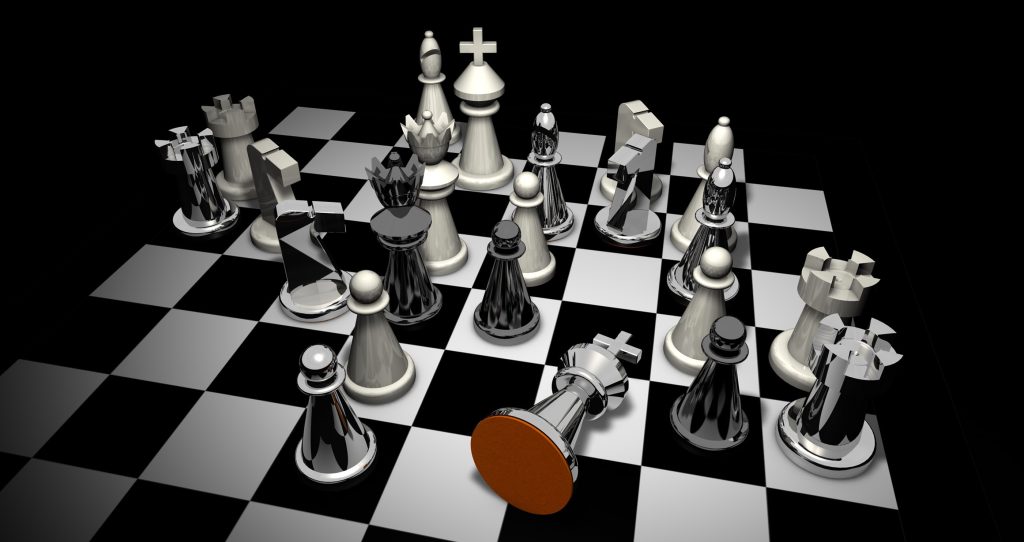
In a result that surprised many traditionalists, the Caro-Kann Defense eliminated 1…e5, signaling a shift in modern preference. Players increasingly value:
- Clear pawn structures
- Reduced theoretical overload
- Strong endgame transitions
The Caro-Kann’s rise reflects a generation that wants clarity before chaos.
The Grand Final: Sicilian vs Caro-Kann
The final showdown took place on December 25th, 2025.
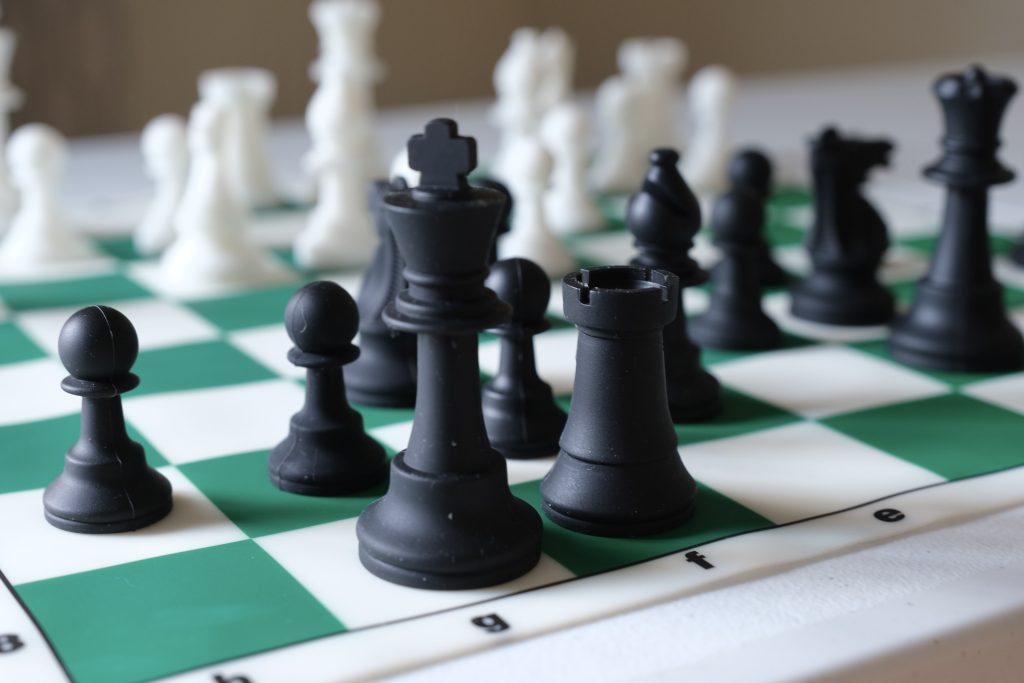
Interestingly, both finalists revolved around the c-pawn, but with entirely different philosophies:
- Caro-Kann: Control first, safety first
- Sicilian: Counterattack immediately, fight for imbalance
In the end, the Sicilian Defense emerged victorious—once again proving why it remains the weapon of choice for elite and ambitious players.
As one strong chess enthusiast perfectly summarized:
“A small, cautious c-pawn move can’t compare to confidently grabbing space and challenging White’s center from move one.”
What This Means for Chess Students in 2026
This debate highlights a crucial lesson for every chess learner:
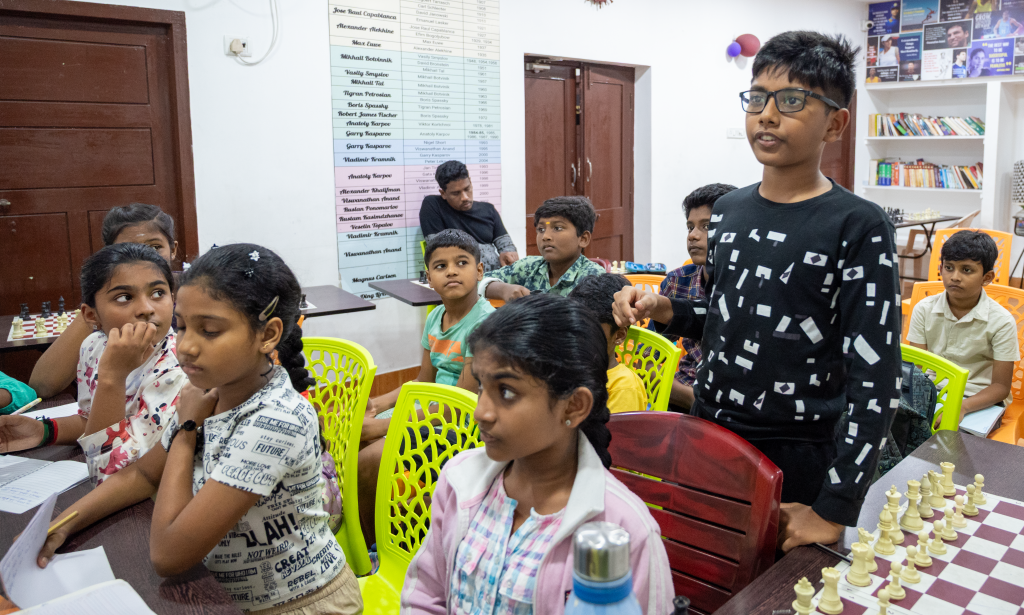
🔹 There is no ‘one best opening’—only the best opening for you
Your choice should depend on:
- Your playing style
- Your tournament goals
- Your willingness to study and practice
At Madras School of Chess, we guide students to:
- Understand ideas, not just moves
- Learn structures that repeat across openings
- Build repertoires that grow with their strength
Reinvent Your Game with Madras School of Chess
Whether your goal for 2026 is to:
- Finally understand the Sicilian
- Master a solid defense like the Caro-Kann
- Build a lifelong opening repertoire
- Or eliminate your personal opening nemesis once and for all
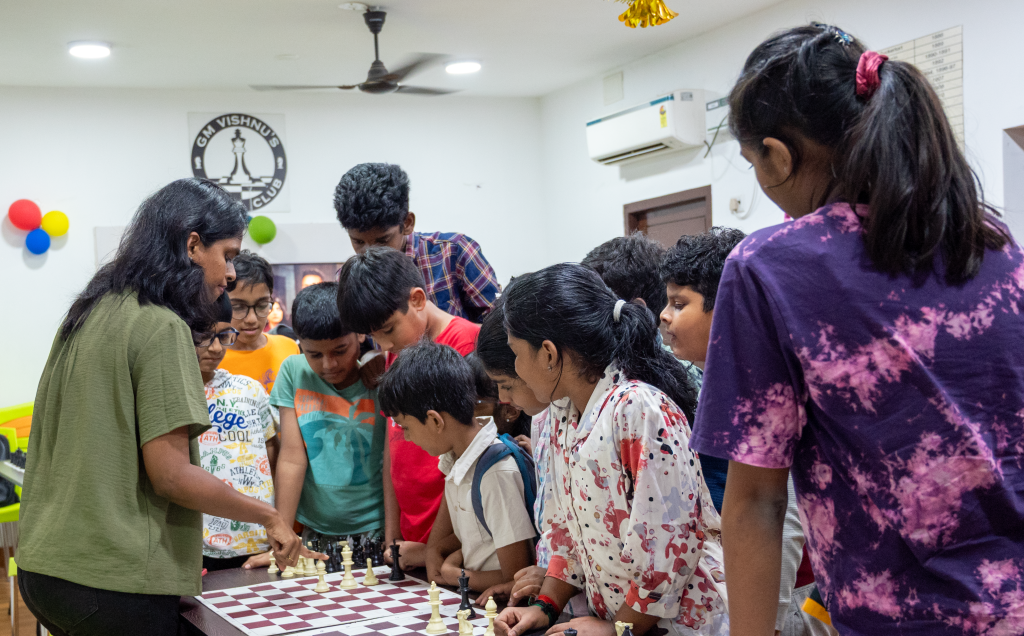
This is the year to do it properly.
With structured training, modern theory, and concept-driven learning, we help students turn past frustrations into future strengths.
2026 Isn’t About Playing More Games.
It’s About Playing Better Positions.
New Year. New Opening.
Let’s build a stronger chess future—one move at a time.
♟️ Ready to Level Up Your Game?
𝐉𝐨𝐢𝐧 𝐌𝐚𝐝𝐫𝐚𝐬 𝐒𝐜𝐡𝐨𝐨𝐥 𝐨𝐟 𝐂𝐡𝐞𝐬𝐬 𝐭𝐨 𝐝𝐞𝐟𝐞𝐚𝐭 𝐲𝐨𝐮𝐫 𝐨𝐩𝐩𝐨𝐧𝐞𝐧𝐭 𝐰𝐢𝐭𝐡 𝐛𝐫𝐢𝐥𝐥𝐢𝐚𝐧𝐜𝐞 𝐚𝐧𝐝 𝐩𝐫𝐞𝐜𝐢𝐬𝐢𝐨𝐧!
📍 Locations: T.Nagar | Anna Nagar | Mandaveli | Online
📞 Call: +91 98404 03376
🌐 Visit: www.madrasschoolofchess.com
📲 Follow us: @madrasschoolofchess
© The Madras School of Chess
Created by Webdzo
 Chat with us